White House Salutes American Workers, Echoes Trump's MAGA Vision
Synopsis
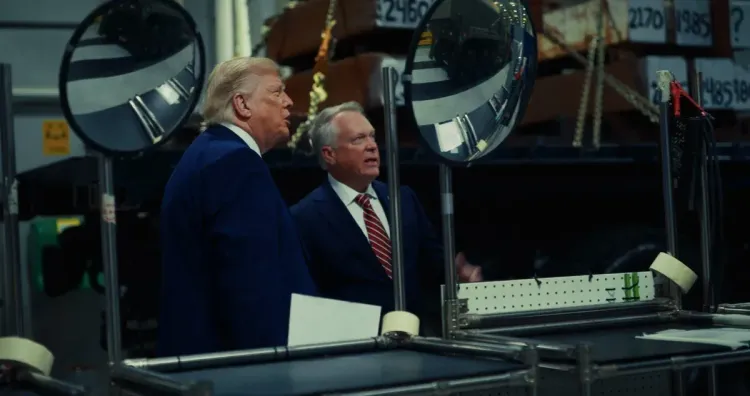
The White House on June 24, 2026, honoured American truck drivers and blue-collar workers with a video post quoting President Trump's pledge to make America powerful, safe, and great again — with Pennsylvania cited as a symbol of national economic revival.
Key Takeaways
The White House posted a worker tribute on June 24, 2026 , centred on truck drivers and blue-collar labour.
President Trump was quoted invoking his 'Make America POWERFUL, SAFE, and GREAT Again' formulation.
Pennsylvania was specifically named as a symbol of the broader national economic and patriotic effort.
The post continues a pattern of Republican messaging that links blue-collar productivity to economic nationalism and domestic security.
Potential follow-up actions may include Department of Transportation guidance on freight corridors or infrastructure spending referencing Pennsylvania.
The message has downstream relevance for India-US trade and supply chain watchers monitoring American freight and manufacturing policy.
The White House on Wednesday, June 24, 2026, posted a tribute to blue-collar workers — particularly truck drivers — framing them as the backbone of the American economy, and paired the message with a quote from President Donald J. Trump invoking his signature 'Make America Great Again' themes of power, safety, and national revival.
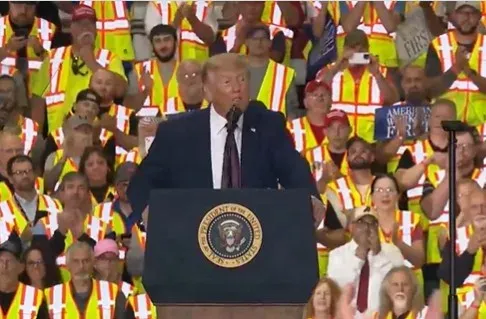
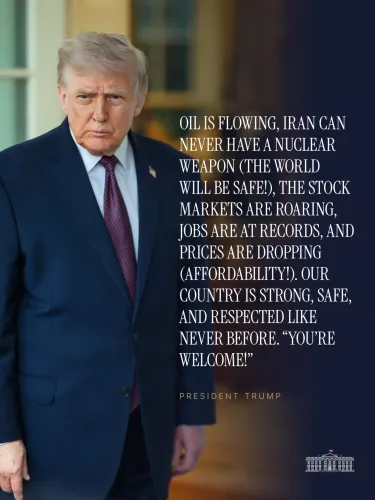
The post, accompanied by a video, carried Trump's words: 'Together with the help of patriots throughout Pennsylvania and all across the land we will make America POWERFUL again, we will make America SAFE again, and we will make America GREAT Again.' The message placed Pennsylvania — a major industrial and trucking corridor state — at the symbolic centre of a broader national economic narrative.
Context
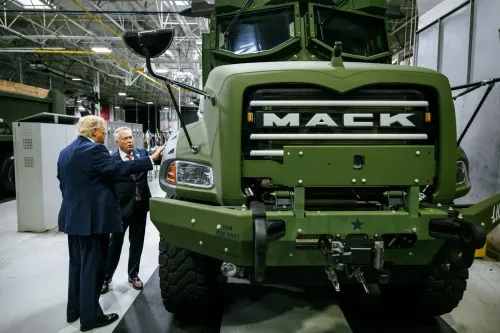
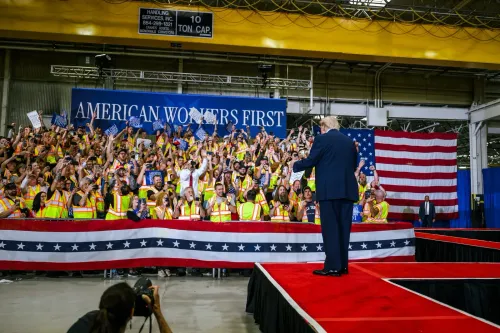
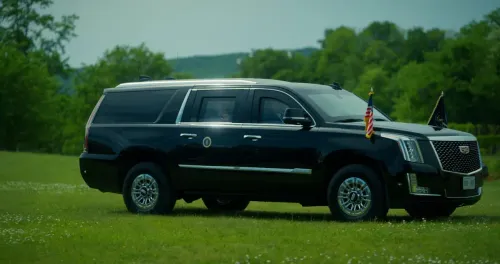
The White House's post is rooted in a long-running Republican messaging tradition that elevates blue-collar labour — truckers, factory hands, freight workers — as the human face of economic nationalism. Truck drivers, in particular, have become a recurring symbol in this framing, representing domestic supply chains, physical infrastructure, and working-class identity. The imagery of the American flag alongside a truck is a deliberate visual shorthand for this political and economic worldview.
Pennsylvania carries particular weight in this narrative. The state has a deep manufacturing and steel heritage, sits astride major freight corridors connecting the Northeast and Midwest, and has functioned as a bellwether in national economic and electoral conversations for decades. Invoking Pennsylvania is rarely incidental in White House communications.
Policy Backdrop
Trump's economic agenda has historically rested on three pillars relevant to this message: infrastructure investment, trade protection, and domestic energy expansion. A $1 trillion infrastructure initiative proposed during his first term targeted roads, bridges, and freight networks — precisely the arteries that truck drivers depend on. Separately, the America First trade and deregulation agenda of 2018-2019 sought to reduce reliance on foreign supply chains, with manufacturing and energy sectors as primary beneficiaries.
The rhetorical triplet — 'POWERFUL,' 'SAFE,' 'GREAT' — maps onto distinct policy domains: military and industrial strength, border and public security, and broad economic revival. This compression of multiple policy goals into a single slogan-driven sentence is characteristic of how the White House has communicated economic priorities to a working-class base.
Stakeholders and Impact
The most directly addressed constituency is America's truck drivers and logistics workers, a sector that moves roughly 70 per cent of all freight in the United States by value. Manufacturing workers and energy sector employees — both heavily represented in Pennsylvania — are also implicit audiences. For this demographic, White House visibility translates into political signalling about regulatory priorities, fuel costs, and infrastructure spending.
For Indian observers, the post is a window into how the world's largest economy frames its domestic labour politics. India-US trade relations, supply chain realignments post-pandemic, and American freight infrastructure all have downstream implications for Indian exporters and logistics firms operating in or with the United States.
What's Next
The post's reference to Pennsylvania and workers in the freight and manufacturing sectors may foreshadow follow-up executive actions or Department of Transportation guidance on freight corridors, labour rules, or infrastructure spending tied to that state. Analysts tracking the White House's economic messaging will watch for whether this communication precedes a formal policy announcement or remains part of an ongoing campaign-style outreach to blue-collar constituencies. The framing of 'patriots' doing the work of keeping 'America running' suggests the administration intends to keep worker-centric economic nationalism at the front of its public communications strategy.
Point of View
Pennsylvania as industrial heartland, and a three-part rhetorical crescendo that doubles as a policy checklist. This kind of messaging serves a dual function — it energises a core blue-collar constituency while also signalling to the broader market that the administration's economic identity remains tethered to domestic production and worker empowerment. The specific invocation of Pennsylvania is unlikely to be accidental; the state's freight corridors and manufacturing base make it a perennial proving ground for Republican economic credibility. Analysts will watch whether this communication precedes concrete executive action or remains part of a sustained campaign-style outreach that keeps the MAGA economic frame alive between formal policy announcements.
NationPress
25 Jun 2026
Frequently Asked Questions
What did the White House post about American workers on June 24 2026?
The White House posted a video tribute to American truck drivers and blue-collar workers, quoting President Trump's pledge to make America powerful, safe, and great again, with a specific mention of Pennsylvania as a symbol of national economic strength.
What does Trump mean by making America powerful safe and great again?
Trump's three-part formulation — powerful, safe, and great — maps onto industrial and military strength, border and public security, and broad economic revival respectively. It is the rhetorical core of his 'Make America Great Again' agenda.
Why does the White House keep mentioning Pennsylvania in economic posts?
Pennsylvania is a major industrial and freight corridor state with a deep manufacturing and steel heritage. It functions as a symbolic and practical centrepiece of Republican economic messaging aimed at blue-collar workers.
How does Trump's worker messaging affect US economic policy?
Historically, Trump's worker-centric messaging has preceded or accompanied policy moves on infrastructure spending, trade tariffs, and deregulation in energy and manufacturing — all sectors that directly affect freight and logistics workers.
Why does US worker policy matter for India?
American freight infrastructure, supply chain policy, and manufacturing revival directly affect India-US trade flows. Indian exporters and logistics firms with US exposure monitor White House economic signals closely for regulatory and market implications.