White House Says Michigan Auto Jobs Are Back Under POTUS
Synopsis
The White House posted on July 28, 2026, declaring that Michigan's auto sector and American manufacturing have been revived under the current President, contrasting his record with predecessors who 'promised to stop' offshoring but failed. The statement invokes decades of trade-policy debate stretching from NAFTA to USMCA.
Key Takeaways
The White House posted on July 28, 2026 , claiming American manufacturing has been restored under the current President.
The post singles out Michigan autoworkers as the primary beneficiaries, citing decades of job losses due to offshoring.
It asserts that every president before the current one 'promised to stop' the trend but none succeeded.
The statement fits within a long-running U.S. political narrative contrasting globalisation with domestic industrial protection, spanning both parties since the 1994 NAFTA era.
The 2018 USMCA introduced stricter vehicle content rules designed to encourage North American production, a policy milestone frequently cited in this debate.
Upcoming Bureau of Labor Statistics manufacturing data will be key to independently assessing the administration's claims.
The White House, the official communications account of the Executive Office of the President of the United States, posted on X on Tuesday, July 28, 2026, asserting that American manufacturing has been revived after decades of job losses in Michigan's auto sector — crediting the current President for reversing a trend that predecessors failed to address.
Context
The post states: 'For decades, globalists sold out Michigan autoworkers, shipping jobs overseas and gutting factories. Every president before promised to stop it. None did.' It goes on to declare, 'Now, thanks to @POTUS, Michigan has a President who fights for workers and puts America FIRST. American manufacturing is BACK!'
Michigan has long been the heartland of American automobile manufacturing, home to major assembly plants and parts suppliers tied to the country's largest automakers. The state has served as a political bellwether on trade and industrial policy for several decades.
Policy Backdrop
The White House framing draws on a well-established political narrative around trade agreements and their effect on Rust Belt employment. The 1994 North American Free Trade Agreement (NAFTA) eliminated a wide range of tariffs between the United States, Canada, and Mexico, and became a focal point of criticism for accelerating the offshoring of manufacturing jobs, particularly in the auto sector.
In 2018, the United States-Mexico-Canada Agreement (USMCA) replaced NAFTA, introducing stricter rules of origin for vehicles — requiring a higher percentage of a car's content to originate in North America for it to qualify for tariff-free treatment. Proponents argued this would incentivise domestic assembly and parts production, while critics debated the scale of its real-world impact on employment.
The White House post positions the current administration as having succeeded where prior administrations — across both parties — fell short, though the post does not specify which policies or legislative actions underpin that claim.
Stakeholders and Impact
Michigan autoworkers and the broader U.S. manufacturing workforce are the stated beneficiaries in the White House's framing. The state's auto sector employs hundreds of thousands of workers directly and indirectly through supplier networks, making it a politically significant constituency.
The assertion that 'American manufacturing is BACK' is a broad claim. Actual employment and output data from the Bureau of Labor Statistics and sector-specific industry bodies would provide the empirical grounding for such a characterisation, and analysts typically look to those releases to assess the health of the manufacturing base.
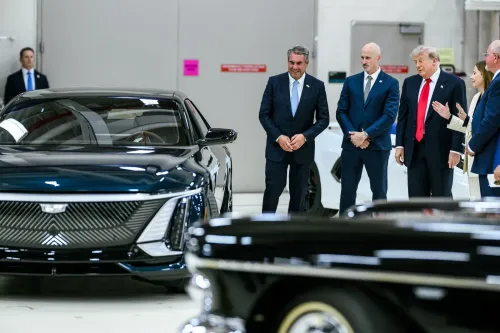
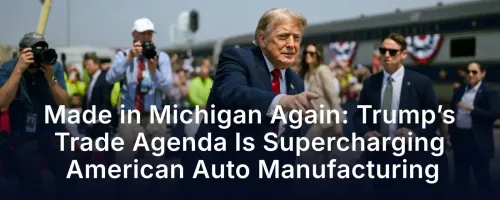
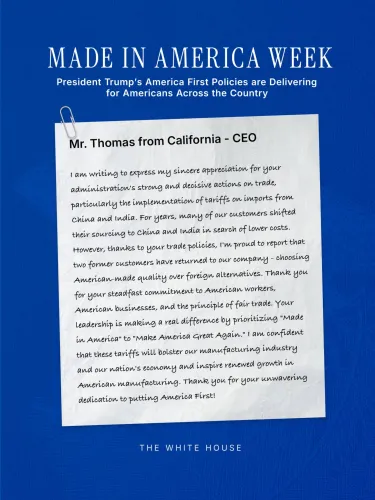
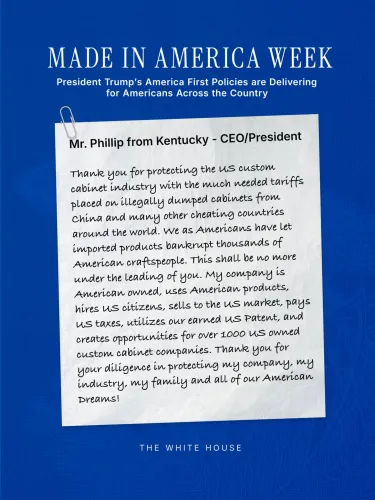
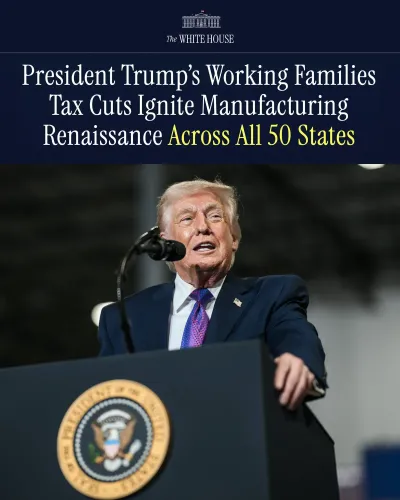
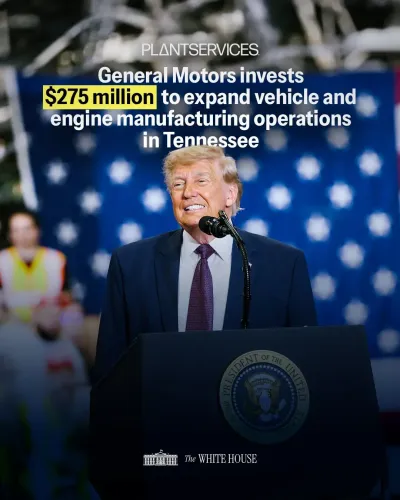
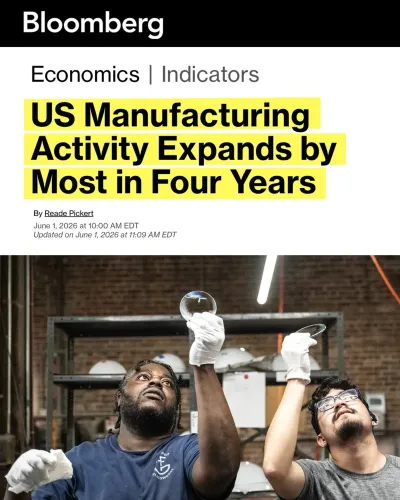
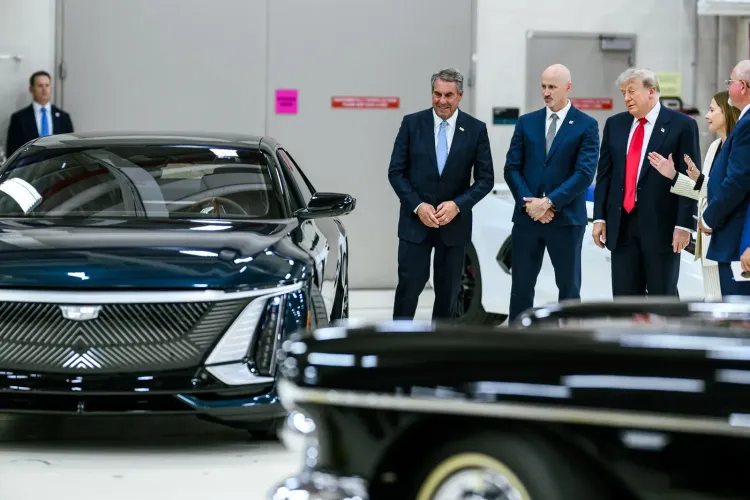
The post was accompanied by four images, which the White House account shared alongside the text, though the specific content of those images was not detailed in available information.
What's Next
Upcoming Bureau of Labor Statistics manufacturing employment releases will be closely watched to assess whether recent policy shifts have translated into measurable job creation in Michigan and other Rust Belt states. Any new tariff announcements or trade agreement developments affecting the auto sector are also expected to draw significant scrutiny.
The White House's continued emphasis on industrial revival in Michigan signals that the administration intends to keep manufacturing and trade policy central to its political messaging — a posture that will likely intensify as the broader economic picture becomes clearer in the months ahead.
Point of View
The administration is targeting a state with outsized electoral and symbolic weight in American industrial politics. The framing — 'every president before promised, none delivered' — is a sharp contrast device designed to draw a clear line between the current administration and its predecessors across party lines. Whether the underlying economic data supports the 'manufacturing is BACK' declaration will be the real test, and the next set of employment figures will either reinforce or complicate this narrative considerably.
NationPress
28 Jul 2026
Frequently Asked Questions
Why is Michigan important for US manufacturing?
Michigan is the historic centre of American automobile manufacturing, home to major assembly plants and a vast supplier network tied to the country's largest automakers, making it a key indicator of the health of U.S. industrial employment.
What is NAFTA and how did it affect auto jobs?
NAFTA , implemented in 1994 , eliminated many tariffs between the United States , Canada , and Mexico . Critics argued it accelerated the offshoring of manufacturing jobs, particularly in the auto sector, and it became a central point of political debate in Rust Belt states like Michigan.
What replaced NAFTA and what changed for autoworkers?
The USMCA , signed in 2018 , replaced NAFTA and introduced stricter rules of origin requiring a higher share of vehicle content to come from North America, aiming to retain domestic assembly and parts jobs.
What did the White House say about Michigan autoworkers in July 2026?
The White House posted on July 28, 2026 , stating that 'globalists' had 'sold out Michigan autoworkers' for decades by shipping jobs overseas, and that the current President had reversed this trend, declaring 'American manufacturing is BACK.'
How can I verify if US manufacturing jobs have actually increased?
The Bureau of Labor Statistics publishes regular manufacturing employment data for the United States, including state-level breakdowns for Michigan , which provide the most authoritative measure of job creation or loss in the sector.