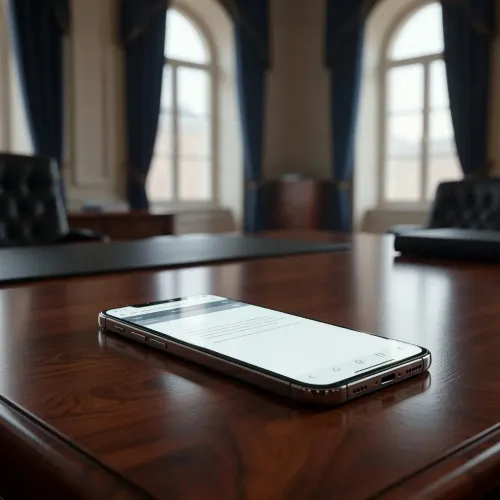
White House Uses AirDrop to Push Public Message
Synopsis
The White House announced on 22 July 2026 it would use Apple's AirDrop to push 'an important message' to the public, reflecting the U.S. government's growing use of consumer device-native tools for direct federal outreach beyond traditional social media channels.
Key Takeaways
The White House posted on 22 July 2026 that it intended to 'AirDrop an important message' to the public.
Apple's AirDrop , first introduced in 2013 , enables wireless peer-to-peer file and link sharing between nearby Apple devices.
The move builds on the Obama administration's 2012 Digital Government Strategy , which pushed federal agencies toward mobile and consumer technology adoption.
The primary audience would be iOS and macOS device users , a large segment of the American public.
The initiative signals a potential shift from social media broadcasting to direct, device-level federal communications.
Observers are watching for follow-up integration with federal alert systems or broader digital communications policy changes.
The White House, the official communications account of the Executive Office of the President of the United States, on Wednesday, 22 July 2026, announced it would use Apple's AirDrop feature to deliver what it called 'an important message' to the public, marking a notable experiment in device-native federal outreach.
Context
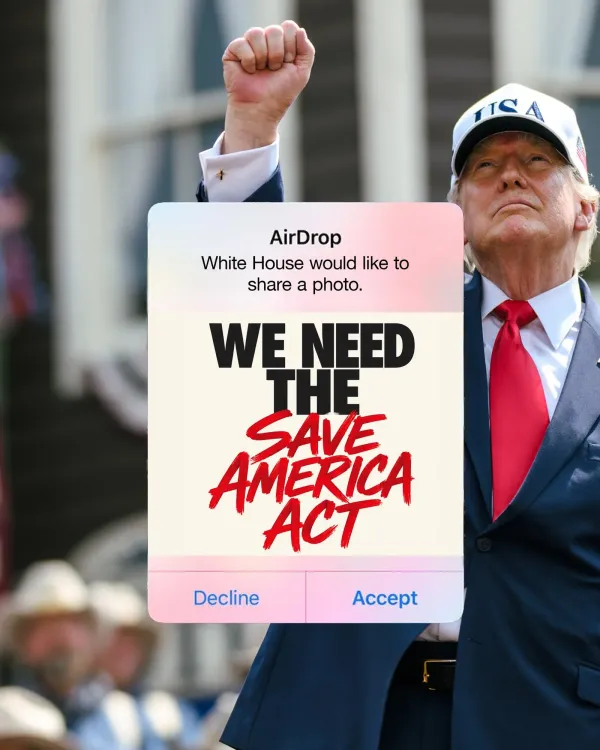
The post read: 'We would like to AirDrop an important message,' accompanied by a smartphone and an American flag emoji. The message was paired with an image and a link, suggesting the administration is attempting to reach iOS and macOS device users through Apple's peer-to-peer wireless file-sharing feature rather than relying solely on conventional social media broadcasting.
AirDrop, developed by Apple Inc. and first introduced in 2013, allows users in close proximity — or, in its 'Everyone' mode, any nearby Apple device — to receive files and links wirelessly without an internet connection. Its use by a federal communications office is unconventional and signals a push toward meeting audiences on their own devices.
Policy Backdrop
The move builds on a trajectory dating back to the Obama administration's 2012 Digital Government Strategy, which directed federal agencies to adopt mobile and consumer technologies for improved public outreach. Since then, U.S. government communications have progressively incorporated consumer apps and peer-to-peer tools alongside traditional channels.
Earlier experiments included the adoption of platforms like Twitter and mobile emergency alert systems. The AirDrop reference reflects a continued adaptation to device-native features, effectively bringing federal messaging closer to the tools everyday Americans already use on their phones and laptops.
Stakeholders and Impact
The primary audience for such an initiative would be iOS and macOS device users — a substantial share of the American public, given Apple's significant market penetration in the United States. If the administration deploys AirDrop in any coordinated or event-based capacity, it could reach individuals who may not follow official government accounts on social media.
The broader implication is a shift in how executive communications are conceptualised — not just as broadcasts to followers, but as direct, device-level interventions. This raises questions about consent, reach, and the boundaries of government use of commercial consumer technology.
What's Next
Observers will watch for whether this signals a deeper integration of AirDrop or similar peer-to-peer tools into federal alert and communications infrastructure. Any follow-up executive actions or agency-level digital communications policies would clarify whether this is a one-off social media moment or the beginning of a broader strategy.
The White House's willingness to experiment with device-native features suggests that future public service announcements, emergency messaging, or policy rollouts could increasingly arrive not through newsfeeds but directly on the lock screens and notification trays of American devices.
Point of View
Frictionless delivery that bypasses algorithmic feeds entirely. It fits a decade-long pattern of executive offices chasing audiences onto newer platforms, but AirDrop's proximity-based mechanics raise fresh questions about how and where such messages would actually be distributed. For Indian observers, it is a reminder that the world's largest democracy is watching how the world's oldest one experiments with direct-to-citizen digital communication. The real test will be whether this becomes infrastructure or remains a social media stunt.
NationPress
22 Jul 2026
Frequently Asked Questions
What did the White House announce on 22 July 2026?
The White House announced it would use Apple's AirDrop feature to send 'an important message' to the public, posting about it on X with a smartphone emoji and an American flag.
What is Apple AirDrop and how does it work?
AirDrop is a wireless file-sharing feature developed by Apple Inc., first introduced in 2013. It allows nearby Apple devices running iOS or macOS to receive files, links, and messages without needing an internet connection.
Has the US government used consumer technology for public outreach before?
Yes. The Obama administration's 2012 Digital Government Strategy directed federal agencies to adopt mobile and consumer technologies. Since then, U.S. government communications have used platforms like Twitter and mobile alert systems to reach the public.
Who would receive a White House AirDrop message?
The message would target iOS and macOS device users — a large portion of the American public — particularly those within AirDrop range at specific locations or events, depending on how the feature is deployed.
What does the White House AirDrop move mean for digital communications policy?
It suggests the executive office is exploring device-native tools to reach citizens more directly. Analysts are watching for any follow-up integration with federal alert systems or new digital communications policies.