Did Susie Wiles Dismiss Vanity Fair's Profile While Defending Trump’s White House?
Synopsis
In a strong rebuttal, Susie Wiles defends Trump's administration against a critical Vanity Fair profile, asserting the team’s achievements and loyalty to the President. Read how she challenges the portrayal of chaos and highlights the administration's successes.
Key Takeaways
Wiles defends Trump’s administration against critical portrayals.
Claims of significant achievements during Trump's second term.
The importance of context in media representations.
Wiles emphasizes loyalty and effectiveness in her role.
Internal conflicts are not uncommon in political environments.
Washington, Dec 16 (NationPress) White House Chief of Staff Susie Wiles vehemently criticized a recent Vanity Fair article that highlighted internal conflicts and challenges during President Donald Trump’s second term, labeling it a “disingenuously framed hit piece” that lacked context and selectively excluded comments to depict the administration as disorganized.
“The article published early this morning is a disingenuously framed hit piece on me and the finest President, White House staff, and Cabinet in history,” Wiles stated in a post on X. “Significant context was disregarded, and much of what I, and others, said about the team and the President was left out of the story.”
Wiles indicated that the portrayal aimed “to paint an overwhelmingly chaotic and negative narrative about the President and our team,” asserting: “The truth is the Trump White House has already achieved more in eleven months than any other President has in eight years, thanks to the unparalleled leadership and vision of President Trump.”
The Vanity Fair piece by Chris Whipple, titled “Susie Wiles, JD Vance, and the ‘Junkyard Dogs’: The White House Chief of Staff On Trump’s Second Term,” is a two-part profile based on months of interviews with Wiles.
The article portrays her as the most influential figure in the White House following Trump and details her role in managing policy disputes, Cabinet conflicts, and high-stakes controversies.
“I’m not an enabler. I’m also not a bitch,” Wiles is quoted as saying in the article. “I guess time will tell whether I’ve been effective.”
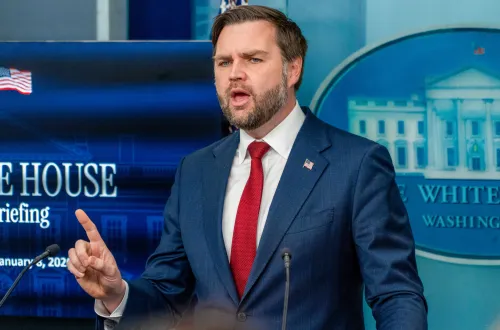
The profile includes on-the-record comments from senior officials. Secretary of State Marco Rubio commended Wiles’s relationship with Trump as a “trusted bond,” while Vice President JD Vance described her as a facilitator of the president’s agenda.
“Susie just takes the diametrically opposite viewpoint,” Vance noted, adding that “her job is to actually facilitate his vision and to make his vision come to life.”
The article recounts debates over tariffs and immigration enforcement, as well as the restructuring of the U.S. Agency for International Development and its impact on the President’s Emergency Plan for AIDS Relief.
In the article, Wiles acknowledges some disagreements while stressing the importance of execution. “I will concede that we’ve got to look harder at our process for deportation,” she stated at one point.
On tariffs, the article quotes Wiles discussing internal divisions: “There was a huge disagreement over whether [tariffs were] a good idea.”
She added that advisers were instructed to align with Trump’s direction: “This is where we’re going to end up. So figure out how you can work into what he’s already thinking.”
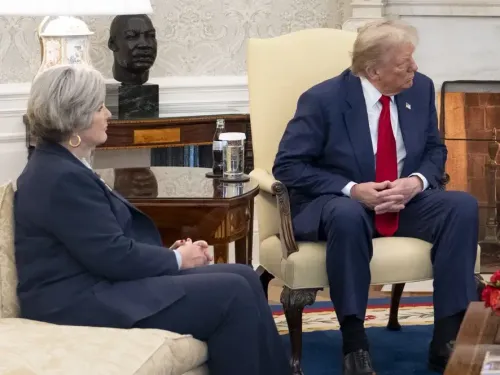
The profile also highlights Wiles’s management style and her closeness to power. “There’s the president, and then there’s whoever the three high-ranking people are on the sofa,” she remarked about Oval Office events. “And then there’s a chair at the corner of the sofa, which is my chair.”
Wiles’s response dismissed the broader framing of the article and reaffirmed her loyalty to Trump. “None of this will stop our relentless pursuit of Making America Great Again!” she asserted.
The Vanity Fair article positions Wiles at the center of decisions that, it claims, have expanded presidential power, including the deployment of National Guard troops, immigration enforcement, and foreign policy initiatives.
It also raises questions about whether she restrains the president or fully endorses his approach. “The question around Wiles’s tenure under Trump has been whether she will do anything to restrain him,” the article suggests.
In her public rebuttal, Wiles emphasized her view of the administration’s inaugural year as a success, rejecting negative representations of internal discord.
Trump returned to office in January 2025 after winning the 2024 presidential election, commencing a second, nonconsecutive term characterized by aggressive policy maneuvers and frequent legal and political challenges.
The White House chief of staff typically serves as the president’s gatekeeper and chief coordinator, a role that has gained increased importance amid swift executive actions.
Point of View
It's crucial to approach this situation with balance. Wiles' response underscores the complexity of the Trump administration’s dynamics and highlights ongoing debates about its impact and effectiveness. While critical articles are necessary for accountability, it’s equally important to consider the administration's claims of success and the context behind internal disagreements.
NationPress
20 Sept 2026
Frequently Asked Questions
What did Susie Wiles say about the Vanity Fair article?
Susie Wiles described the article as a 'disingenuously framed hit piece' that neglected important context and misrepresented the Trump administration.
What achievements did Wiles claim for the Trump administration?
Wiles asserted that the Trump White House accomplished more in eleven months than any other President has in eight years, attributing this to Trump's leadership.
How did Wiles respond to criticisms of internal discord?
Wiles dismissed negative characterizations of internal conflicts and reaffirmed her loyalty to Trump, emphasizing the administration's successes.
What role does Susie Wiles have in the Trump administration?
Wiles serves as the White House Chief of Staff, a position that involves managing policy disputes and facilitating the President's agenda.
What are the main themes of the Vanity Fair article?
The article discusses internal debates, management style, and the complexities of Wiles' role within the Trump administration.