UN Security Council reform: World leaders demand overhaul at UNGA 2026
Synopsis
Seventeen years of failed negotiations haven't dimmed the demand — at UNGA 2026, African leaders, Japan, and the G4 delivered their most coordinated push yet for Security Council reform. With Africa's 54 nations holding zero permanent seats while filling the Council's agenda, and each P5 member retaining a veto over reform itself, the gulf between moral urgency and structural reality has never looked wider.
Key Takeaways
World leaders at the UN General Assembly on 26 September 2026 demanded a comprehensive overhaul of the UN Security Council , unchanged in structure since 1945 .
African nations — led by Kenya, Sierra Leone, Nigeria, South Africa, and Ghana — called for at least two permanent seats with full veto rights and five additional non-permanent seats .
Kenyan President William Ruto noted reform negotiations have stalled for 17 years ; Julius Maada Bio highlighted Africa's 1.6 billion people remain unrepresented permanently.
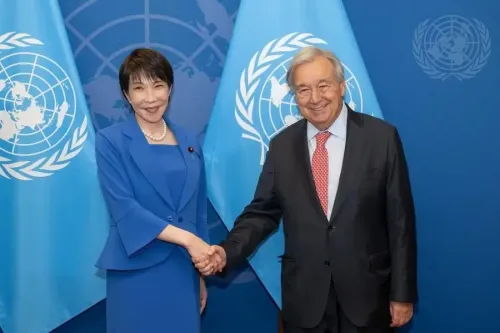
Japanese Prime Minister Sanae Takaichi also backed urgent expansion of both permanent and non-permanent membership.
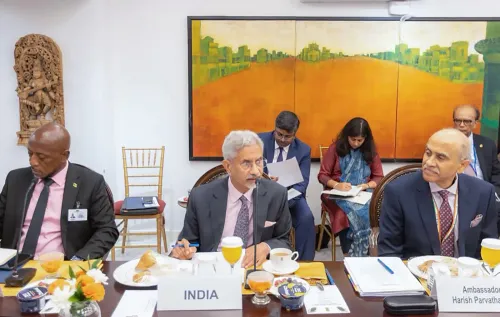
India is part of the Group of Four (G4) with Brazil, Germany, and Japan, all seeking permanent seats — their push aligns with the African Union's Ezulwini Consensus .
A Charter amendment requires ratification by all five permanent members , giving each a veto over the reform process itself.
A growing coalition of world leaders converged on the United Nations General Assembly on 26 September 2026 to demand a fundamental overhaul of the UN Security Council, arguing that a power structure forged in 1945 no longer reflects the world it is mandated to protect. Calls ranged from expanding permanent membership to securing dedicated African representation — with full veto rights if the privilege is retained.
Africa's Unified Demand
Kenyan President William Ruto delivered one of the sharpest rebukes of the current structure. 'Every nation is sovereign and equal under the Charter. Yet on the gravest questions of war and peace, five nations possess a permanent power that the other 188 do not,' Ruto said. 'The equality proclaimed in this Assembly ends at the doors of the Security Council.'
Ruto pointed out that Africa — home to 54 UN member states — holds no permanent seat on the body most responsible for international peace and security. He noted that reform negotiations had dragged on for 17 years without result, adding: 'We should not accept that reform is impossible because it is difficult.'
Sierra Leone, which coordinates the African Union Committee of Ten on Council reform, pressed the continent's unified position — at least two permanent seats with all the rights of existing permanent members, including the veto, plus five additional non-permanent seats. President Julius Maada Bio said: 'The Security Council still reflects the world of 1945. Africa, home to more than 1.6 billion people and the subject of much of the Council's work, still has no Permanent Seat.'
Nigerian Vice President Kashim Shettima framed the demand in stark terms: 'The reform of this institution must begin with the reconstitution of the Security Council, for the world of 2026 cannot remain captive to the distribution of power in 1945.' South African Minister Ronald Lamola noted that African conflicts account for much of the Council's caseload while the continent remains locked out of permanent membership. Ghanaian President John Dramani Mahama called the absence of an African permanent seat 'fundamentally unacceptable in the 21st century,' describing reform as 'an imperative for the legitimacy, credibility, and survival of the United Nations.'
Japan and Smaller States Add Pressure
Japanese Prime Minister Sanae Takaichi backed urgent reform, calling for expansion of both permanent and non-permanent membership. 'We need to transform it without delay into a structure that truly reflects the current realities of the international community,' Takaichi said. Japan stopped short of naming specific candidates for permanent seats. Lesotho backed comprehensive reform under the Ezulwini Consensus, while Saint Lucia called for expanded representation across Africa, the Asia-Pacific, and Latin America and the Caribbean. Niger questioned how the Council could command global trust with Africa's 54 nations holding zero permanent seats.
What Reform Requires — and Why It Is So Difficult
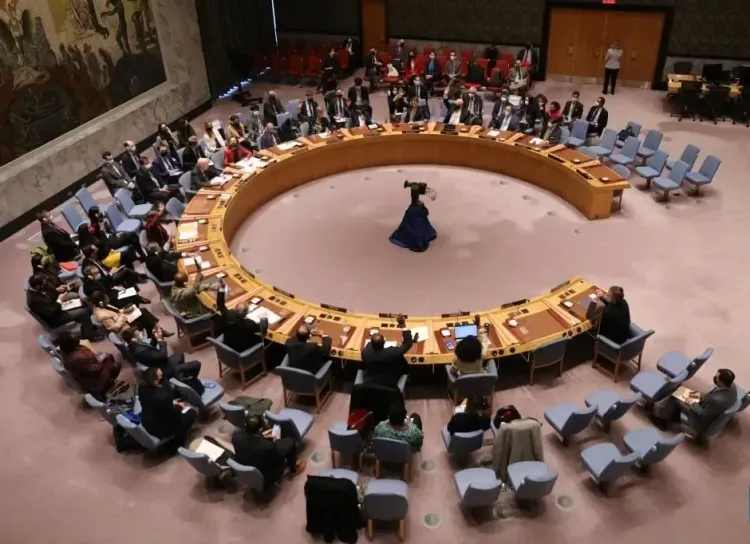
The Security Council currently has 15 members. China, France, Russia, Britain, and the United States hold permanent seats and veto power; the remaining 10 members are elected for two-year terms. Any Charter amendment requires approval by two-thirds of the General Assembly and ratification by two-thirds of all UN members — crucially including all five permanent members. That last condition gives each P5 nation an effective veto over reform itself, making the structural barrier almost as formidable as the political one. Notably, no P5 nation made a prominent call for reform at this session.
India's Stake and the G4 Dimension
For India, the debate carries particular weight. India is part of the Group of Four (G4) — alongside Brazil, Germany, and Japan — which supports expanding both permanent and non-permanent categories and backs each member's candidacy for a permanent seat. The African Union separately pursues two permanent seats under the Ezulwini Consensus. The convergence of G4 aspirations and the AU position gives the reform push a broader coalition than it has held in previous cycles, though translating that coalition into a Charter amendment remains a formidable challenge. With 17 years of stalled negotiations as the backdrop, the pressure is mounting — but the path forward remains as contested as ever.
Point of View
And the G4's alignment with the Ezulwini Consensus gives the coalition a breadth it previously lacked. The structural trap remains unchanged, however: reform requires P5 ratification, meaning the five nations most advantaged by the current arrangement must approve their own dilution. Until a credible mechanism emerges to either bypass or persuade the P5, even the most eloquent General Assembly speeches will end at the very doors Ruto described.
NationPress
26 Sept 2026
Frequently Asked Questions
What is the UN Security Council reform debate at UNGA 2026 about?
At the UN General Assembly session on 26 September 2026, a broad group of world leaders demanded that the Security Council be expanded and restructured, arguing its current five-permanent-member format — unchanged since 1945 — no longer represents today's geopolitical realities. African nations are pushing for at least two permanent seats with full veto rights, while India, Brazil, Germany, and Japan are also seeking permanent membership through the G4 grouping.
Why does Africa not have a permanent seat on the UN Security Council?
The Security Council's five permanent seats were allocated in 1945 to the victorious Allied powers — China, France, Russia, the United Kingdom, and the United States. Africa was not independently represented in that post-war settlement. Despite Africa comprising 54 UN member states and more than 1.6 billion people, any change requires a Charter amendment ratified by all five existing permanent members, each of whom holds an effective veto over reform.
What is the Ezulwini Consensus?
The Ezulwini Consensus is the African Union's common position on UN Security Council reform, which calls for at least two permanent seats for Africa — with all the prerogatives of existing permanent members, including the veto if it is retained — plus five additional non-permanent seats. It was adopted by the AU in 2005 and remains the continent's unified negotiating stance.
How does UN Security Council reform affect India?
India has long campaigned for a permanent seat on the Security Council and is a member of the Group of Four (G4), alongside Brazil, Germany, and Japan, which collectively support expanding both permanent and non-permanent membership and back each other's candidacies. A successful reform round would be a major diplomatic achievement for India, ending decades of advocacy at the UN.
Why has Security Council reform been so difficult to achieve?
Any amendment to the UN Charter requires approval by two-thirds of the General Assembly and ratification by two-thirds of all UN member states — including all five permanent members. This gives China, France, Russia, the United Kingdom, and the United States an individual veto over reform, creating a structural paradox in which the countries most advantaged by the status quo must consent to changing it. Negotiations have been ongoing for 17 years without a binding result.