Xi Jinping Arrives in US for Visit at America's 250th
Synopsis
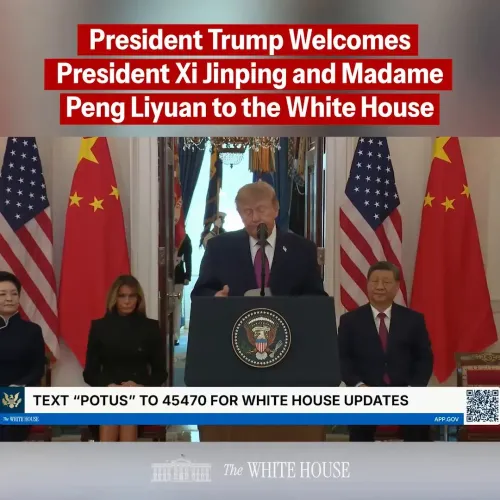
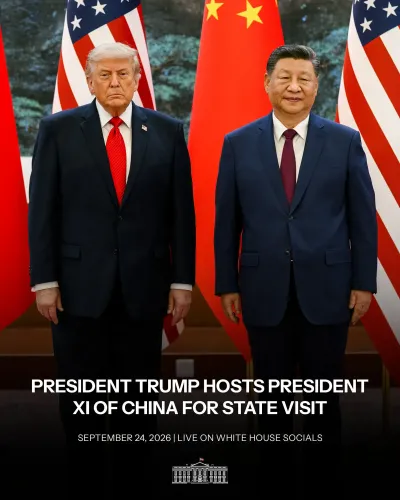
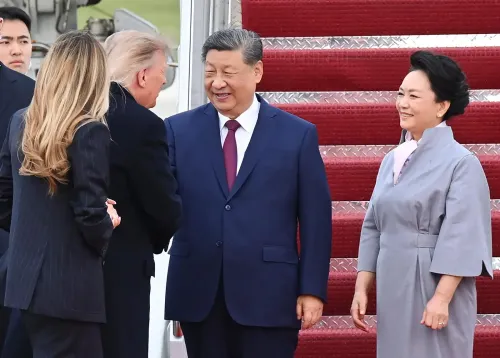
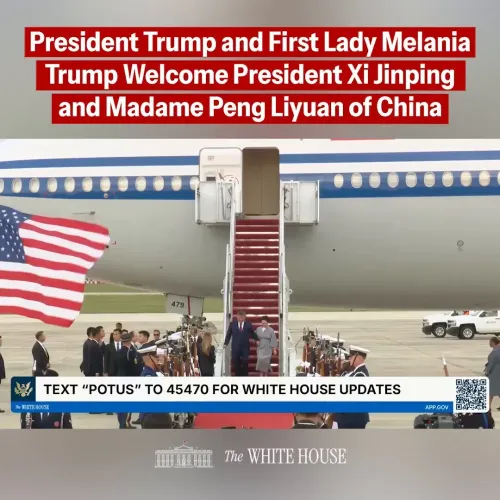
President Trump welcomed Chinese President Xi Jinping and Madame Peng Liyuan to the United States on September 24, 2026, framing the visit around America's 250th founding anniversary — a symbolically charged backdrop for the next major US–China leadership encounter.
Key Takeaways
President Xi Jinping and Madame Peng Liyuan arrived in the United States on September 24, 2026 .
President Trump directly linked the visit to America's 250th founding anniversary , calling it 'an important moment.' Xi has led China since 2012–2013 ; Trump and Xi previously held bilateral meetings in 2017, 2018, and 2019 .
The visit occurs amid ongoing US–China competition on trade, technology, and regional security.
No bilateral agreements or joint statements have been confirmed yet; the visit schedule remains the primary watch item.
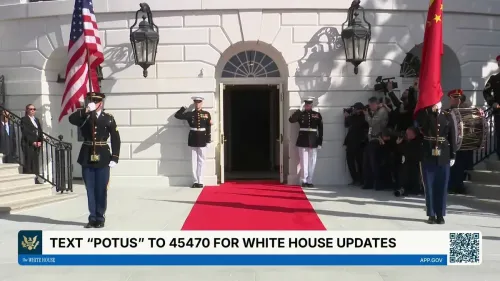
At a moment when the United States is marking 250 years since its founding, the world's two most consequential powers are face-to-face. President Donald J. Trump confirmed on Thursday, September 24, 2026 that Chinese President Xi Jinping and Madame Peng Liyuan have arrived on American soil — a visit that lands squarely in the middle of America's semiquincentennial commemorations.
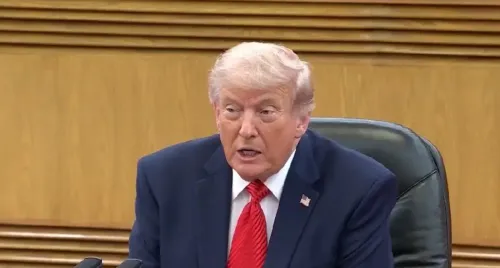
Trump framed the timing deliberately, stating: 'President Xi and Madame Peng arrive at an important moment for America — the 250th anniversary of our founding.' That framing is not incidental. Anchoring a high-stakes bilateral visit to a national milestone is a calculated gesture — part pageantry, part signal that Washington wants the world watching.
Two Powers, One Symbolic Milestone
The United States declared independence in 1776, making 2026 its semiquincentennial year — a once-in-a-generation national moment. Hosting the leader of China during this commemoration carries unmistakable symbolic weight: it projects American confidence while simultaneously extending a high-profile platform to Beijing. For Xi Jinping, who has led the People's Republic of China since 2012–2013, this marks one of the most prominent US arrivals of his tenure.
Peng Liyuan, Xi's spouse and a celebrated vocal performer in China, accompanies him as First Lady — a presence that adds a ceremonial dimension to what is otherwise a visit defined by strategic undercurrents.
A Relationship Built on High-Stakes Summits
Trump and Xi are not strangers to the summit table. During Trump's first term, the two leaders met at Mar-a-Lago in 2017 and held further engagements through 2018 and 2019 against the backdrop of an escalating trade war. Before that, Xi conducted a formal state visit to Washington in September 2015 under the Obama administration. Each encounter set off ripple effects across global markets, supply chains, and security alliances.
US–China leader summits have punctuated the bilateral calendar since diplomatic normalisation in 1979, but the combination of circumstances in 2026 — an anniversary year, unresolved trade and technology tensions, and renewed great-power competition — gives this one a sharper edge than most.
What Washington and Beijing Will Watch Closely
Whether the visit produces a joint statement, a bilateral agreement, or simply a managed reset in tone, the outcome will be parsed by governments from New Delhi to Brussels to Tokyo. Trade, technology access, and regional security — particularly around Taiwan and the South China Sea — remain the live wires running beneath the ceremonial surface of any Trump–Xi encounter.
For now, the two leaders have arrived at the same table, in a country celebrating its founding, at a moment the whole world is watching. What they say next will matter far beyond the anniversary banners.
Point of View
Making it harder for domestic critics to frame the encounter as weakness. For Xi, the optics of a formal arrival at this commemorative moment elevate China's standing as an indispensable interlocutor. Both leaders face domestic audiences that demand competitive posturing, yet the fact that a meeting is happening at all signals that neither side wants unmanaged escalation. India and other regional powers will be watching closely to see whether any Trump–Xi understanding reshapes the broader Indo-Pacific calculus.
NationPress
25 Sept 2026
Frequently Asked Questions
Why did Xi Jinping visit the United States in 2026?
President Xi Jinping arrived in the United States on September 24, 2026 for a bilateral visit with President Trump, timed to coincide with America's 250th founding anniversary . The White House described the moment as historically significant.
What is America's 250th anniversary?
The United States declared independence on July 4, 1776 , making 2026 its semiquincentennial — the 250th year since the nation's founding. It is one of the largest national commemorations in American history.
Have Trump and Xi met before?
Yes. Trump and Xi held bilateral meetings at Mar-a-Lago in April 2017 and again during 2018 and 2019 amid trade negotiations. Xi also conducted a state visit to Washington in September 2015 under the Obama administration.
Who is Madame Peng Liyuan?
Peng Liyuan is the spouse of President Xi Jinping and serves as First Lady of China . She has a distinguished background as a vocal performer and is a prominent cultural figure in China.
What issues are likely to be discussed at the Trump–Xi summit?
Key issues expected to feature include trade and tariffs, technology competition, Taiwan, and South China Sea security — the persistent flashpoints in US–China relations. No agreements or joint statements have been confirmed at this stage.