CM Himanta: 1 Crore Assam Residents Benefit from DBT Welfare Push
Synopsis
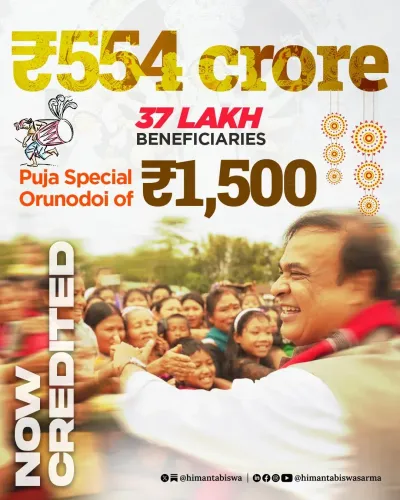
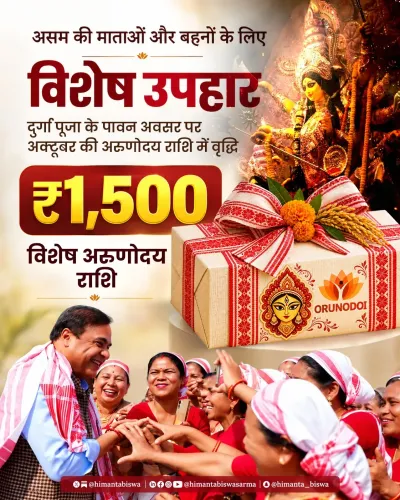
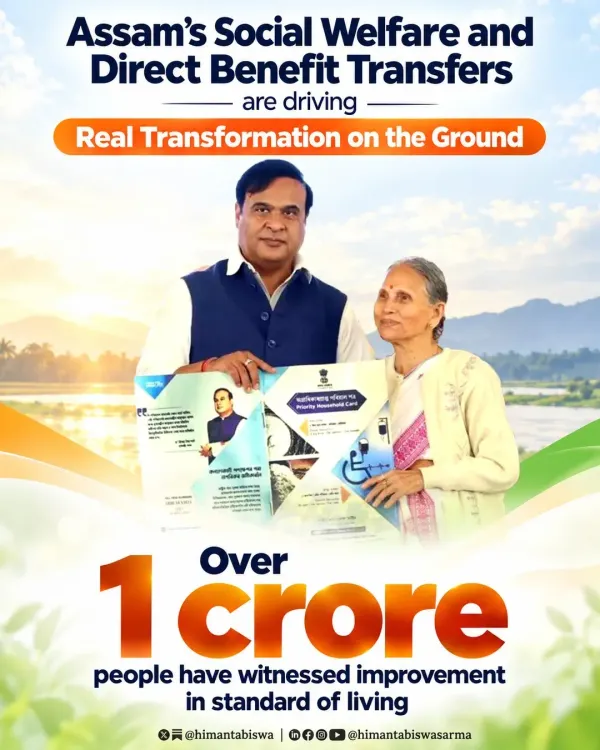
Assam Chief Minister Himanta Biswa Sarma claims over 1 crore residents have experienced a higher standard of living through a combination of the state Orunodoi cash-transfer scheme, PMJAY health insurance, and free foodgrains under the DBT architecture.
Key Takeaways
Assam CM Himanta Biswa Sarma says over 1 crore Assam residents have seen an improved standard of living through targeted welfare schemes.
The Orunodoi scheme provides Rs 1,250 per month in direct cash to women from low-income households since 2020-21 .
PMJAY (Ayushman Bharat) offers up to Rs 5 lakh per family in health insurance coverage, rolled out nationally in 2018 .
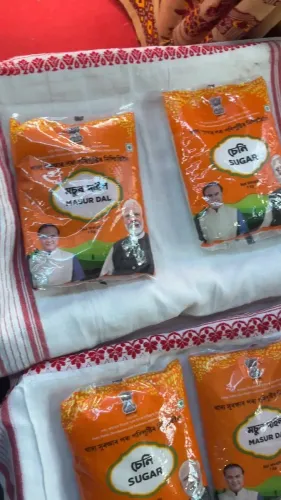
Free foodgrains under PM Garib Kalyan Anna Yojana , introduced in 2020 , form a third pillar of the welfare stack.
The DBT architecture , scaled since 2014 , underpins all three by wiring benefits directly into beneficiary bank accounts to cut leakages.
Sarma tagged @GoIStats in the post, anchoring the beneficiary claim in official government data.
More than 1 crore people in Assam have seen a measurable rise in their standard of living, Assam Chief Minister Himanta Biswa Sarma declared on Thursday, 22 October 2026 — pointing to a layered stack of direct-benefit and food-security schemes as the engine behind the shift.
From Orunodoi to PMJAY: the welfare stack at work
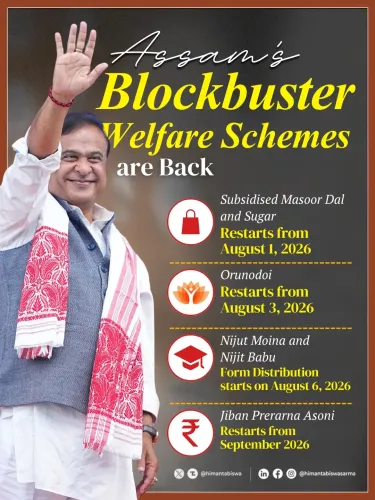
At the core of the claim sits a deliberate combination of state and central programmes. The Orunodoi scheme, launched by the Assam government in 2020-21, channels Rs 1,250 per month in direct cash assistance to women from economically weaker households — a transfer that lands straight in bank accounts, bypassing older, leakage-prone delivery chains. Layered on top is Ayushman Bharat PMJAY, the central health insurance scheme that has offered up to Rs 5 lakh per family for secondary and tertiary hospital care since its 2018 rollout. Free foodgrains under the PM Garib Kalyan Anna Yojana — first introduced in 2020 and extended repeatedly — round out the package.
Sarma tagged @GoIStats in the post, signalling the figures are drawn from official government data. 'From Orunodoi to free foodgrains to PMJAY and more,' he wrote, 'these schemes have enhanced #EaseOfLiving and are helping them live a better life.'
DBT architecture: plugging the leaks that earlier welfare missed
The connective tissue holding all three together is the Direct Benefit Transfer (DBT) architecture, scaled nationally from 2014 onwards to wire subsidies and welfare payments electronically into beneficiaries' bank accounts. The logic is straightforward: fewer intermediaries means fewer opportunities for funds to evaporate before they reach the intended household. Assam's adoption of this architecture — combining it with state-designed top-ups like Orunodoi — mirrors a broader national pattern of using targeted transfers to both deepen coverage and demonstrate fiscal accountability.
The Northeast has historically faced welfare delivery challenges tied to geography and connectivity. A scheme like Orunodoi, focused specifically on women in low-income families, also carries an embedded gender dimension: putting recurring cash in the hands of women rather than a generic household head has well-documented downstream effects on nutrition, education, and household decision-making.
What the 1-crore figure means for Assam's poverty picture
The 'over 1 crore' beneficiary claim — if borne out by forthcoming official surveys — would represent a substantial share of Assam's population of roughly 3.5 crore. That scale suggests these are not niche programmes but population-wide interventions touching nearly one in three residents. State budget allocations for Orunodoi and food schemes in 2025-26, alongside any fresh poverty headcount data, will be the next real test of whether improved benefit delivery is translating into durable income and health gains on the ground.
For Sarma, the post is also a political ledger entry — a public accounting of welfare delivery ahead of any electoral cycle, framed around the BJP-led government's record since 2016 in Assam and his own tenure as Chief Minister since May 2021.
The numbers cited are drawn from government data; independent verification and updated survey evidence will ultimately determine how deep that 'increased standard of living' runs — but the policy architecture to deliver it, brick by brick, is already in place.
Point of View
Particularly in states like Assam where a visible uplift story is central to the party's identity. Tagging @GoIStats anchors the claim in official data, pre-empting opposition challenges and framing the numbers as institutional rather than political. The real test, however, will come from independent poverty and welfare surveys for 2025-26, which will determine whether the DBT delivery efficiency is translating into durable improvements in household income, health outcomes, and nutrition.
NationPress
22 Oct 2026
Frequently Asked Questions
What is the Orunodoi scheme in Assam?
Orunodoi is an Assam state government scheme launched in 2020-21 that provides Rs 1,250 per month in direct cash assistance to women from economically weaker households, transferred electronically through the DBT mechanism.
How many people benefit from welfare schemes in Assam according to CM Himanta?
Assam Chief Minister Himanta Biswa Sarma stated on 22 October 2026 that over 1 crore people in Assam have witnessed an increased standard of living due to targeted DBT and food welfare schemes.
What is PMJAY and how does it help people in Assam?
PMJAY, or Ayushman Bharat Pradhan Mantri Jan Arogya Yojana, is a central government health insurance scheme launched in 2018 that provides up to Rs 5 lakh per family per year for secondary and tertiary hospital treatment at empanelled hospitals.
What is Direct Benefit Transfer (DBT) and why does it matter?
Direct Benefit Transfer is a government mechanism that wires subsidies and welfare payments electronically into beneficiaries' bank accounts, cutting out intermediaries to reduce leakages and ensure funds reach intended recipients. It has been scaled nationally since 2014.
What is PM Garib Kalyan Anna Yojana?
PM Garib Kalyan Anna Yojana is a central scheme introduced in 2020 that provides free foodgrains to beneficiaries covered under the National Food Security Act. It has been extended multiple times and forms part of India's food welfare architecture.