Assam CM Office: 15,000 Dancers Claim World Record in Karbi Folk Dance

Synopsis
More than 15,000 dancers performed Karbi folk dance in Assam, claiming a world record and spotlighting the Northeast's rich indigenous tribal heritage, the Chief Minister's Office announced on November 18, 2026.
Key Takeaways
Over 15,000 dancers participated in a mass Karbi folk dance performance in Assam .
The event was declared a world record by the Chief Minister's Office of Assam on 18 November 2026 .
The Karbi community is primarily based in Karbi Anglong , one of Assam's largest hill districts.
Formal adjudication details and the certifying record authority have not yet been publicly specified.
The event reflects Assam's broader strategy of promoting indigenous art forms and heritage tourism in Northeast India.
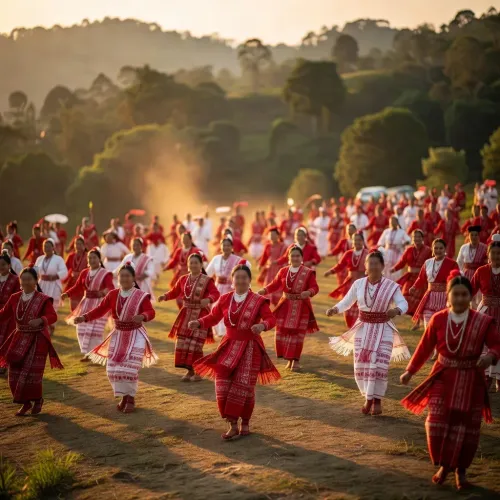
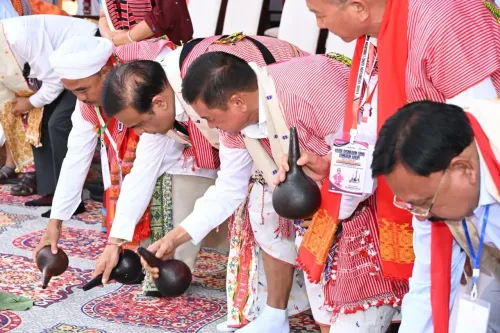
More than 15,000 dancers came together in Assam to perform the traditional Karbi folk dance, claiming a world record in what the Chief Minister's Office of Assam described as a landmark celebration of the state's indigenous tribal heritage.
Karbi Anglong's living tradition takes centre stage
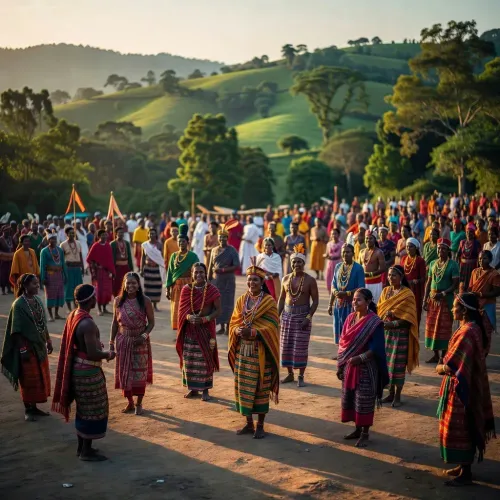
The Karbi people are among Assam's most prominent indigenous communities, concentrated in the Karbi Anglong hill district — one of the largest districts in northeast India. Their folk dances are not merely performative; they are deeply woven into seasonal festivals, agricultural cycles, and community ceremonies that have survived centuries of change. To field 15,000 performers simultaneously is to mobilise an entire cultural ecosystem.
Northeast India has periodically staged mass folk-performance events to spotlight tribal heritage and draw domestic tourism, but a 15,000-strong single-dance attempt is extraordinary in scale. Assam maintains ongoing state programmes supporting indigenous art forms across its districts, and events of this magnitude typically receive governmental coordination and logistical backing.
The record claim and what comes next
The post frames this as a confirmed world record, though formal adjudication details — including which record authority certified the performance — have not yet been independently detailed in official communications. Such mass-participation records are commonly adjudicated by established record bodies that require strict headcount verification, marshals, and documentation protocols. Those specifics are worth watching as they emerge.
What is already clear is the symbolic weight: a performance of this scale transforms a living folk tradition into a globally visible milestone, placing Karbi culture on a stage far beyond the hills of Karbi Anglong.
Culture as soft power in India's Northeast
India's Northeast has long used cultural spectacle as a tool of both community pride and regional diplomacy. Mass events that assert the richness of tribal heritage serve multiple purposes — they reinforce identity for communities navigating rapid modernisation, attract heritage tourism, and signal to the rest of India that the region is a living, creative force, not just a border frontier. Assam, as the region's largest economy, has increasingly positioned itself at the centre of that narrative.
Fifteen thousand Karbi dancers moving as one is a statement no policy brief could make as eloquently. The record — if certified — belongs not just to the state, but to a community that has been dancing these steps long before anyone was counting.
Point of View
The milestone sits in a provisional zone that invites scrutiny. If certified, it will likely become a template for similar exercises across other Northeastern states.
NationPress
18 Nov 2026
Frequently Asked Questions
What world record did Assam claim with Karbi folk dance?
Over 15,000 dancers performed the traditional Karbi folk dance simultaneously in Assam, which the Chief Minister's Office announced as a world record on 18 November 2026.
What is Karbi folk dance?
Karbi folk dance is a traditional performance art of the Karbi indigenous community of Assam, particularly from the Karbi Anglong hill district. It is performed during festivals, harvests, and community ceremonies.
Where is Karbi Anglong in Assam?
Karbi Anglong is a large hill district in central Assam and the traditional homeland of the Karbi ethnic community, one of the state's most prominent indigenous groups.
Has the Karbi dance world record been officially certified?
The Chief Minister's Office of Assam announced the world record claim, but detailed adjudication information — including the certifying record authority — has not yet been publicly confirmed.
Why does Assam organise large tribal folk events?
Assam uses large-scale folk and cultural events to promote indigenous heritage, boost domestic tourism, and raise the national and global profile of the Northeast's tribal communities.