Operation Navjeevan: 16 Maoists, 6 commanders surrender in Jharkhand
Synopsis
Sixteen Maoists — including the bodyguard of a ₹1 crore bounty commander — laid down arms in Ranchi under Operation Navjeevan, surrendering 11 firearms and 1,562 live cartridges. With 425 criminal cases between them, this is one of Jharkhand's most significant mass surrenders in recent memory and a concrete marker in India's push to eliminate Left Wing Extremism by 2026.
Key Takeaways
16 Maoists , including 6 senior commanders , surrendered at Jharkhand police headquarters in Ranchi on 28 July under Operation Navjeevan .
The six commanders carried a combined bounty of ₹39 lakh ; Santosh alias Basudev Da alone was worth ₹15 lakh and named in 128 criminal cases .
The group collectively faced 425 criminal cases covering murder, attacks on security forces, extortion, and explosions.
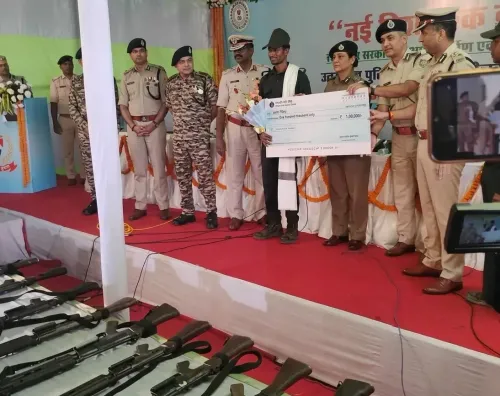
Surrendered weapons included 11 modern firearms — among them two AK-47s and six INSAS rifles — along with 38 magazines and 1,562 live cartridges .
Devan Murmu was reportedly the chief bodyguard of top Maoist leader Misir Besra , who carries a ₹1 crore bounty and remains at large.
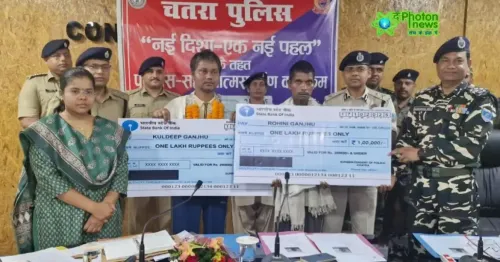
All surrendered cadres will receive benefits under Jharkhand's rehabilitation programme, including financial aid, skill training, and employment support.
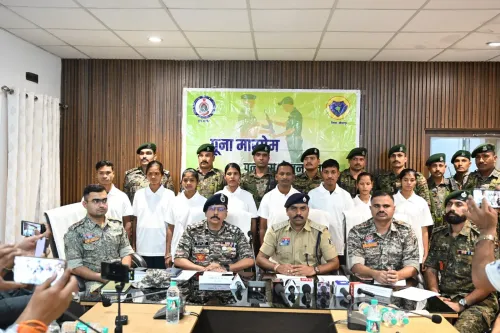
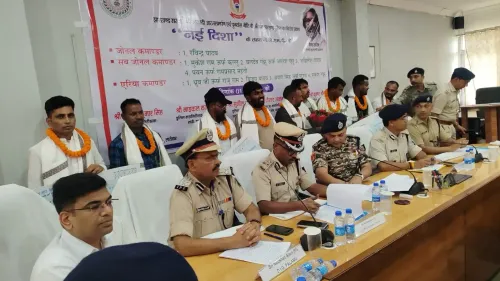
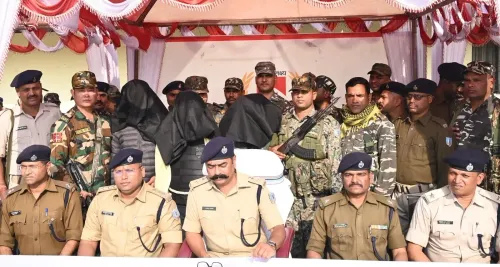
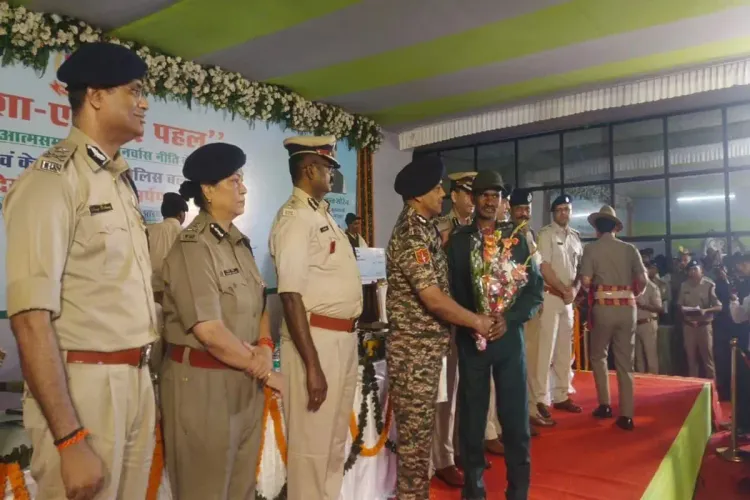
Sixteen Maoists, including six senior commanders carrying a combined bounty of ₹39 lakh, surrendered before top police and Central Reserve Police Force (CRPF) officials at the Jharkhand state police headquarters in Ranchi on Tuesday, 28 July, in what authorities described as a major breakthrough under Operation Navjeevan. The surrendering cadres collectively faced 425 criminal cases across the state and handed over a cache of sophisticated weapons and live ammunition.
Key Surrenders and Bounties
The most significant surrender was that of Regional Committee Member Santosh alias Basudev Da alias Gandhi alias Dilip alias Sanjay Mahato, who carried a reward of ₹15 lakh and is named in 128 criminal cases alone. Zonal Committee Member Chandan Lohra, against whom 78 cases are pending, surrendered with a bounty of ₹10 lakh on his head.
Sub-Zonal Committee Members Anil Turi alias Ujjwal and Sukhlal Biranjia alias Akela each carried rewards of ₹5 lakh, while Area Committee Members Sudesh Honhaga alias Sonaram and Reciv Soy both carried bounties of ₹2 lakh each. The remaining ten cadres who surrendered were Santosh Manjhi alias Jagbandhu, Jaykant Munda alias Goonga alias Bangali, Rajnath Hansda alias Guna Hansda, Etwari Manjhi alias Sonot alias Sant, Devan Murmu alias Shanicharwa, Sumitra Surin, Champa Manjhiyain alias Gudiya, Salmi Munda alias Parul, Munni Surin alias Murin Surin, and Sita Munda.
Notably, Devan Murmu was reportedly the chief bodyguard of top Maoist leader Misir Besra, who carries a reward of ₹1 crore and remains at large.
Weapons and Ammunition Seized
During the surrender ceremony, the Maoists deposited 11 modern firearms, comprising six INSAS rifles, two AK-47 rifles, one HK-33 rifle, one US Carbine, and one M-16 rifle. They also handed over 38 magazines and 1,562 live cartridges — an arsenal that underlines the operational capacity these cadres held before laying down arms.
Senior Officials at the Ceremony
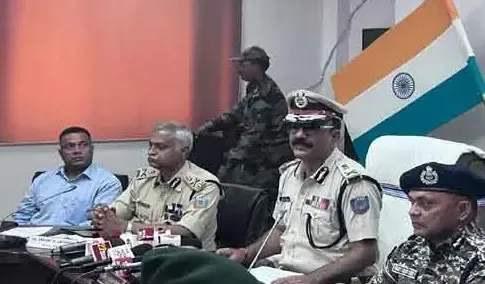
The surrender was witnessed by Jharkhand Director General of Police (DGP) Tadasha Mishra, ADG Manoj Kaushik, IG Saket Singh, IG Pankaj Kamboj, IG Operations Narendra Singh, and IG Anoop Birthare, among other senior officers. The high-level attendance signals the importance the state administration places on the development.
Rehabilitation and What Comes Next
Jharkhand Police attributed the mass surrender to sustained anti-Naxal pressure, coordinated security operations, and the state government's rehabilitation policy, which officials say has increasingly encouraged extremists to abandon violence. According to police, all 16 surrendered Maoists will be eligible for benefits under the state rehabilitation programme, including financial assistance, skill-development training, employment support, and other reintegration facilities. This comes amid a broader national push to eliminate Left Wing Extremism, with the Centre having set a target to make India Naxal-free by 2026. The surrender of a commander as senior as Santosh alias Basudev Da — linked to 128 cases — marks one of the more significant individual capitulations in Jharkhand in recent years.
Point of View
But its true measure lies in what follows. Mass surrenders in Jharkhand have occurred before — the durability of the rehabilitation pipeline, not the ceremony, determines whether these cadres stay out of the forest. The presence of Devan Murmu, reportedly Misir Besra's chief bodyguard, is the headline within the headline: it suggests security forces are now penetrating the inner circles of top Maoist leadership, even if Besra himself remains at large with a ₹1 crore bounty. The 425 pending criminal cases also raise a due-process question that mainstream coverage tends to gloss over — how the justice system handles surrendered cadres with serious charges will shape whether the rehabilitation model holds credibility with future fence-sitters.
NationPress
26 Oct 2026
Frequently Asked Questions
What is Operation Navjeevan in Jharkhand?
Operation Navjeevan is an ongoing anti-Naxal initiative by Jharkhand Police and the CRPF aimed at dismantling Maoist networks through sustained security pressure and a parallel rehabilitation programme that encourages cadres to surrender. The operation has resulted in multiple surrenders, with the 28 July 2025 event being one of its most significant outcomes to date.
Who are the most wanted Maoists who surrendered on 28 July?
The most prominent surrender was Regional Committee Member Santosh alias Basudev Da, who carried a ₹15 lakh bounty and is named in 128 criminal cases. Zonal Committee Member Chandan Lohra (₹10 lakh bounty, 78 cases) and Sub-Zonal Members Anil Turi and Sukhlal Biranjia (₹5 lakh each) were also among the six senior commanders who gave themselves up.
What weapons were seized during the Jharkhand Maoist surrender?
The 16 surrendering Maoists deposited 11 modern firearms — including six INSAS rifles, two AK-47 rifles, one HK-33 rifle, one US Carbine, and one M-16 rifle — along with 38 magazines and 1,562 live cartridges. The seizure reflects the significant operational capacity these cadres held before surrendering.
What rehabilitation benefits will the surrendered Maoists receive?
According to Jharkhand Police, all 16 surrendered cadres will be entitled to benefits under the state government's rehabilitation programme, which includes financial assistance, skill-development training, employment support, and other facilities designed to help them reintegrate into mainstream society.
Who is Misir Besra and why is he significant?
Misir Besra is a top Maoist leader carrying a bounty of ₹1 crore who remains at large. His significance in the current surrender is that Devan Murmu, one of the 16 who gave themselves up, was reportedly his chief bodyguard — indicating that security forces are now reaching into the immediate inner circle of senior Maoist leadership in Jharkhand.