Two Bangladeshi women held at NJP for illegally entering India, headed to Kerala

Synopsis
Two Bangladeshi women with no valid documents were intercepted on a Bengaluru-bound train at New Jalpaiguri station after allegedly crossing into India through Meghalaya and transiting via Assam. Investigators are now probing whether an organised cross-border smuggling network was involved and why their destination was Kerala.
Key Takeaways
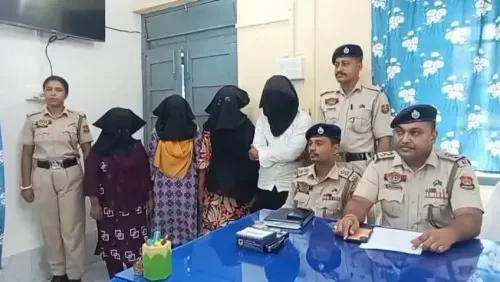
Rabia Akhtar and Shiuli Akhtar , both from Narayanganj district, Bangladesh , were arrested on 27 October 2025 at New Jalpaiguri (NJP) station in Siliguri.
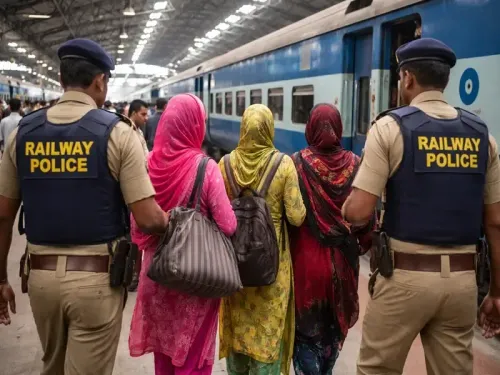
The women were caught in the general compartment of a Bengaluru-bound long-distance train during a tip-off-based joint operation by Siliguri GRP and NJP GRP .
They allegedly entered India illegally through the Indo-Bangladesh border in Meghalaya and boarded the train from Kamakhya station, Assam .
Neither woman carried valid documents for entry into or stay in India.
Police are investigating potential links to a cross-border smuggling ring and whether others entered India alongside them.
Two Bangladeshi women were arrested on Tuesday, 27 October 2025, after being caught travelling on a Bengaluru-bound long-distance train at New Jalpaiguri (NJP) station in north Bengal's Siliguri, following their alleged illegal entry into India from Bangladesh. The arrests were made during a joint operation by the Special Operation Group of Siliguri GRP and NJP GRP (Government Railway Police) acting on a tip-off.
Who Was Arrested
The two women have been identified as Rabia Akhtar and Shiuli Akhtar, both residents of Narayanganj district in Bangladesh. When brought to the Siliguri GRP police station for questioning, neither could produce valid documents authorising their stay or entry into India, following which they were formally placed under arrest.
How They Entered India
Initial interrogation revealed that the two women allegedly crossed into India through the Indo-Bangladesh border in Meghalaya before making their way to Assam. From there, they reportedly boarded a train from Kamakhya station in Assam, apparently destined for Kerala. The circuitous route — entering through Meghalaya, transiting through Assam, and boarding a southbound train at NJP — suggests a degree of planning, according to officials.
What Investigators Are Probing
Authorities have not yet established the motive behind the women's travel to Kerala. Deputy Superintendent of Railway Police, Anupam Majumdar, confirmed the arrests and said an investigation has been initiated. “No valid documents related to their stay or entry into India were found with them. An investigation has been started along with interrogation to find out the purpose for which they entered India and were going to Kerala,” Majumdar said.
Investigators are examining whether a larger smuggling network or any international link facilitated their entry. Police sources noted they are also probing whether other individuals crossed the border with or alongside the two women, and who may have helped them gain entry into Indian territory.
Broader Context
The arrests come amid heightened scrutiny of illegal crossings along India's porous borders with Bangladesh, particularly through the northeastern states of Assam and Meghalaya. This is not an isolated incident — security forces have periodically intercepted undocumented migrants attempting to travel deep into the country via long-distance rail networks. Notably, the use of a general train compartment, rather than local transport, suggests the individuals may have been attempting to blend in over a longer journey before reaching their destination.
As the investigation continues, police are expected to share findings with relevant central agencies if an organised cross-border network is confirmed.
Point of View
Assam transit, NJP rail boarding — points to a degree of logistical coordination that warrants serious scrutiny beyond a routine illegal immigration case. India's northeastern border remains chronically under-surveilled, and the frequency of such interceptions underscores systemic gaps rather than isolated lapses. The real question investigators must answer is not just who these two women are, but whose network moved them, and how many others slipped through undetected on the same corridor. The Kerala destination, far from the point of entry, adds a layer of operational planning that elevates this beyond a simple undocumented crossing.
NationPress
27 Oct 2026
Frequently Asked Questions
Who were the two Bangladeshi women arrested at NJP station?
The two women are Rabia Akhtar and Shiuli Akhtar, both residents of Narayanganj district in Bangladesh. They were arrested on 27 October 2025 at New Jalpaiguri station in Siliguri, West Bengal, after being found without valid documents on a Bengaluru-bound train.
How did the two women enter India illegally?
According to initial interrogation, they crossed into India through the Indo-Bangladesh border in Meghalaya, then travelled to Assam, from where they boarded a long-distance train at Kamakhya station. The exact point of border crossing and the facilitators involved are still under investigation.
Why were the women travelling to Kerala?
The motive behind their intended destination of Kerala has not yet been established. Investigators are probing whether the journey was linked to a smuggling network or other international connections, and the case remains under active investigation.
Which police units conducted the operation?
The Special Operation Group of the Siliguri GRP (Government Railway Police) and the NJP GRP carried out a joint search operation in the general compartment of the train at New Jalpaiguri station, acting on prior information. Deputy Superintendent of Railway Police Anupam Majumdar confirmed the arrests.
What are the next steps in the investigation?
Police are questioning the two women to determine whether others crossed the border with them, who helped facilitate their entry, and whether an organised cross-border smuggling ring is involved. Central agencies may be brought in if a larger network is confirmed.