Kishan Reddy: ₹232.7 Cr Science Centre for Hyderabad

Synopsis
The Government of India will develop a ₹232.7 crore Science Experience Centre at CSIR-IICT in Hyderabad, featuring immersive exhibits, a 3D dome theatre, robotics hub, and a walk-through aquarium — announced by Union Minister G. Kishan Reddy on November 12, 2026.
Key Takeaways
The Government of India is developing a Science Experience Centre at CSIR-IICT, Hyderabad , with a budget of ₹232.7 crore .
The facility will include a 3D Digital Dome Theatre , Robotics and Innovation Hub , Walk-through Aquarium , Motion Simulator , and Interactive and Immersive Exhibits .
Kishan Reddy announced the project on November 12, 2026 , framing it as a step toward making Hyderabad a hub for scientific innovation.
CSIR-IICT is one of India's premier research laboratories, situated within Hyderabad's established cluster of scientific institutions.
India's tradition of publicly funded science popularisation infrastructure dates to the founding of the National Council of Science Museums in 1978 .
Project sanction orders, tendering timelines, and a construction schedule are yet to be formally released by the nodal ministry.
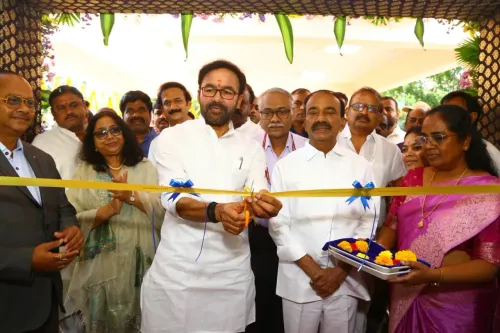
A ₹232.7 crore Science Experience Centre is coming to Hyderabad — and the Government of India is building it right inside the campus of one of the city's most storied research institutions. Union Coal and Mines Minister G. Kishan Reddy announced on Thursday, November 12, 2026, that the centre will come up at the CSIR-Indian Institute of Chemical Technology (CSIR-IICT), signalling the Centre's intent to transform Hyderabad into a frontline hub for scientific learning and public engagement.
What the Centre will actually look like
This is not a conventional museum with dusty display cases. The planned Science Experience Centre is designed around immersion and interaction — a deliberate shift from passive viewing to hands-on discovery. According to the minister's post, the facility will house Interactive and Immersive Exhibits, an Astronomy and Space Science zone, a Robotics and Innovation Hub, and a 3D Digital Dome Theatre. A Walk-through Aquarium, a Motion Simulator, and dedicated Student Activity Zones round out the blueprint.
Taken together, the feature list reads less like a government facility and more like a world-class science discovery centre — the kind that anchors entire city tourism and education ecosystems. The 3D dome and motion simulator, in particular, push the project firmly into experiential territory that few Indian science centres currently occupy.
CSIR-IICT: Why this campus, why now
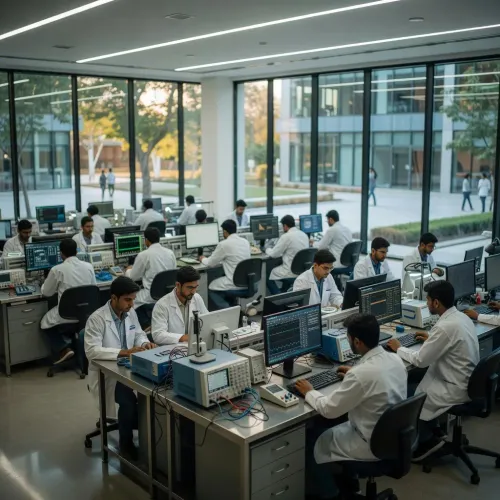
CSIR-IICT is not an accidental choice of venue. Founded as one of India's premier chemical technology laboratories, it sits within Hyderabad's dense cluster of CSIR and research institutions that have made the city a recognised knowledge corridor. Locating a public-facing science centre here creates a rare bridge between cutting-edge research happening inside the lab and the students, families, and curious minds on the outside.
India's tradition of building science popularisation infrastructure dates to 1978, when the National Council of Science Museums was established to seed interactive science centres across the country. The ₹232.7 crore allocation for Hyderabad represents a significant escalation of that decades-old mission — both in scale and in the sophistication of the experiences being funded.
Hyderabad's growing claim as India's science capital
Kishan Reddy, who also serves as BJP's Telangana state president, framed the project explicitly as making Hyderabad 'a hub for scientific innovation and learning.' That framing carries political weight: Telangana remains a key battleground state, and central government infrastructure spending in the city is as much a governance signal as it is a development milestone.
But strip away the politics, and the case for Hyderabad as a science hub stands on its own. The city already hosts a concentration of CSIR laboratories, defence research establishments, pharmaceutical R&D campuses, and technology companies. A large-scale, centrally funded science experience centre adds a crucial public-engagement layer to that ecosystem — one that could inspire the next generation of researchers while making science accessible far beyond elite university campuses.
The project now moves toward sanction orders, tendering, and a construction timeline — the unglamorous machinery that will ultimately determine whether this ambitious blueprint becomes Hyderabad's most visited landmark.
Point of View
Announcing a ₹232.7 crore centrally funded project in Telangana — where it has been working hard to expand its footprint — doubles as both governance delivery and political signalling. The choice of CSIR-IICT as the venue is strategically sound: it grounds a public-facing attraction in genuine research credibility. The real test, however, will be execution speed and whether the experiential ambition of the blueprint survives the tendering and construction process intact.
NationPress
12 Nov 2026
Frequently Asked Questions
What is the Science Experience Centre being built in Hyderabad?
It is a large-scale, centrally funded science facility planned at the CSIR-IICT campus in Hyderabad, with a budget of ₹232.7 crore. It will feature interactive exhibits, a 3D Digital Dome Theatre, a Robotics and Innovation Hub, a Walk-through Aquarium, a Motion Simulator, and Student Activity Zones.
Who announced the Hyderabad Science Experience Centre?
Union Coal and Mines Minister and BJP Telangana state president G. Kishan Reddy announced the project on November 12, 2026, via a post on X.
Where exactly in Hyderabad will the science centre be located?
The centre will be developed at the campus of CSIR-IICT (Council of Scientific and Industrial Research - Indian Institute of Chemical Technology), one of India's premier research laboratories situated in Hyderabad.
What is the budget for the Hyderabad Science Experience Centre?
The Government of India has allocated ₹232.7 crore for the development of the Science Experience Centre at CSIR-IICT, Hyderabad.
When will the Hyderabad Science Experience Centre be completed?
A specific completion timeline has not yet been announced. The project is expected to move through sanction, tendering, and construction phases; official timelines are awaited from the nodal ministry and CSIR.