Kishan Reddy Flags New Science Centre for Hyderabad Youth
Synopsis
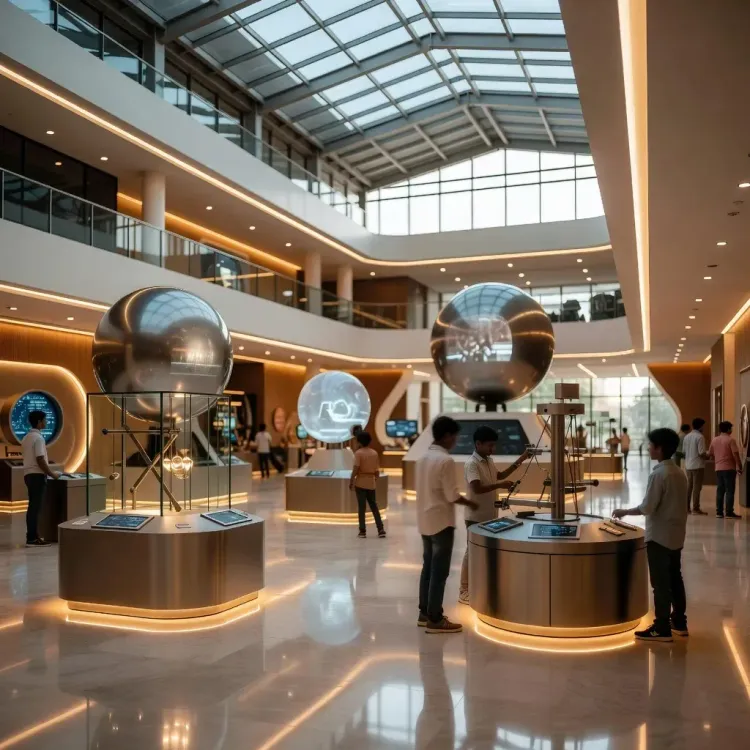
Union Minister G. Kishan Reddy on 12 November 2026 spotlighted a new world-class Science Experience Centre in Hyderabad, calling it a realisation of PM Modi's vision to blend scientific temperament with cultural heritage and drive youth innovation under the Viksit Bharat framework.
Key Takeaways
Kishan Reddy posted about a new Science Experience Centre in Hyderabad on 12 November 2026 .
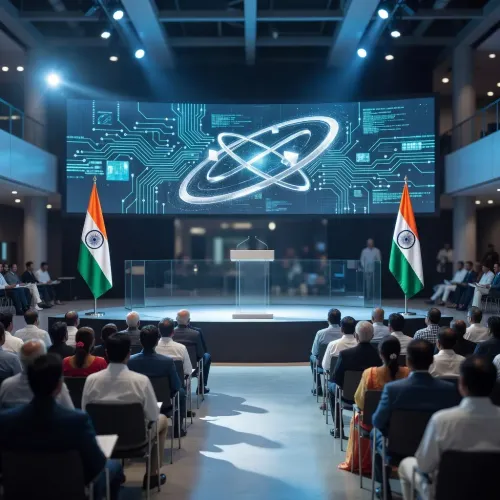
The facility is framed under PM Modi's Viksit Bharat vision, articulated in his 2022 Independence Day address with a target of a developed India by 2047 .
Both the Department of Science and Technology (DST) and the Ministry of Culture are tagged, reflecting a dual mandate of innovation and cultural heritage.
The centre targets youth of Telangana , offering hands-on, experiential science learning — a model the central government is replicating across state capitals.
Hyderabad is already a major hub for technology and research institutions, making it a strategic location for such an initiative.
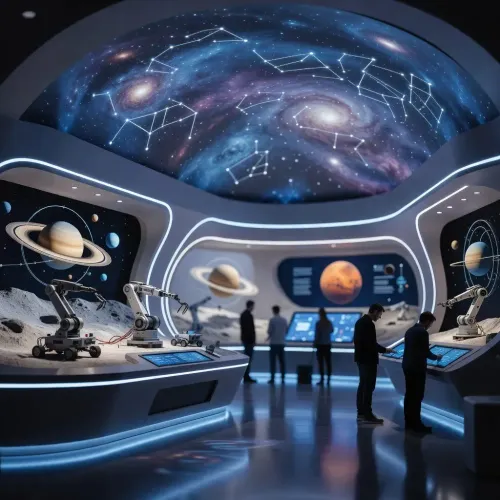
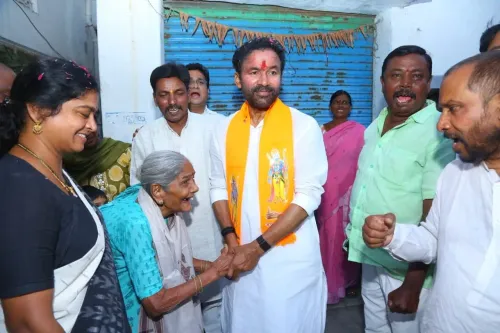
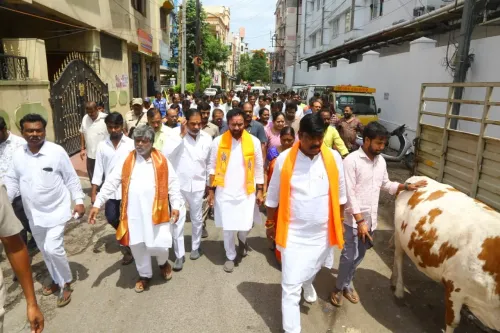
A world-class Science Experience Centre is set to reshape how young people in Telangana engage with learning and discovery — and Union Coal and Mines Minister G. Kishan Reddy wants the country to take note. On Thursday, 12 November 2026, the minister posted on X about the facility, framing it as a direct expression of Prime Minister Narendra Modi's vision to nurture scientific temperament while keeping India's cultural heritage at the centre of that journey.
Reddy described the centre as a facility that 'will inspire young minds, spark innovation, provide hands-on learning experience for the youth of Telangana and contribute to India's journey of development and innovation.' The post tagged both the Department of Science and Technology (DST) and the Ministry of Culture — a pairing that is deliberate and telling.
Where Science Policy Meets Cultural Roots in Hyderabad
The joint DST–Ministry of Culture footprint visible in Reddy's post reflects a wider central government pattern: building or upgrading science centres in state capitals that do not merely teach physics and biology, but weave in India's civilisational legacy. Hyderabad, already a dense node of technology campuses, research institutions, and pharmaceutical industry, now gets a facility designed to pull that intellectual energy toward younger, pre-professional audiences.
The model answers a gap that educators have long flagged — experiential, hands-on science infrastructure has historically been concentrated in a handful of metropolitan centres. Rolling it out city by city, with central funding through DST and cultural texture supplied by the Ministry of Culture, is how the government is trying to change that arithmetic.
The 'Viksit Bharat' Thread Running Through the Announcement
Prime Minister Modi first articulated the Viksit Bharat — Developed India — framework in his 2022 Independence Day address, setting a target horizon of 2047, the centenary of independence. Science education infrastructure, particularly at the state level, is one of the tangible planks underneath that larger ambition. Reddy, who also serves as BJP Telangana state president, is effectively signalling that the state is a beneficiary of that national arc — a point that carries both administrative and political weight ahead of continued electoral competition in the region.
What makes the Hyderabad centre notable is not just its scale but its dual mandate: innovation on one axis, cultural identity on the other. That combination — a science hall that does not feel disconnected from who Indians are — is precisely the synthesis Modi has repeatedly called for in education and research policy discussions.
Youth as the Intended Audience, States as the Delivery Mechanism
Reddy's emphasis on 'the youth of Telangana' is consistent with how both DST and the Ministry of Culture have framed outreach programmes: students, young innovators, and first-generation science learners in Tier-2 and state-capital contexts. A hands-on science centre, when done well, functions as a pipeline — turning curiosity into career interest, and career interest into the kind of skilled human capital that feeds back into India's broader technology and research ecosystem.
Comparable facilities have been announced or operationalised across other states, suggesting a phased national rollout rather than a one-off prestige project. Whether Hyderabad's centre becomes a template for speed and quality of execution will be watched closely in upcoming DST and science ministry programme reviews.
India's innovation ambitions now have a new address in Hyderabad — and whether the centre lives up to its billing will be measured not in ribbon-cutting photographs, but in the number of young Telangana students who walk out of it asking better questions than when they walked in.
Point of View
Not merely utilitarian. For Reddy, who wears both his Union Cabinet hat and his BJP Telangana state president role simultaneously, the announcement lets him claim federal delivery in a state the BJP is working hard to consolidate. The broader pattern of science centre rollouts across state capitals suggests this is less a one-off gesture and more a phased infrastructure play that will gain electoral and policy visibility as the 2047 deadline anchors more and more government announcements.
NationPress
12 Nov 2026
Frequently Asked Questions
What is the Science Experience Centre in Hyderabad?
It is a world-class facility in Hyderabad designed to offer hands-on science learning and foster innovation among the youth of Telangana, developed in alignment with the central government's Viksit Bharat vision.
Who inaugurated or announced the Hyderabad Science Experience Centre?
Union Coal and Mines Minister and BJP Telangana state president G. Kishan Reddy highlighted the facility on X on 12 November 2026, linking it to PM Modi's vision and tagging DST and the Ministry of Culture.
What is the Viksit Bharat vision and how does this science centre relate to it?
Viksit Bharat — Developed India — is PM Modi's framework for transforming India into a fully developed nation by 2047, the centenary of independence. Science and innovation infrastructure like this centre is a key pillar of that goal.
Which central ministries are involved in the Hyderabad Science Experience Centre?
The Department of Science and Technology (DST) and the Ministry of Culture are both involved, reflecting the centre's dual focus on scientific innovation and India's cultural heritage.
Will similar science centres open in other Indian states?
The central government has followed a broader pattern of establishing science centres and museums in multiple state capitals through DST and the Ministry of Culture, suggesting comparable facilities are planned or underway in other states.