Rajasthan Sarpanch polls: YouTuber with 2M followers gets just 33 votes
Synopsis
A YouTuber with over 2 million combined social media followers reportedly got just 33 votes in a Rajasthan Sarpanch election — in a panchayat of about 1,600 voters. Omprakash Bishnoi's result from Indon Ki Dhani II is a striking case study in the gap between digital celebrity and grassroots political capital.
Key Takeaways
Omprakash Bishnoi , a YouTuber with over 2 million combined social media followers, reportedly secured just 33 votes in the Sarpanch election in Osian tehsil, Rajasthan .
The contest was held in Indon Ki Dhani II Gram Panchayat , which has approximately 1,600 eligible voters .
Bishnoi has over 1.4 million Instagram followers , 2,32,000 Facebook followers , and 5,50,000 YouTube subscribers .
The election was part of the first phase of Rajasthan's Panchayati Raj elections .
The result has sparked discussion about the disconnect between online popularity and grassroots electoral support in India.
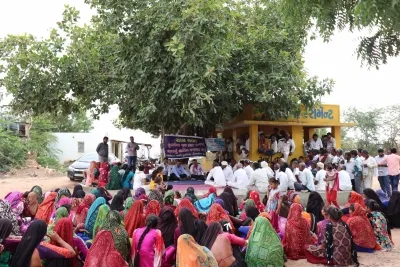
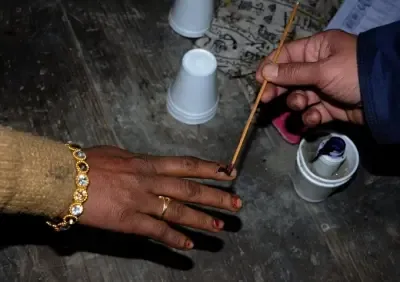
A Rajasthan-based YouTuber with over 2 million combined social media followers reportedly received just 33 votes in the Sarpanch election from Indon Ki Dhani II Gram Panchayat in Osian tehsil, underlining a stark gap between digital popularity and grassroots electoral support. The result, from the first phase of Rajasthan's Panchayati Raj elections, has sparked widespread discussion about the real-world limits of online influence.
The Candidate and His Digital Reach
Omprakash Bishnoi, known for his presence across multiple social media platforms, entered the contest hoping to convert his online audience into votes. According to available figures, Bishnoi has over 1.4 million followers on Instagram, approximately 2,32,000 followers on Facebook, and around 5,50,000 subscribers on YouTube — putting his total combined following at over 2 million across the three platforms. It should be noted that the combined figure may include individuals who follow him on more than one platform.
The Election Result
The panchayat in question has approximately 1,600 eligible voters. Despite his substantial digital footprint, Bishnoi reportedly secured just 33 votes — a tally that fell far short of what his online reach might have led observers to anticipate. Following the declaration of results, Bishnoi reportedly shared an emotional post on social media, drawing further attention to his defeat. The specific contents of that post have not been fully established.
Why Digital Following Does Not Always Convert to Votes
Analysts and locals point to the fundamental difference between digital audiences and local electorates. Social media platforms allow creators to build followings across geographical boundaries, often attracting viewers from across the country or even internationally. Panchayat elections, by contrast, are decided exclusively by eligible voters within a defined local area. Voters in village-level contests are typically guided by local concerns, personal relationships, development priorities, caste equations, and community-level political dynamics — factors that a national or global online audience cannot influence.
Notably, a large subscriber count reflects content consumption, not civic trust or familiarity with a candidate's ground-level work. This distinction is particularly sharp at the panchayat level, where face-to-face engagement with residents often carries more weight than any online platform.
A Broader Trend Under Scrutiny
Bishnoi's reported defeat has become a talking point precisely because of the contrast it highlights. This is not the first time in India that social media personalities have tested the waters of electoral politics, with mixed outcomes. The result from Indon Ki Dhani II adds to a growing body of evidence suggesting that digital celebrity does not automatically translate into political capital — especially at the hyperlocal level of gram panchayats, where voters prioritise proximity and accountability over reach.
As Rajasthan's Panchayati Raj election process continues, the case of Omprakash Bishnoi is likely to remain a reference point in conversations about the evolving relationship between social media influence and democratic participation.
Point of View
Not an anomaly — it confirms what political scientists have long argued about Indian local democracy: at the panchayat level, trust is transactional and hyper-local, built through years of presence, not algorithmic reach. A subscriber who watches a creator's content from Bengaluru or Delhi cannot vote in Osian. The more interesting question is why candidates with large online audiences continue to overestimate the electoral convertibility of digital followings. The answer may lie in how social media metrics are routinely conflated with public approval — a confusion that platforms, advertisers, and now apparently candidates have all been guilty of.
NationPress
26 Oct 2026
Frequently Asked Questions
Who is Omprakash Bishnoi and what happened in the Sarpanch election?
Omprakash Bishnoi is a YouTuber with over 2 million combined followers across Instagram, Facebook, and YouTube. He reportedly received just 33 votes in the Sarpanch election from Indon Ki Dhani II Gram Panchayat in Rajasthan's Osian tehsil during the first phase of the state's Panchayati Raj elections.
How many voters does Indon Ki Dhani II Gram Panchayat have?
The panchayat has approximately 1,600 eligible voters. Bishnoi's reported tally of 33 votes represents a very small fraction of the total electorate, despite his large social media following.
Why does a large social media following not guarantee votes in panchayat elections?
Panchayat elections are decided by eligible voters within a specific local area, not by a creator's national or international audience. Voters in village-level contests are typically influenced by local concerns, personal relationships, development priorities, and community-level trust — factors that social media reach does not capture.
What did Omprakash Bishnoi do after losing the election?
Bishnoi reportedly shared an emotional post on social media following his defeat, drawing further attention to the result. The specific contents of the post have not been fully established.
Is this the first time an Indian social media personality has lost a local election?
Social media personalities have contested elections in India before with mixed results. Bishnoi's case is notable because of the scale of the contrast — over 2 million followers against just 33 votes — and has become a widely cited example of the limits of digital influence in grassroots democracy.