CM Fadnavis Approves 15 New Protected Areas, Expands Tansa Sanctuary
Synopsis
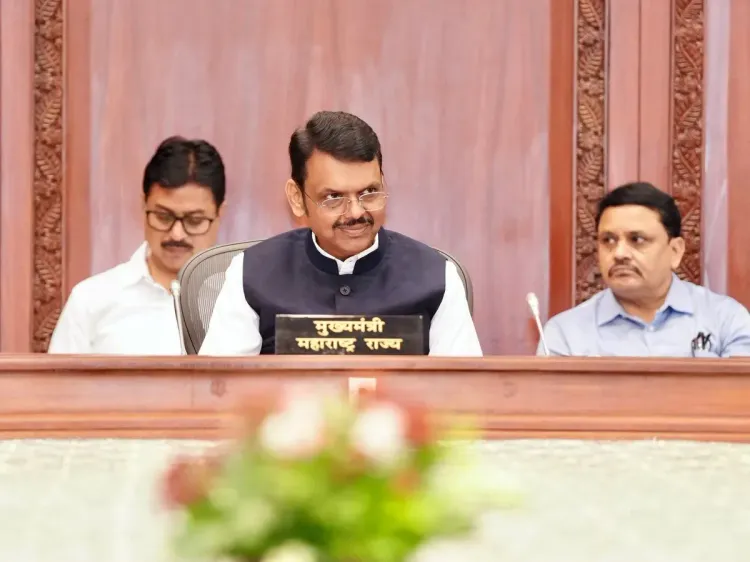
Maharashtra CM Devendra Fadnavis chaired the 26th State Wildlife Board meeting on 26 October 2026, approving the upgrade of Kolamarka Conservation Reserve to a Wildlife Sanctuary, 14 new Conservation Reserves across seven districts, an expansion of Tansa Sanctuary, and Critical Wildlife Habitat designations for Koka and Jayakwadi sanctuaries.
Key Takeaways
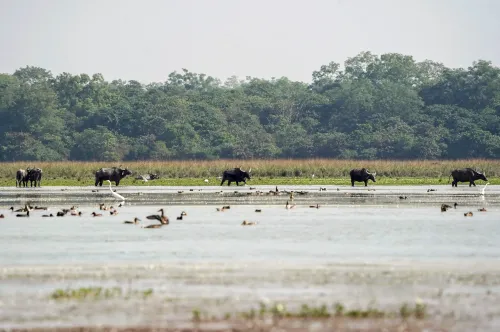
Kolamarka Conservation Reserve in Gadchiroli approved for upgrade to a full Wildlife Sanctuary, recognising it as a key habitat for wild buffaloes.
14 new Conservation Reserves approved across Pune, Raigad, Nashik, Nandurbar, Thane, Palghar and Chandrapur districts.
588.767 hectares of revenue and private land across six villages added to Tansa Wildlife Sanctuary to make it human-free.
Koka Wildlife Sanctuary ( 100.139 sq km ) and Jayakwadi Bird Sanctuary ( 255.79 sq km ) declared Critical Wildlife Habitats.
Board approved regulated infrastructure — roads, bridges, optical fibre, electricity lines — inside protected areas, Eco-Sensitive Zones and tiger corridors.
Routine dam repairs and desilting within sanctuaries directed to be incorporated into official management plans.
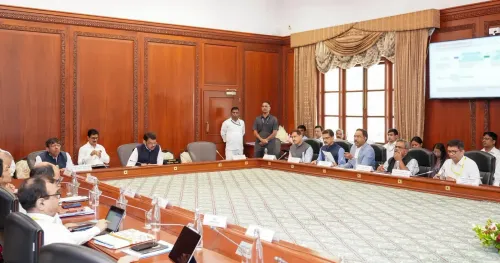
Fifteen protected areas in one afternoon. Maharashtra Chief Minister Devendra Fadnavis chaired the 26th meeting of the Maharashtra State Wildlife Board in Mumbai on Monday, 26 October 2026, and walked out with a sweeping expansion of the state's conservation footprint — approving proposals that stretch from the wild buffalo country of Gadchiroli in the east to the coastal ridgelines of Raigad in the west.
Kolamarka's upgrade: a sanctuary for Maharashtra's wild buffaloes
The headline decision of the meeting was the approval to declare the Kolamarka Conservation Reserve in Gadchiroli district a full Wildlife Sanctuary. The site carries particular ecological weight as one of the few remaining natural habitats for wild buffaloes in peninsular India — a species whose population outside Chhattisgarh's Indravati basin is critically limited. Elevating Kolamarka from a Conservation Reserve to a Sanctuary grants it a higher tier of legal protection under the Wildlife (Protection) Act, 1972, tightening restrictions on human activity within its boundaries.
14 new Conservation Reserves from the Sahyadris to Vidarbha
Beyond Kolamarka, the board approved 14 new Conservation Reserves spread across Pune, Raigad, Nashik, Nandurbar, Thane, Palghar and Chandrapur districts. The list — Velhe-Mulshi, Bhor Girigad, Dindori, Surgana, Taharabad, Chinchpada, Alibag, Ghera Manikgad, Lonavala, Guntara, Jawhar, Asherigad, Dhamni and Ekara — reads like a tour of Maharashtra's most sensitive ecological corridors, threading the Western Ghats biodiversity hotspot with forest patches in the Vidarbha belt.
Conservation Reserves, a category introduced through the 2002 amendment to the Wildlife Protection Act, allow local communities a degree of participation in governance — making them politically more viable than outright sanctuaries in areas with dense habitation. The sheer number approved in a single sitting signals a deliberate acceleration in coverage.
Tansa expansion and two new Critical Wildlife Habitats
The board also approved adding 588.767 hectares of revenue and private land across six villages to the existing Tansa Wildlife Sanctuary in Thane district, with the explicit goal of making the sanctuary 'human-free.' That phrase, used verbatim in the post, signals an intent to initiate voluntary relocation or settlement of land-use rights — a process that typically involves lengthy negotiations with village communities and state revenue machinery.
Two existing protected areas received Critical Wildlife Habitat designations: 100.139 sq km of Koka Wildlife Sanctuary in Bhandara district and 255.79 sq km of Jayakwadi Bird Sanctuary in Aurangabad district. Critical Wildlife Habitat status, provided under the Forest Rights Act, 2006, is the mechanism through which core areas are formally insulated from any activity incompatible with wildlife conservation.
Infrastructure inside protected zones — the fine print that matters
Alongside the conservation approvals, Fadnavis also directed that routine dam repairs, rehabilitation works and desilting within sanctuaries be folded into official management plans — a move that regularises maintenance that has often proceeded in a legal grey zone. The board approved infrastructure proposals inside protected areas, Eco-Sensitive Zones and tiger corridors, covering irrigation, healthcare facilities, water supply lines, bridges, roads, underground optical fibre networks and electricity lines.
This dual track — tighter conservation designations on one hand, regulated infrastructure permissions on the other — reflects a pattern evident across Indian states navigating the tension between forest protection and rural development. The key legal question going forward is whether the infrastructure approvals are accompanied by mandatory site-specific impact assessments and monitored against the management plans they are now required to enter.
Maharashtra's State Wildlife Board, a statutory advisory body constituted under the Wildlife (Protection) Act, recommends these proposals; formal notifications by the state government are required before any designation takes legal effect. Watch for those gazette notifications — and the management plans that must follow — as the true measure of today's ambition.
Point of View
Adding fifteen protected designations in one afternoon. The simultaneous approval of infrastructure inside sanctuaries and tiger corridors, however, tests the credibility of the conservation push — regulated permissions can either be a pragmatic accommodation of rural needs or a softening of protection norms, depending entirely on how rigorously the new management plans are enforced. Fadnavis's framing of Tansa as a future 'human-free' zone also signals an intent to pursue voluntary relocation processes, which carry significant implications for tribal and revenue-land communities. The true policy legacy of today's board meeting will be written in the gazette notifications and site-specific impact assessments that follow.
NationPress
26 Oct 2026
Frequently Asked Questions
What was decided at the 26th Maharashtra State Wildlife Board meeting?
The board, chaired by CM Devendra Fadnavis on 26 October 2026, approved the upgrade of Kolamarka Conservation Reserve to a Wildlife Sanctuary, 14 new Conservation Reserves across seven districts, an expansion of Tansa Wildlife Sanctuary by 588.767 hectares, and Critical Wildlife Habitat designations for Koka and Jayakwadi sanctuaries.
Where is Kolamarka Conservation Reserve and why is it significant?
Kolamarka is located in Gadchiroli district in eastern Maharashtra. It is ecologically significant as a natural habitat for wild buffaloes, a species with a very limited range in peninsular India outside Chhattisgarh.
What is a Critical Wildlife Habitat under Indian law?
A Critical Wildlife Habitat is a designation under the Forest Rights Act, 2006 that demarcates the core area of a protected zone as strictly incompatible with any human activity that could harm wildlife, providing it the highest level of conservation protection.
Why is Tansa Wildlife Sanctuary being expanded?
The Maharashtra Wildlife Board approved adding 588.767 hectares of revenue and private land across six villages to Tansa Wildlife Sanctuary in Thane district with the stated objective of making the sanctuary human-free, meaning reducing or eliminating permanent human settlements inside its boundaries.
Can infrastructure be built inside Maharashtra wildlife sanctuaries after this meeting?
The board approved specific infrastructure proposals — including roads, bridges, water supply, healthcare facilities and underground optical fibre lines — inside protected areas, Eco-Sensitive Zones and tiger corridors. These are subject to the respective sanctuary management plans, and formal state government notifications are still required before any work can proceed legally.