MP Emerging as Wildlife Conservation Hub: CM Mohan Yadav

Synopsis
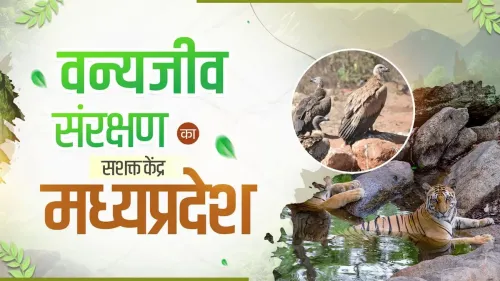
The Chief Minister's Office of Madhya Pradesh declared the state a rising national wildlife conservation hub on 18 July 2026, citing cheetah population growth under Project Cheetah at Kuno, wild buffalo rehabilitation at Kanha Tiger Reserve, and sustained protection of gharials, crocodiles, and turtles across the Chambal, Kuno, and Narmada river systems.
Key Takeaways
The CMO of Madhya Pradesh on 18 July 2026 positioned the state as India's emerging wildlife conservation hub.
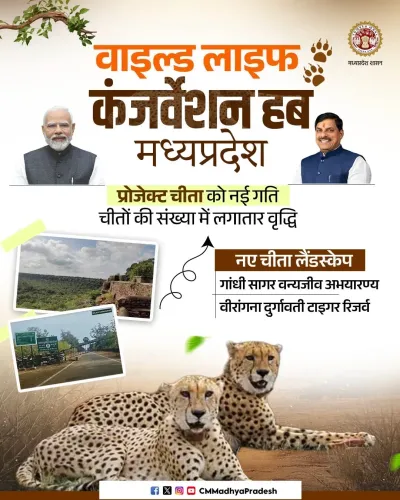
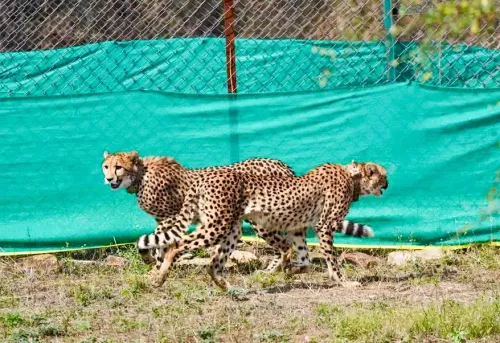
Project Cheetah , launched with eight Namibian cheetahs released into Kuno National Park in September 2022 , remains the centrepiece of the state's reintroduction efforts.
Kanha Tiger Reserve , one of the original nine reserves under Project Tiger (1973) , is cited for wild buffalo rehabilitation work.
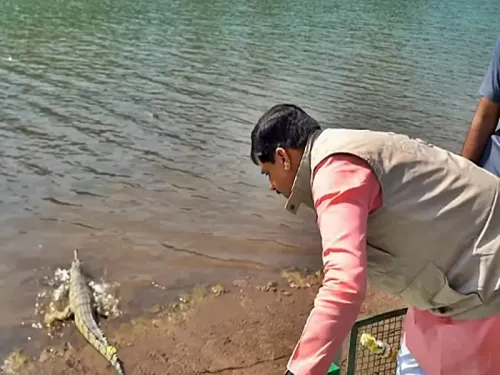
The National Chambal Sanctuary (notified 1979 ) continues to protect gharials, mugger crocodiles, and freshwater turtles along the Chambal river.
Conservation efforts also span the Narmada river corridor for aquatic species protection.
Mohan Yadav , in office since December 2023 , is actively linking wildlife conservation to the state's governance agenda.
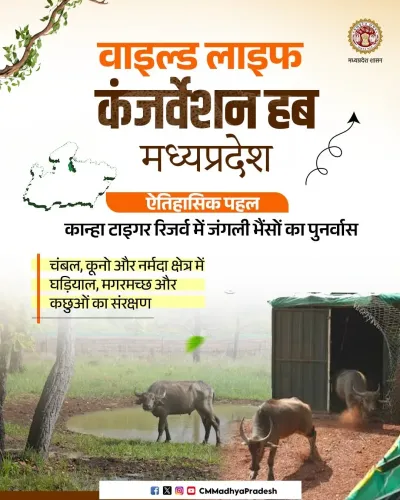
The Chief Minister's Office of Madhya Pradesh on Saturday, 18 July 2026, highlighted the state's growing stature as a national hub for wildlife conservation, pointing to rising cheetah numbers, wild buffalo rehabilitation at Kanha Tiger Reserve, and ongoing protection of gharials, crocodiles, and turtles across the Chambal, Kuno, and Narmada river systems.
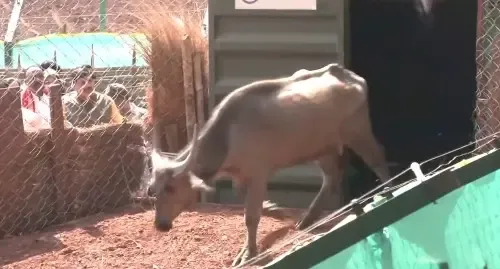
The post, tagged to Chief Minister Dr. Mohan Yadav and the state forest ministry, stated: 'वाइल्ड लाइफ कंजर्वेशन का नया हब बन रहा मध्यप्रदेश' — 'Madhya Pradesh is becoming a new hub for wildlife conservation.' It cited three specific fronts: growing cheetah population, wild buffalo rehabilitation in Kanha, and aquatic species conservation in the state's major river corridors.
Context
Madhya Pradesh has long occupied a central position in India's wildlife recovery story. Kanha Tiger Reserve, one of the country's oldest, was among the first nine reserves brought under Project Tiger when it launched in 1973, and has been a model for large-mammal conservation ever since. The state's forests consistently record among the highest tiger densities in India, establishing it as a benchmark for protected-area management. More recently, the state became the frontline of India's most ambitious species reintroduction effort. Kuno National Park received the first batch of eight African cheetahs from Namibia in September 2022 under Project Cheetah, marking the return of the big cat to the Indian subcontinent after decades of local extinction. Kuno remains the primary site for this programme.Policy Backdrop
The conservation drive spans both terrestrial and aquatic ecosystems. The National Chambal Sanctuary, notified in 1979, protects a critical river stretch across Madhya Pradesh specifically for gharials, mugger crocodiles, and freshwater turtles — species that have faced severe population pressures from sand mining, fishing, and habitat loss. The sanctuary represents one of the longest-running aquatic wildlife protection efforts in the country. The state's efforts align with India's obligations under the Wildlife Protection Act and international biodiversity conventions. The CMO's post signals that the current administration under CM Dr. Mohan Yadav, who took office in December 2023, is actively positioning wildlife conservation as a governance priority alongside economic development.Stakeholders and Impact
The beneficiaries of these programmes extend well beyond the species themselves. Forest communities living on the periphery of reserves are directly affected by wildlife management decisions, including buffer-zone policies and human-wildlife conflict protocols. Eco-tourism operators across Kanha, Kuno, and the Chambal corridor stand to gain from enhanced wildlife visibility and improved sanctuary infrastructure. Wildlife researchers and conservation scientists also have a stake in the outcomes, particularly the cheetah reintroduction, which is being closely monitored as a global case study in large carnivore restoration. Successful population growth at Kuno could inform future reintroduction sites and species selection across the subcontinent.What's Next
The next All India Tiger Estimation report and dedicated cheetah population monitoring updates from the National Tiger Conservation Authority will be key indicators of whether the state's conservation claims translate into verifiable population data. Authorities may also consider expanding cheetah habitat to additional sites within Madhya Pradesh as the Kuno population grows, and new riverine sanctuary notifications along the Narmada corridor remain a possibility. Madhya Pradesh's trajectory suggests the state intends to consolidate its identity as India's pre-eminent wildlife destination — a positioning with both ecological and economic implications.Point of View
Framing Madhya Pradesh not merely as a forest-rich state but as the nerve centre of India's wildlife recovery ambitions — a narrative that serves both ecological and political purposes ahead of future electoral cycles. By invoking Project Cheetah alongside the older Project Tiger legacy, the administration is threading together a decades-long conservation arc and claiming ownership of its most visible recent chapter. The emphasis on river systems alongside terrestrial reserves signals a broader, more holistic conservation pitch that could attract central funding and international conservation partnerships. Whether the claims around rising cheetah numbers and buffalo rehabilitation hold up to independent scientific scrutiny will determine how durable this positioning proves to be.
NationPress
16 Oct 2026
Frequently Asked Questions
Is Madhya Pradesh the top state for wildlife conservation in India?
Madhya Pradesh is widely regarded as one of India's leading states for wildlife conservation, hosting some of the country's highest tiger densities, the primary cheetah reintroduction site at Kuno National Park, and long-established sanctuaries like the National Chambal Sanctuary for aquatic species.
Where are cheetahs in India located?
Cheetahs in India are currently located at Kuno National Park in Madhya Pradesh, which has been the sole release site under Project Cheetah since the first eight African cheetahs arrived from Namibia in September 2022.
What is being done for wild buffaloes in Kanha Tiger Reserve?
The Chief Minister's Office of Madhya Pradesh stated on 18 July 2026 that wild buffalo rehabilitation is underway at Kanha Tiger Reserve ; specific details of the programme have not been independently verified as of that date.
What animals are protected in the Chambal river?
The National Chambal Sanctuary , notified in 1979, protects gharials, mugger crocodiles, and freshwater turtles along the Chambal river stretch in Madhya Pradesh.
What is Project Cheetah in India?
Project Cheetah is a national wildlife programme that reintroduced African cheetahs into India after the species went locally extinct. It began in September 2022 with the release of eight cheetahs from Namibia into Kuno National Park in Madhya Pradesh.