Madhya Pradesh reintroduces wild buffaloes in Kanha after 46-year absence
Synopsis
For the first time since 1979, the Asiatic wild water buffalo has returned to Kanha Tiger Reserve — and Madhya Pradesh isn't stopping there. With a founder population of 50 buffaloes targeted, a tiger-for-buffalo exchange deal with Assam, and a cheetah sanctuary nearing completion near Sagar, the state is executing the most ambitious multi-species wildlife revival in India right now.
Key Takeaways
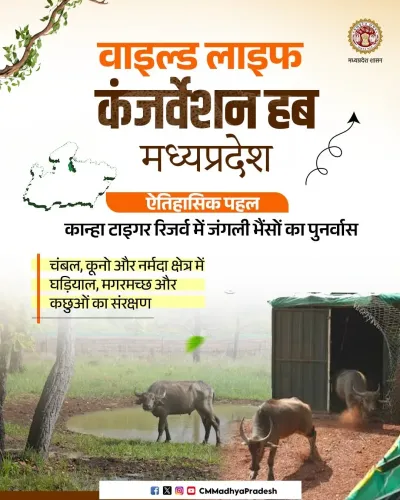
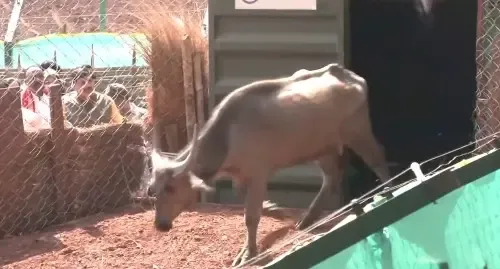
Four sub-adult Asiatic wild buffaloes were translocated from Assam to Kanha Tiger Reserve , Balaghat , on 28 April 2025 .
The long-term target is a founder population of 50 buffaloes ; eight will be translocated this season.
The Soopkhar sanctuary area last recorded a wild buffalo sighting in 1979 — a gap of over 46 years .
In exchange, Madhya Pradesh will provide Assam with three tigers and six crocodiles .
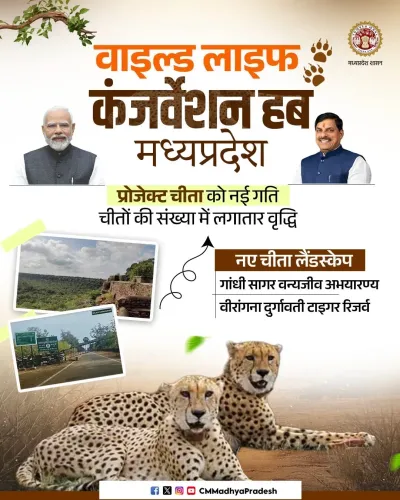
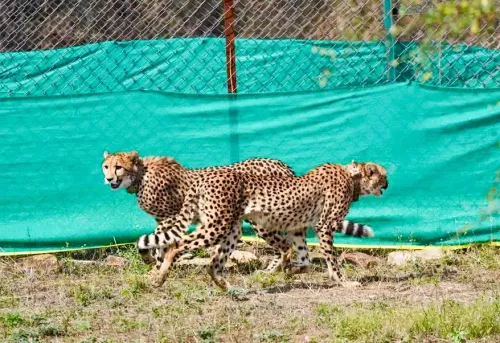
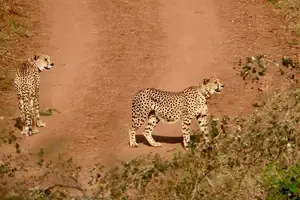
Cheetah populations are established at Kuno Palpur and Gandhi Sagar ; a third sanctuary near Sagar (Nauradehi) is nearing completion.
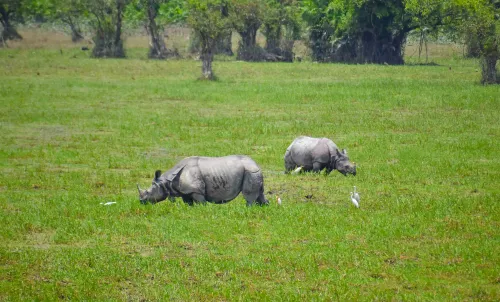
CM Mohan Yadav and Assam CM Himanta Biswa Sarma have also discussed bringing rhinoceroses to Madhya Pradesh in future phases.
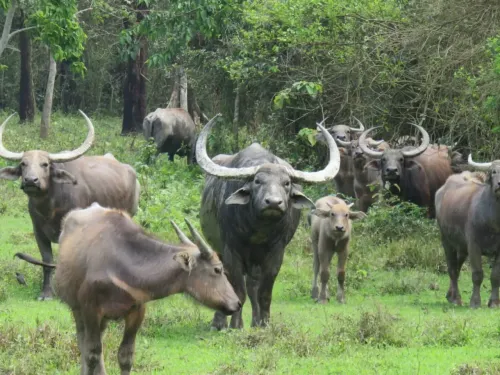
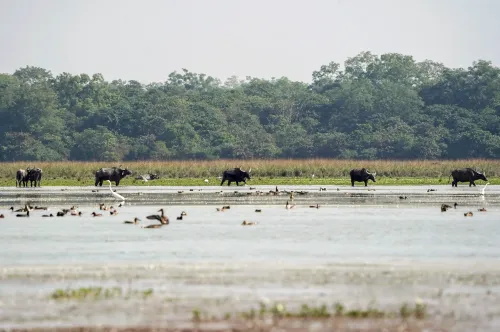
Madhya Pradesh has reintroduced the Asiatic wild water buffalo to the Supkhar and Topla area within Kanha Tiger Reserve, Balaghat, marking the species' return to the region after its last recorded sighting there in 1979 — a gap of over 46 years. The translocation, carried out on 28 April, is part of a strategic inter-state conservation partnership between Madhya Pradesh and Assam.
The Translocation: What Has Happened So Far
In this initial phase, four sub-adult wild buffaloes — including at least one male — have been successfully relocated from Assam to Kanha. A total of eight buffaloes are to be translocated during this season, with the long-term target set at 50 animals to establish a viable founder population. The entire process is being conducted under the supervision of senior officials and experienced veterinarians from Kaziranga and Kanha, ensuring scientific rigour at every stage.
Experts have noted that the translocated animals are in excellent health and are well-positioned to adapt to adulthood within the protected confines of the reserve, according to officials.
What the Chief Ministers Said
Madhya Pradesh Chief Minister Mohan Yadav described the relocation as the commencement of a strategic partnership aimed at restoring the ecological balance of the region's forests. "This significant relocation marks the commencement of a strategic partnership between the governments of Madhya Pradesh and Assam aimed at restoring the ecological balance of the region's forests," he said.
CM Yadav expressed gratitude to Assam Chief Minister Himanta Biswa Sarma for facilitating the transfer, noting that the two leaders had previously discussed the possibility of bringing both wild buffaloes and rhinoceroses to Madhya Pradesh. He also highlighted that the initiative is designed to enhance the state's natural beauty while providing a boost to local tourism.
In exchange, Madhya Pradesh will provide Assam with three tigers and six crocodiles, establishing a new model of inter-state cooperation in wildlife management.
Why the Supkhar Sanctuary Area Was Chosen
The Soopkhar sanctuary area, located within the sprawling expanse of Kanha Tiger Reserve in Balaghat, is a pristine highland meadow characterised by vast, undulating grasslands and perennial water streams. It provides a secluded and ecologically suitable environment for rare herbivores — making it the ideal site for this reintroduction. Notably, it was also the site of the last recorded wild buffalo sighting in the region in 1979, lending historical significance to the current effort.
Cheetah Relocation to Nauradehi and Broader Conservation Ambitions
The wild buffalo reintroduction follows the historic return of the cheetah to India after an absence of over 150 years. CM Yadav stated that cheetah populations are now established at Kuno Palpur and Gandhi Sagar, with a third sanctuary nearing completion near Sagar — widely understood to refer to the Nauradehi Wildlife Sanctuary.
"From the gharials of the rivers to the leopards and wolves of the plains, Madhya Pradesh has created a unique haven for a diverse array of creatures. The state government maintains that while infrastructure and public welfare are standard pillars of governance, the preservation of the ecosystem is an unparalleled responsibility," CM Yadav said.
Madhya Pradesh already holds the distinction of being India's leading tiger and leopard state, and these successive reintroduction programmes signal a systematic effort to revive the state's ancient biological heritage. With the Nauradehi sanctuary preparation reportedly nearing completion, the next phase of cheetah expansion could follow in the coming months.
Point of View
Now wild buffalo, with rhino potentially next — represent a genuine shift in how Indian states think about conservation as governance. The inter-state exchange model (buffaloes for tigers and crocodiles) is particularly notable: it turns wildlife into a diplomatic currency and creates mutual accountability. The harder question is whether carrying capacity and prey base at Kanha can sustain a founder population of 50 buffaloes alongside its existing tiger density — something the official announcements have not addressed. Tourism framing is politically useful, but conservation credibility will ultimately rest on whether these populations breed successfully, not just survive.
NationPress
7 Oct 2026
Frequently Asked Questions
Which wild buffaloes have been reintroduced to Kanha Tiger Reserve?
Asiatic wild water buffaloes from Assam have been reintroduced to the Supkhar and Topla area within Kanha Tiger Reserve in Balaghat, Madhya Pradesh. Four sub-adult buffaloes were translocated in the first phase on 28 April 2025, with a total of eight planned for this season and a long-term target of 50.
When was the last time wild buffaloes were seen in Kanha?
The last recorded wild buffalo sighting in the Soopkhar sanctuary area of Kanha Tiger Reserve was in 1979, making the 2025 reintroduction a return after over 46 years.
What is Madhya Pradesh giving Assam in exchange for the wild buffaloes?
As part of the inter-state wildlife exchange agreement, Madhya Pradesh will provide Assam with three tigers and six crocodiles in return for the wild buffaloes being translocated to Kanha.
Where is the cheetah relocation near Sagar taking place?
Chief Minister Mohan Yadav referred to a third cheetah sanctuary nearing completion near Sagar, which is widely understood to be the Nauradehi Wildlife Sanctuary in Madhya Pradesh. Cheetah populations are already established at Kuno Palpur and Gandhi Sagar.
Are rhinoceroses also being brought to Madhya Pradesh?
CM Mohan Yadav noted that he and Assam CM Himanta Biswa Sarma had discussed the possibility of bringing both wild buffaloes and rhinoceroses to Madhya Pradesh. However, the rhino translocation has not been confirmed and appears to be under consideration for a future phase.