Will MP Receive 50 Wild Water Buffaloes, Rhinos, and Cobras from Assam in Exchange for Tigers and Crocs?
Synopsis
In a groundbreaking agreement between Madhya Pradesh and Assam, a historic wildlife exchange is set to enhance biodiversity in both states. This initiative includes the relocation of wild water buffaloes, rhinos, and cobras to MP, while Assam will receive tigers and crocodiles, marking a significant step forward in wildlife conservation efforts.
Key Takeaways
Madhya Pradesh and Assam have agreed to an animal exchange.
50 wild water buffaloes , a pair of rhinos , and cobras are being transferred to MP.
In return, MP will provide tigers and crocodiles to Assam .
The initiative aims to enhance biodiversity in both states.
Historic species like the wild water buffalo are being reintroduced.
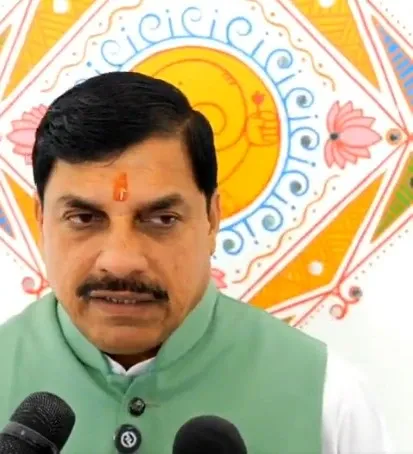
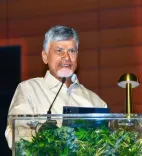
Bhopal, Jan 9 (NationPress) In a landmark move for wildlife conservation, Madhya Pradesh's Chief Minister, Dr Mohan Yadav, engaged with Assam's Chief Minister, Himanta Biswa Sarma, in Guwahati, resulting in a principled agreement regarding the interstate transfer of wild animals.
The collaboration is designed to enhance biodiversity in both states, particularly by reintroducing species that have become extinct in certain areas.
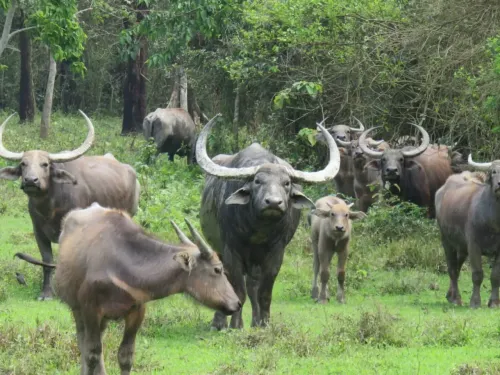
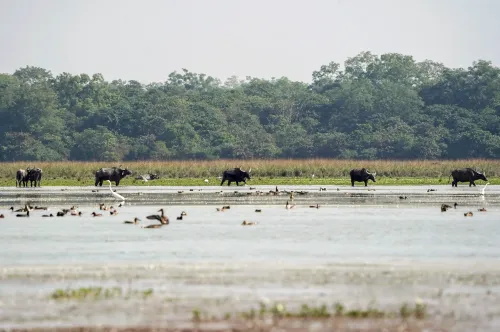
According to the agreement, Assam will relocate 50 wild water buffaloes to Madhya Pradesh over a period of three years, in phased consignments.
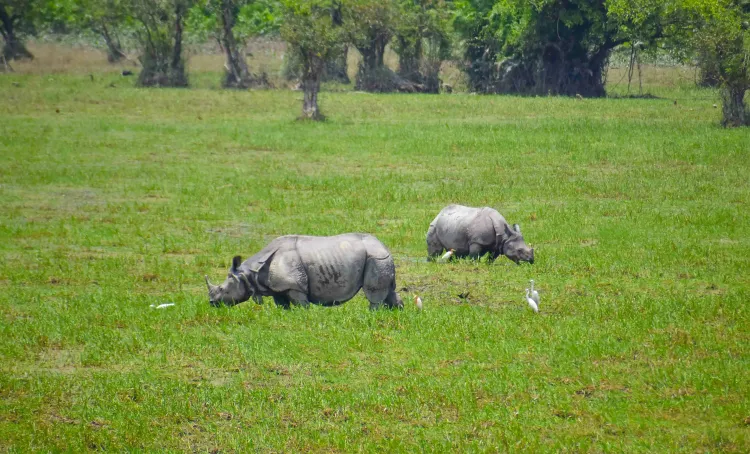
Furthermore, a pair of one-horned rhinoceroses and three king cobras will also be dispatched to Madhya Pradesh. These species, including the rhinos and cobras, will initially be accommodated at Van Vihar National Park in Bhopal for acclimatization and public observation.
The wild buffaloes, however, are set to be reintroduced into their historical habitat at Kanha Tiger Reserve.
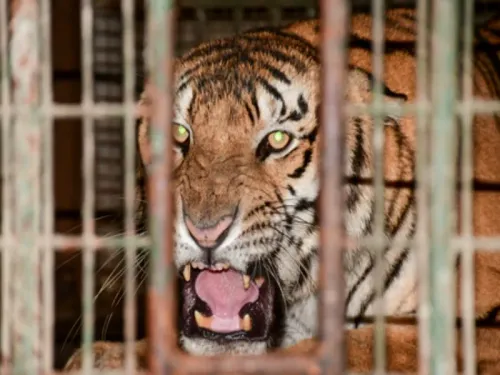
In reciprocation, Madhya Pradesh will send Assam a pair of tigers and six mugger crocodiles, contributing to the diversification of Assam's wildlife.
In announcing this development on his X handle, CM Yadav expressed, "Measures will be implemented to enhance wildlife and biodiversity in Madhya Pradesh. The extinct wild buffalo species will be reinstated... 50 wild buffaloes, a pair of rhinos, and three cobras will be introduced from Assam in the next three years. The buffaloes will be reinstated in Kanha Tiger Reserve."
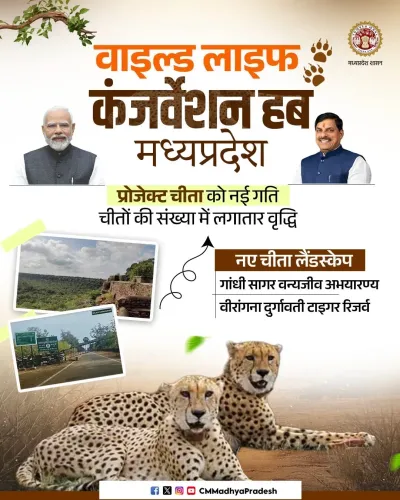
Dr Yadav highlighted that this initiative is in line with the successful reintroduction of cheetahs in Kuno National Park, adding a new layer to Madhya Pradesh's conservation strategies.
The state, renowned as the 'Tiger State' and 'Leopard State', is dedicated to restoring species that once inhabited its forests.
The wild water buffalo (Bubalus arnee), classified as an endangered species, has been locally extinct in Madhya Pradesh for over a century.
Today, India's primary population is largely found in Assam, particularly in Kaziranga and Manas National Parks, with global totals below 4,000.
A thorough study conducted by the Wildlife Institute of India (WII) in Dehradun has identified Kanha Tiger Reserve as an optimal location for reintroduction due to its plentiful grasslands, water resources, minimal human disturbance, and favorable herbivore dynamics.
Point of View
It is crucial to acknowledge the importance of wildlife conservation initiatives like this interstate exchange. By facilitating the return of historically significant species, both Madhya Pradesh and Assam are making pivotal strides toward addressing biodiversity loss and enhancing their ecosystems. Such collaborative efforts are vital for the preservation of India's rich wildlife heritage.
NationPress
2 Oct 2026
Frequently Asked Questions
What animals are being exchanged between Madhya Pradesh and Assam?
Madhya Pradesh will receive 50 wild water buffaloes, a pair of one-horned rhinos, and three king cobras from Assam, while Assam will get a pair of tigers and six mugger crocodiles.
Where will the animals be housed after their transfer?
The one-horned rhinos and king cobras will initially be housed at Van Vihar National Park in Bhopal for acclimatization, while the wild water buffaloes will be reintroduced into Kanha Tiger Reserve.
Why is this animal exchange significant?
This exchange aims to enhance biodiversity in both states and restore species that have become extinct in certain areas.
What is the status of wild water buffaloes in India?
The wild water buffalo (Bubalus arnee) is an endangered species that has been locally extinct in Madhya Pradesh for over a century, with the primary population now concentrated in Assam.
How does this initiative relate to previous conservation efforts?
This initiative follows the successful reintroduction of cheetahs in Kuno National Park and represents a continued commitment to wildlife conservation in Madhya Pradesh.