Wild Buffalo Returns to MP After 100 Years: CM Yadav Launches Kanha Project
Synopsis
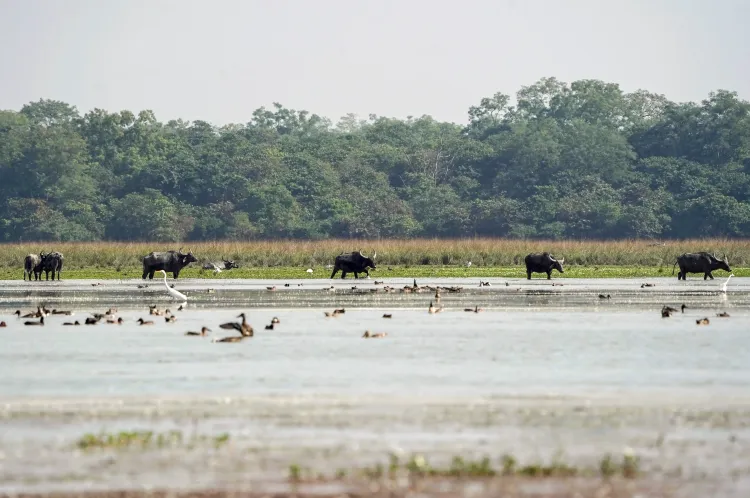
For the first time in over 100 years, wild buffaloes are returning to Madhya Pradesh. CM Mohan Yadav will release a founder group of four buffaloes at Kanha Tiger Reserve on April 28, 2026, as part of a landmark translocation from Kaziranga — and MP will receive rhinos from Assam in return.
Key Takeaways
CM Mohan Yadav launches the wild buffalo reintroduction programme at Kanha Tiger Reserve on April 28, 2026 .
A founder group of 3 female and 1 male wild buffalo will be released in the Supkhar and Topla regions of Balaghat district .
A total of 50 wild buffaloes from Kaziranga National Park, Assam are planned for translocation, with 8 buffaloes in the first phase.
Under an inter-state agreement, MP will receive 2 pairs of rhinoceroses for Van Vihar National Park, Bhopal in exchange for 3 tigers and 6 crocodiles sent to Assam.
The Supkhar sanctuary recorded the last wild buffalo sighting in 1979 , making it the symbolic and ecological heart of the reintroduction effort.
The project is being supervised by senior forest officials and specialised veterinarians from both states to ensure scientific rigour.
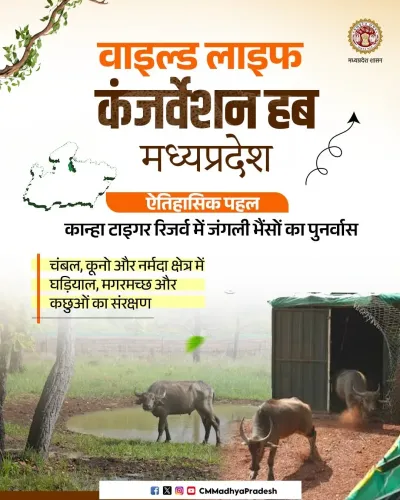
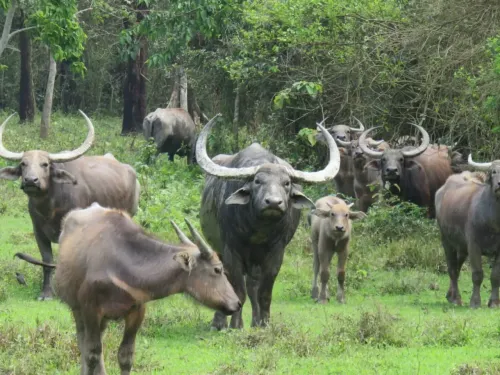
Madhya Pradesh is set to script a new chapter in wildlife conservation as Chief Minister Mohan Yadav officially launches the wild buffalo reintroduction programme at Kanha Tiger Reserve on Tuesday, April 28, 2026 — marking the return of a species absent from the state for over a century. The initiative, which involves translocating wild buffaloes from Kaziranga National Park, Assam, is being hailed as one of the most ambitious inter-state wildlife projects in India's recent conservation history.
Key Developments in the Reintroduction Programme
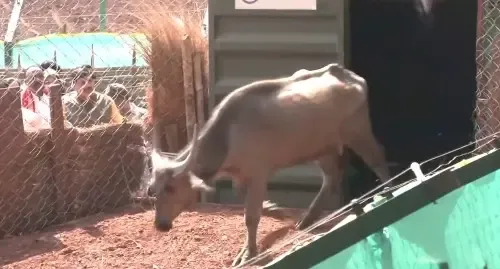
The launch will take place in the Supkhar and Topla regions of Balaghat district, where CM Mohan Yadav will release a founder group comprising three females and one male wild buffalo into their new natural habitat. According to an official press release, the broader translocation plan envisions bringing 50 wild buffaloes from Kaziranga to Kanha, with eight buffaloes scheduled for transfer during the current season alone as part of the first phase.
The project is being executed with scientific precision under the supervision of senior forest officials and specialised veterinarians from both Madhya Pradesh and Assam, ensuring that each animal undergoes thorough health screening before and after translocation.
Why Supkhar Was Chosen for the Release
The Supkhar sanctuary area, nestled within the sprawling expanse of the Kanha Tiger Reserve, is characterised by vast undulating grasslands and perennial water streams — conditions considered ideal for rare herbivores. Notably, Supkhar holds the distinction of being the site of the last recorded wild buffalo sighting in the region, back in 1979, making it a symbolically and ecologically fitting location for the species' return. This comes amid growing recognition that grassland ecosystems across central India have been severely depleted due to decades of hunting and habitat degradation.
Experts argue that restoring wild buffaloes to Kanha will significantly bolster the reserve's grassland ecosystem and help re-establish a vital ecological balance that has been missing for generations.
The MP-Assam Biodiversity Exchange Agreement
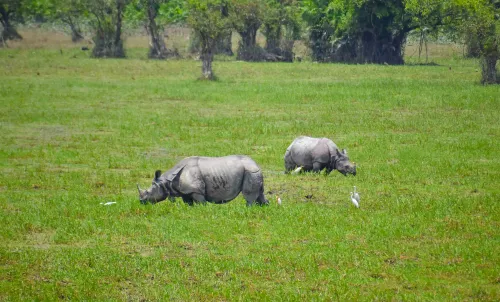
Beyond the buffalo reintroduction, a landmark inter-state biodiversity exchange has been formalised between Madhya Pradesh and Assam. Under an agreement reportedly reached between CM Mohan Yadav and Assam Chief Minister Himanta Biswa Sarma, Madhya Pradesh will receive two pairs of rhinoceroses for Bhopal's Van Vihar National Park in return. In exchange, Madhya Pradesh will provide Assam with three tigers and six crocodiles — a strategic wildlife swap that officials say fosters a new era of inter-state cooperation in conservation management.
This is the first such structured biodiversity exchange of this scale between two Indian states, setting a potential template for future wildlife diplomacy across the country.
Impact on MP's Conservation Legacy
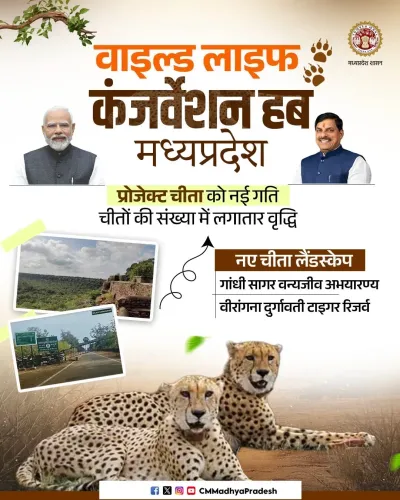
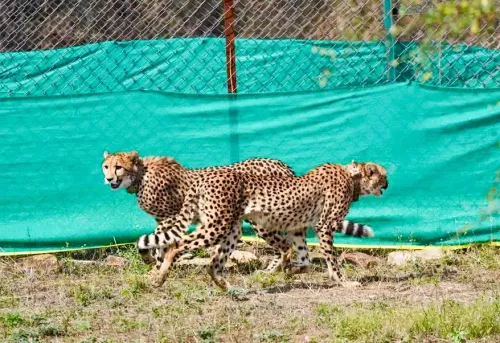
Madhya Pradesh already holds the distinction of being India's tiger and leopard capital, and this project further cements its position as a national leader in wildlife conservation. The wild buffalo reintroduction follows the global spotlight that the cheetah reintroduction project at Kuno National Park brought to India, and analysts suggest it could attract similar international attention and eco-tourism interest to the Kanha landscape.
Critics and conservationists alike will be watching closely to see whether the founder group adapts successfully to their new environment — a process that could take several breeding seasons to assess. With the ecological, diplomatic, and tourism stakes all riding on this initiative, the coming months will be critical for Madhya Pradesh's boldest conservation bet in decades.
Point of View
And if it succeeds, it could reshape how states manage their faunal diversity. However, the real test lies not in the launch ceremony but in the years of monitoring, anti-poaching enforcement, and habitat management that must follow — areas where India's conservation record has historically been uneven. The Kanha project deserves scrutiny as much as celebration.
NationPress
7 Oct 2026
Frequently Asked Questions
What is the wild buffalo reintroduction project in Madhya Pradesh?
The wild buffalo reintroduction project involves translocating 50 wild buffaloes from Kaziranga National Park in Assam to Kanha Tiger Reserve in Madhya Pradesh. CM Mohan Yadav will officially launch the programme on April 28, 2026, by releasing four buffaloes in the Supkhar and Topla regions of Balaghat district.
Why are wild buffaloes being reintroduced in Kanha Tiger Reserve?
Wild buffaloes have been extinct in Madhya Pradesh for over 100 years, primarily due to hunting and habitat degradation. Reintroducing them is expected to restore the grassland ecosystem of Kanha and re-establish ecological balance that has been lost for generations.
What is the MP-Assam wildlife exchange agreement?
Under an agreement between CM Mohan Yadav and Assam CM Himanta Biswa Sarma, Madhya Pradesh will receive two pairs of rhinoceroses for Van Vihar National Park in Bhopal. In return, MP will provide Assam with three tigers and six crocodiles as part of a structured biodiversity exchange.
When was the last wild buffalo seen in Madhya Pradesh?
The last recorded wild buffalo sighting in the Kanha region was in 1979, at the Supkhar sanctuary — the same location chosen for the current reintroduction effort. This makes the site both historically and ecologically significant for the project.
How many wild buffaloes will be transferred in the first phase?
Eight wild buffaloes from Kaziranga National Park will be transferred to Kanha Tiger Reserve during the first phase of the current season. The overall plan envisions relocating a total of 50 wild buffaloes over the course of the project.