Maharashtra SBWL grants Sanctuary status to 2 reserves, clears 14 new conservation areas
Synopsis
In a single board meeting, Maharashtra approved Wildlife Sanctuary status for Kolamarka — home to the endangered Asiatic wild buffalo — expanded Tansa Sanctuary by 588 hectares, and cleared 14 new Conservation Reserves across seven districts. Chief Minister Devendra Fadnavis also pushed to classify Human-Wildlife Conflict as a Natural Disaster. It is one of the state's most consequential wildlife decisions in years.
Key Takeaways
Kolamarka Conservation Reserve in Gadchiroli has been upgraded to a full Wildlife Sanctuary , protecting the endangered Asiatic wild buffalo (Bubalus arnee) .
Tansa Wildlife Sanctuary is set to expand by 588.767 hectares by incorporating land from six villages to become human-settlement-free.
14 new Conservation Reserves across Pune, Raigad, Nashik, Nandurbar, Thane, Palghar, and Chandrapur received board clearance.
Koka Wildlife Sanctuary ( 100.139 sq km ) and Jaakwadi Bird Sanctuary ( 255.79 sq km ) have been declared Critical Wildlife Habitat .
The board discussed declaring Human-Wildlife Conflict a Natural Disaster under the Disaster Management Act .
CM Fadnavis directed a staffing review within one month to transfer sanctuaries to the dedicated Wildlife Wing .
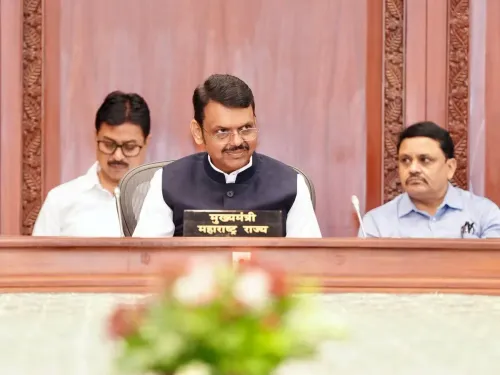
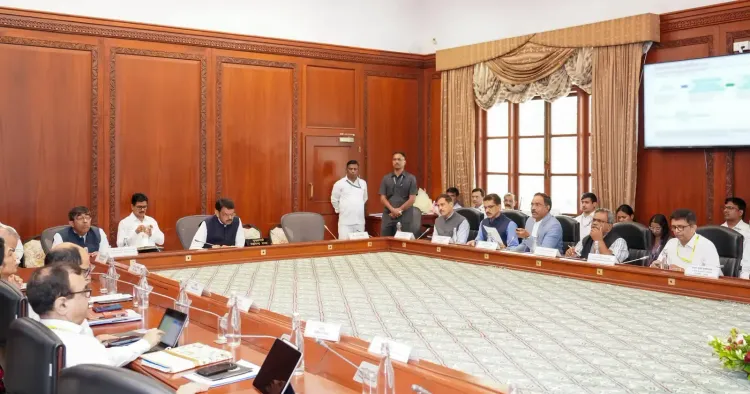
The State Board for Wildlife (SBWL) of Maharashtra, chaired by Chief Minister Devendra Fadnavis, on Monday, 26 October 2026, approved a sweeping set of environmental measures during its 26th official meeting in Mumbai. The decisions include upgrading two forest pockets to full Wildlife Sanctuary status and clearing proposals for 14 new Conservation Reserves across seven districts — marking one of the state's most significant single-session conservation moves in recent years.
Two Reserves Elevated to Wildlife Sanctuary Status
Kolamarka Conservation Reserve in Gadchiroli district has been officially upgraded to a Wildlife Sanctuary. The reserve is widely recognised as a critical habitat for the endangered Asiatic wild buffalo (Bubalus arnee), one of India's rarest large mammals, making the upgrade particularly significant for conservationists.
Separately, the board approved the expansion of the existing Tansa Wildlife Sanctuary by incorporating 588.767 hectares of private and revenue land from six villages — Ogda, Khodde, Tirmal, Pachghar, Phansad, and Amle — with the objective of making the sanctuary free of human settlements.
14 New Conservation Reserves Across Seven Districts
The board cleared proposals for 14 new Conservation Reserves spread across Pune, Raigad, Nashik, Nandurbar, Thane, Palghar, and Chandrapur districts. The newly approved reserves are: Velhe Mulshi (Pune/Raigad), Bhorgirigad (Pune), Lonavala (Pune/Raigad), Dindori (Nashik), Surgana (Nashik), Taharabad (Nashik), Chinchpada (Nandurbar), Alibaug (Raigad), Ghera Manikgad (Raigad), Gumatara (Thane), Jawhar (Palghar), Asherigad (Palghar), Dhamani (Palghar), and Ekara (Chandrapur).
This comes amid growing pressure on Maharashtra's forest corridors from urban and industrial expansion, particularly in the ecologically sensitive Western Ghats belt that straddles several of these districts.
Critical Wildlife Habitat Declarations and Infrastructure Clearances
The board also declared 100.139 sq km within Koka Wildlife Sanctuary and 255.79 sq km within Jaakwadi Bird Sanctuary as Critical Wildlife Habitat. Such declarations typically restrict certain human activities within those zones and afford stronger legal protection under the Wildlife Protection Act.
Clearances were simultaneously granted for essential civic and infrastructure projects — including irrigation works, drinking water supply, roads, bridges, power transmission lines, medical units, and underground optical fibre cables — in protected zones, eco-sensitive areas, and tiger corridors. The board directed that maintenance, silt removal, and dam repair works inside wildlife sanctuaries be permanently integrated into respective Management Plans within three months, and that wildlife officials be notified in advance rather than seeking fresh administrative clearances for each project.
Broader Policy Directions from Chief Minister Fadnavis
The meeting also saw policy-level discussions on declaring Human-Wildlife Conflict as a Natural Disaster under the Disaster Management Act — a move that, if formalised, would unlock relief mechanisms currently unavailable to affected communities. Deliberations were held on establishing quiet zones in tiger reserve core areas, buffer zones, and eco-sensitive zones, as well as formulating relocation policies for villages in buffer zones.
Chief Minister Fadnavis instructed officials to assess staffing requirements, deputations, and vacant positions within one month to transfer notified sanctuaries from Regional Forest and Forest Development Corporation Maharashtra control to the dedicated Wildlife Wing. Notably, this administrative realignment has been a long-pending demand of wildlife managers who argue that dual-control structures dilute accountability in protected areas.
What Comes Next
The formal notification of the 14 new Conservation Reserves and the Kolamarka Wildlife Sanctuary upgrade will now move through statutory processes under the Wildlife Protection Act, 1972. Environmentalists have broadly welcomed the decisions, though scrutiny will follow on whether the infrastructure clearances granted at the same meeting strike the right balance with protection goals. The next phase of implementation — particularly the Management Plan revisions and the staffing overhaul — will test whether Monday's board resolutions translate into ground-level impact.
Point of View
14 new reserves, two Critical Habitat declarations, and simultaneous infrastructure clearances — raises a legitimate question about implementation depth. Maharashtra has a history of gazetting protected areas without commensurate staffing or funding, and the CM's own instruction to review vacancies within a month underscores that the Wildlife Wing is already stretched. The proposal to classify Human-Wildlife Conflict as a Natural Disaster is the meeting's most consequential sleeper item: it could unlock compensation pipelines for thousands of affected farmers, but it also risks bureaucratising a problem that ultimately needs habitat corridor restoration. Granting infrastructure clearances inside protected zones at the same meeting that expands those zones is a tension the board will need to resolve transparently if these decisions are to withstand legal scrutiny.
NationPress
26 Oct 2026
Frequently Asked Questions
Which reserves were granted Wildlife Sanctuary status in Maharashtra's SBWL meeting?
Kolamarka Conservation Reserve in Gadchiroli district was upgraded to a Wildlife Sanctuary, primarily to protect the endangered Asiatic wild buffalo. Additionally, the existing Tansa Wildlife Sanctuary was approved for expansion by 588.767 hectares from six adjoining villages.
What are the 14 new Conservation Reserves approved in Maharashtra?
The 14 reserves are Velhe Mulshi, Bhorgirigad, Lonavala, Dindori, Surgana, Taharabad, Chinchpada, Alibaug, Ghera Manikgad, Gumatara, Jawhar, Asherigad, Dhamani, and Ekara, spanning the districts of Pune, Raigad, Nashik, Nandurbar, Thane, Palghar, and Chandrapur. The approvals were granted at the 26th SBWL meeting on 26 October 2026.
What is the significance of the Kolamarka Wildlife Sanctuary upgrade?
Kolamarka is a critical habitat for the Asiatic wild buffalo (Bubalus arnee), one of India's most endangered large mammals. Upgrading it from a Conservation Reserve to a Wildlife Sanctuary affords it stronger legal protection under the Wildlife Protection Act, 1972.
What did the Maharashtra SBWL decide about Human-Wildlife Conflict?
The board held discussions on declaring Human-Wildlife Conflict a Natural Disaster under the Disaster Management Act. If formalised, this would make affected communities eligible for disaster relief mechanisms not currently available to them, though no final notification was issued at the meeting.
What administrative changes did CM Fadnavis direct at the SBWL meeting?
Chief Minister Devendra Fadnavis directed officials to complete a review of staffing, deputations, and vacancies within one month, with the goal of transferring notified sanctuaries from Regional Forest and Forest Development Corporation Maharashtra control to the dedicated Wildlife Wing.