Stalin Condemns Anbil Mahesh Arrest as Political Vendetta

Synopsis
DMK president M. K. Stalin condemned the TVK government on 26 October 2026 for arresting former minister Anbil Mahesh Poyyamozhi, calling it an act of political vendetta designed to distract from the ruling administration's governance failures.
Key Takeaways
Stalin issued a strong condemnation on 26 October 2026 against the TVK government's arrest of Anbil Mahesh Poyyamozhi .
Stalin alleged the arrest was politically motivated, aimed at diverting public attention from law-and-order failures and administrative dysfunction.
He stated that Anbil Mahesh had been 'fully cooperating' with investigators before the arrest, making the detention unnecessary by legal standards, in his view.
The DMK pledged that Anbil Mahesh would 'face charges through legal means,' signalling a court-focused response strategy.
Stalin warned that the tactic of using arrests to deflect public anger 'will certainly not succeed.'
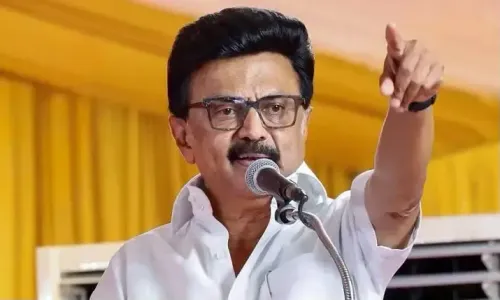
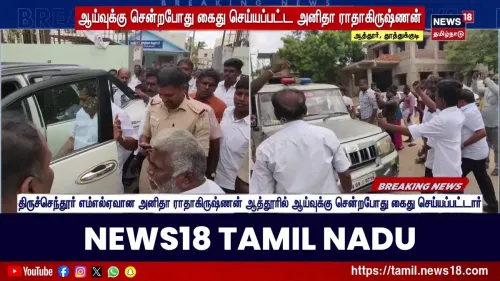
A former Tamil Nadu cabinet minister is behind bars — and DMK president M. K. Stalin has wasted no time calling it exactly what he believes it is: a politically motivated act of vengeance by the ruling TVK government. On Monday, 26 October 2026, Stalin fired off a sharp condemnation on X, charging the ruling dispensation with arresting former minister Anbil Mahesh Poyyamozhi not to serve justice, but to manufacture a distraction.
The Arrest That Sparked the Firestorm
Anbil Mahesh Poyyamozhi — who previously served as Tamil Nadu's School Education Minister under the DMK government — had, according to Stalin, been fully cooperating with investigators probing allegations against him. That cooperative posture, Stalin argues, makes the arrest not a legal necessity but a political choice. His post in Tamil reads: 'அரசியல் காழ்ப்புணர்வோடு முன்னாள் அமைச்சர் திரு. அன்பில் மகேஸ் பொய்யாமொழி அவர்களைக் கைது செய்துள்ள த.வெ.க. அரசுக்குக் கடும் கண்டனம்!' — translating to: 'Strongest condemnation of the TVK government for arresting former minister Anbil Mahesh Poyyamozhi out of political vendetta!'
Stalin does not stop at condemnation. He frames the arrest as a deliberate smokescreen — an attempt by the ruling government to 'hide, for a few days, the disgrace of its crumbling law and order and its rotting administrative dysfunction, and divert public attention.' The language is unsparing and the charge is precise: the arrest is theatre, not justice.
DMK's Defiant Counter-Pledge
Even as Stalin condemns the move, he makes clear that the DMK is not rattled. He states plainly that Anbil Mahesh 'will face the charges against him through legal means' — a signal that the party intends to fight this in court, not in the streets. The legal fight, in other words, is already being mapped out.
But the sharper message is the one aimed directly at the ruling party. Stalin closes with a warning: the TVK government's 'plan to escape the public's anger by diverting it through such arrests will certainly not succeed.' It is a bet on public memory — that voters will see through the timing, connect the dots, and hold the administration to account on governance, not spectacle.
A Pattern Tamil Nadu Knows Well
Accusations of politically motivated arrests are not new to Tamil Nadu's political landscape. Rival parties have, across successive governments, alleged that investigations and detentions are weaponised to settle scores and shift news cycles whenever an administration faces heat on law-and-order or governance fronts. DMK, currently in opposition to the TVK dispensation in this context, is now deploying that same argument — with Stalin as its most prominent voice.
The immediate legal question — whether Anbil Mahesh secures bail and on what terms — will be the first real test of how this episode unfolds. But the political battle has already been joined, loudly and in public.
A party that believes it can silence dissent by incarcerating its critics has, historically, found the strategy backfires. Stalin is counting on exactly that.
Point of View
The DMK attempts to flip the narrative — making the ruling TVK government the accused party in the court of public opinion. The timing calculus is significant; if the arrest does coincide with a spike in governance criticism, the 'distraction' argument gains traction with voters. Tamil Nadu's political history suggests this cycle — government arrests opposition figure, opposition cries vendetta, courts eventually arbitrate — repeats with regularity, but the reputational cost to whichever side overreaches tends to compound over time. Anbil Mahesh's bail outcome will be the first hard data point that either vindicates or complicates Stalin's framing.
NationPress
26 Oct 2026
Frequently Asked Questions
Why was Anbil Mahesh Poyyamozhi arrested?
Anbil Mahesh Poyyamozhi was arrested by the TVK government in Tamil Nadu in connection with allegations against him, though DMK president M. K. Stalin has alleged the arrest was politically motivated and unwarranted given his cooperation with investigators.
Who is Anbil Mahesh Poyyamozhi?
Anbil Mahesh Poyyamozhi is a senior DMK leader who previously served as Tamil Nadu's School Education Minister during the DMK government's tenure in power.
What did M. K. Stalin say about the arrest?
Stalin condemned the arrest as an act of 'political vendetta,' charging the TVK ruling government with using the detention to distract the public from its own governance failures and deteriorating law and order.
What is the TVK government accused of by the DMK?
The DMK accuses the TVK government of orchestrating politically motivated arrests to divert attention from administrative dysfunction and declining law and order, rather than pursuing genuine legal accountability.
What happens next in the Anbil Mahesh case?
The DMK has indicated that Anbil Mahesh will contest the charges through legal channels. Key developments to watch include bail proceedings and any formal response from the TVK government or law-enforcement authorities.