Centre clears elevation of 3 High Court Chief Justices to Supreme Court
Synopsis
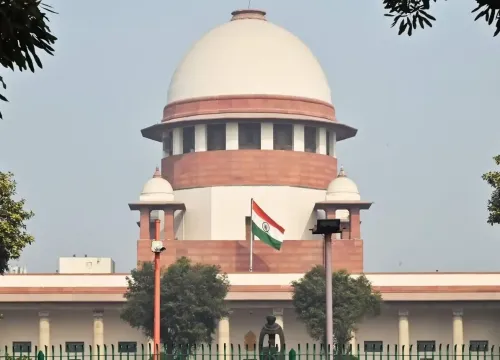
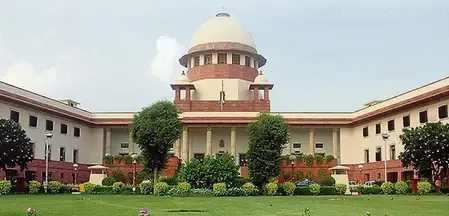
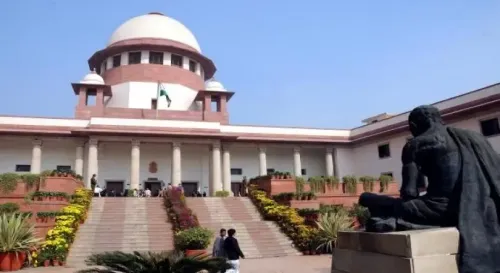
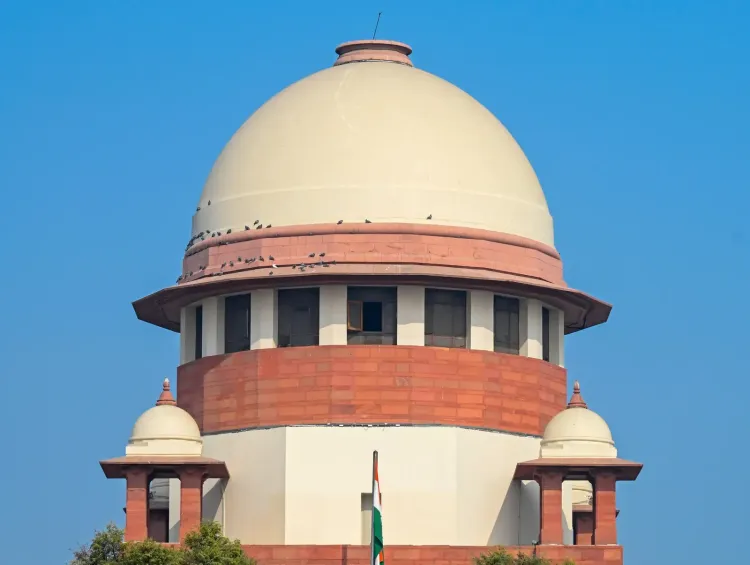
The Centre cleared all three Supreme Court Collegium recommendations within days — appointing the Chief Justices of Gujarat, Delhi, and Telangana High Courts to the apex court. The swift turnaround is notable given the historically fraught relationship between the government and the Collegium over judicial appointments, and comes as the Supreme Court expands its sanctioned bench strength to 37 judges.
Key Takeaways
The Centre on 5 October 2026 cleared the elevation of three High Court Chief Justices to the Supreme Court of India .
The appointees are Justice Sunita Agarwal (Gujarat HC), Justice Devendra Kumar Upadhyaya (Delhi HC), and Justice Aparesh Kumar Singh (Telangana HC).
The Supreme Court Collegium recommended the elevations at its meeting on 28 September 2026 .
Union Minister Arjun Ram Meghwal announced the appointments on X, confirming presidential approval after consultation with CJI Surya Kant .
The appointments will strengthen the bench following the Centre's earlier decision in 2026 to raise the Supreme Court's sanctioned judge strength to 37 , excluding the CJI.
The Centre on 5 October 2026 approved the elevation of three High Court Chief Justices — Justice Sunita Agarwal of the Gujarat High Court, Justice Devendra Kumar Upadhyaya of the Delhi High Court, and Justice Aparesh Kumar Singh of the Telangana High Court — as judges of the Supreme Court of India. The appointments follow a recommendation made by the Supreme Court Collegium at its meeting on 28 September 2026 and were cleared after consultation with Chief Justice of India (CJI) Surya Kant.
The Announcement
Union Minister for Law and Justice Arjun Ram Meghwal confirmed the development in a post on X, stating that the President had formally appointed the three Chief Justices as judges of the apex court following consultation with CJI Kant. The Collegium had uploaded its recommendation on the Supreme Court's official website shortly after its 28 September meeting, naming all three jurists along with their parent High Courts.
Profiles of the Three Appointees
Justice Sunita Agarwal, born on 30 April 1966, was appointed as a judge of the Allahabad High Court on 21 November 2011. She became Chief Justice of the Gujarat High Court on 23 July 2023, making her one of the senior-most women Chief Justices in the country at the time of her elevation.
Justice Devendra Kumar Upadhyaya, born on 16 June 1965, was appointed a puisne judge of the Allahabad High Court on 21 November 2011 and confirmed as a permanent judge on 6 August 2013. He served as Senior Judge of the Lucknow Bench before being appointed Chief Justice of the Bombay High Court, taking the oath on 29 July 2023. He was subsequently transferred as Chief Justice of the Delhi High Court, assuming office on 21 January 2025.
Justice Aparesh Kumar Singh, born on 7 July 1965, was appointed Additional Judge of the Jharkhand High Court on 24 January 2012 and confirmed as a permanent judge on 16 January 2014. He served as Acting Chief Justice of the Jharkhand High Court from 20 December 2022 to 19 February 2023, before being sworn in as Chief Justice of the Tripura High Court on 17 April 2023. He was subsequently transferred as Chief Justice of the Telangana High Court, taking oath on 19 July 2025.
Strengthening the Supreme Court Bench
The three appointments will bolster the Supreme Court's numerical strength following the Centre's decision earlier in 2026 to raise the sanctioned strength of judges to 37, excluding the Chief Justice of India. The bench has faced persistent criticism over vacancies that slow down the disposal of pending cases, making these confirmations particularly consequential. Notably, all three appointees had their parent High Court as either Allahabad or Jharkhand, reflecting the traditional weight these courts carry in the Supreme Court's judicial pipeline.
The Collegium Process
The appointments underscore a relatively swift turnaround between Collegium recommendation and government clearance — a dynamic that has historically been a flashpoint between the judiciary and the executive. The Centre's prompt action on the 28 September 2026 Collegium resolution stands in contrast to past episodes where recommended names waited months for approval, a pattern that had drawn sharp criticism from sitting and retired judges alike. The three elevations are expected to take effect upon the newly appointed judges taking the oath of office at the Supreme Court.
Point of View
And filling bench vacancies, while necessary, is not sufficient without parallel investment in infrastructure and process reform. Worth watching is whether the expanded 37-judge bench will be operationalised fully or whether new recommendations will again pile up unapproved.
NationPress
5 Oct 2026
Frequently Asked Questions
Which three High Court Chief Justices have been elevated to the Supreme Court?
The Centre has approved the elevation of Justice Sunita Agarwal of the Gujarat High Court, Justice Devendra Kumar Upadhyaya of the Delhi High Court, and Justice Aparesh Kumar Singh of the Telangana High Court as judges of the Supreme Court of India. The appointments were cleared on 5 October 2026 following a Collegium recommendation made on 28 September 2026.
What is the Supreme Court Collegium and how does it recommend judges?
The Supreme Court Collegium is a body comprising the Chief Justice of India and the four most senior judges of the Supreme Court, which recommends appointments and transfers of judges in the higher judiciary. Its recommendations are formally sent to the Centre, which then seeks presidential approval for the appointments.
How does this affect the Supreme Court's bench strength?
The three appointments will bolster the Supreme Court's total judge count, following the Centre's decision earlier in 2026 to raise the sanctioned strength to 37 judges, excluding the Chief Justice of India. A fuller bench is expected to help address the significant backlog of pending cases.
Who announced the Supreme Court appointments and how?
Union Minister for Law and Justice Arjun Ram Meghwal announced the appointments in a post on X, confirming that the President had formally appointed the three Chief Justices after consultation with Chief Justice of India Surya Kant.
What are the professional backgrounds of the three newly elevated judges?
All three judges have extensive High Court experience spanning over a decade. Justice Agarwal and Justice Upadhyaya both have Allahabad High Court as their parent court and were appointed there in November 2011, while Justice Singh was appointed to the Jharkhand High Court in January 2012. Each subsequently served as Chief Justice of multiple High Courts before this elevation.