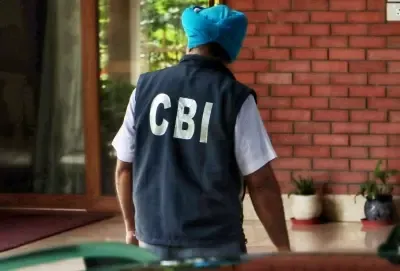
CBI court jails 30 in Punjab rice scam: 14 FCI officials, 16 millers convicted

Synopsis
More than two decades after substandard rice was passed off as Grade-A grain at FCI centres in Punjab, a Special CBI Court has finally handed down sentences — 30 convicts, including 14 FCI officials and 16 private millers, face up to three years behind bars. The verdict lays bare a systemic rot in grain procurement quality control that cost the Corporation money and the public trust.
Key Takeaways
A Special CBI Court in Mohali sentenced 30 convicts on 14 November 2026 in the 2004-2005 Punjab Rice Procurement Scam .
The convicted include 14 FCI officials and 16 private rice millers , facing rigorous imprisonment ranging from one to three years plus fines.
FCI officials were additionally convicted under the Prevention of Corruption Act, 1988 .
The scam involved accepting substandard rice as Grade-A at FCI centres in Malerkotla, Sunam, and Tapa in Sangrur district.
The CBI registered the case on 7 January 2006 after surprise checks in September 2005 and laboratory confirmation of quality failures.
Most FCI officials received two years' RI and fines of ₹15,000 each .
A Special CBI Court in Mohali, Punjab, on 14 November 2026 sentenced 30 convicts — including 14 officials of the Food Corporation of India (FCI) and 16 private rice millers — to rigorous imprisonment of up to three years for their roles in the 2004-2005 Punjab Rice Procurement Scam. The court found all accused guilty of criminal conspiracy and cheating under the Indian Penal Code (IPC), with the FCI officials additionally convicted under the Prevention of Corruption Act, 1988.
What the Scam Involved
According to a Central Bureau of Investigation (CBI) statement, the fraud centred on a criminal conspiracy between FCI officials and private rice millers during Kharif Season 2004-2005. Substandard rice was deliberately accepted as Grade-A rice at FCI procurement centres in Malerkotla, Sunam, and Tapa in Sangrur district, resulting in wrongful payments to millers and direct financial loss to the Corporation. The irregularities surfaced during joint surprise checks carried out by the CBI in September 2005, and laboratory examination of rice samples confirmed that the consignments failed to meet prescribed quality specifications. The CBI formally registered the case on 7 January 2006.
Key Convictions Across Three Centres
In the Malerkotla Centre case, the court convicted 10 accused — five FCI officials and five rice millers. The then FCI Technical Assistants Varinder Rajput, Girdari Lal, and K.P. Singh, along with then FCI Assistant Managers (Quality Control) Raunaq Ali and R.N. Sharma, were each sentenced to two years' rigorous imprisonment (RI) and fined ₹15,000. Among the private millers convicted were Harish Kumar and Rajnish Kumar, partners of Shiv Shakti Rice Agro Products, and Rakesh Goyal, partner of R.K. Agro Tech.
In the Sunam Centre case, six accused — three FCI officials and three millers — were convicted. The then FCI Assistant Manager (Quality Control) R.C. Verma and then FCI Technical Assistants Som Pal Singh and K.L. Gulati each received two years' RI and a fine of ₹15,000.
The Tapa Centre case yielded the largest single-centre conviction, with 14 accused found guilty — six FCI officials and eight private individuals. The then FCI Deputy Manager (Quality Control) Gurmail Singh, then Assistant Manager (Quality Control) R.S. Sirohi, and then Technical Assistants Ramesh Kumar, Harinder Singh, Harish Kumar, and Satnam Singh were each sentenced to two years' RI with a fine of ₹15,000.
Significance of the Verdict
The convictions mark the conclusion of an investigation that began more than two decades ago, underscoring the protracted timelines that characterise complex food-procurement fraud cases in India. Notably, this verdict comes at a time of heightened public scrutiny over grain quality and food security management under government procurement systems. The case also illustrates systemic vulnerabilities in FCI's quality-control chain, where officials entrusted with grading powers were found complicit in accepting inferior stock.
What Happens Next
The convicts are entitled to appeal the sentences before higher courts. The CBI has not yet indicated whether it will seek enhanced sentences or file supplementary chargesheets against any additional accused. Industry observers say the verdict could prompt the FCI to revisit its internal quality-audit mechanisms at procurement centres across grain-surplus states.
Point of View
But it also exposes how slowly India's anti-corruption machinery grinds — by the time sentences are handed down, careers have ended and institutional memory has faded. The more pressing question is structural: if quality-control gatekeepers at three separate FCI centres in a single district could collude simultaneously, it was not an individual failure but a systemic one. The FCI has yet to demonstrate that internal audit reforms have made repeat conspiracies harder. Verdicts without institutional overhaul are a rearguard action, not a deterrent.
NationPress
14 Nov 2026
Frequently Asked Questions
What was the 2004-2005 Punjab Rice Procurement Scam?
The scam involved a criminal conspiracy between FCI officials and private rice millers during Kharif Season 2004-2005, in which substandard rice was deliberately accepted as Grade-A rice at FCI procurement centres in Malerkotla, Sunam, and Tapa in Sangrur district, Punjab. This led to wrongful payments to millers and financial losses to the Food Corporation of India.
How many people were convicted and what sentences did they receive?
A total of 30 people were convicted — 14 FCI officials and 16 private rice millers. The court handed down rigorous imprisonment ranging from one to three years, along with monetary fines. Most FCI officials received two years' RI and fines of ₹15,000 each.
Under which laws were the accused convicted?
All 30 convicts were found guilty of criminal conspiracy and cheating under the Indian Penal Code (IPC). The 14 FCI officials were additionally convicted under the Prevention of Corruption Act, 1988, given their status as public servants.
How did the scam come to light?
The irregularities were detected during joint surprise checks conducted by the CBI in September 2005. Laboratory examination of rice samples subsequently confirmed that the consignments did not meet prescribed quality specifications, leading the CBI to formally register the case on 7 January 2006.
Which FCI centres were involved in the scam?
Three FCI procurement centres in Sangrur district, Punjab — Malerkotla, Sunam, and Tapa — were implicated. The Tapa Centre case had the highest number of convictions, with 14 accused found guilty, while Malerkotla and Sunam saw 10 and 6 convictions respectively.