CM Mohan Yadav Highlights NAMASTE Scheme for Sanitation Workers
Synopsis
Madhya Pradesh CM Dr. Mohan Yadav has highlighted the state's implementation of the NAMASTE scheme, which provides sanitation workers with safety equipment, occupational training and health protection, alongside Ayushman Bharat health insurance coverage of up to Rs 5 lakh per family.
Key Takeaways
Madhya Pradesh CM Dr.
Mohan Yadav confirmed the state is implementing the NAMASTE (National Action for Mechanised Sanitation Ecosystem) scheme for sanitation workers.
NAMASTE, launched by the Union Ministry of Social Justice and Empowerment in 2023 , delivers safety equipment, occupational training and health support to safai karmis .
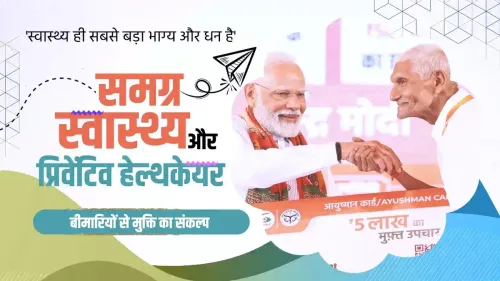
Sanitation workers in Madhya Pradesh are also being extended coverage under Ayushman Bharat , which provides up to Rs 5 lakh in annual health insurance per family.
The scheme is part of the broader Swachh Bharat framework , prioritising mechanisation over manual scavenging and reducing occupational hazards.
District-level coverage and actual equipment procurement data remain the key metrics to watch for real-world impact.
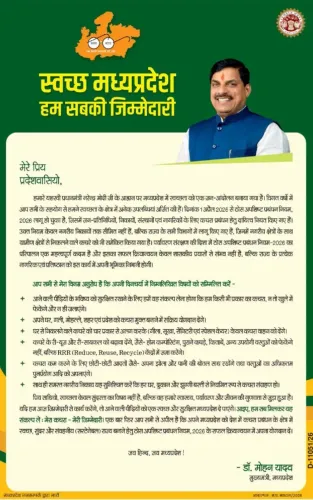
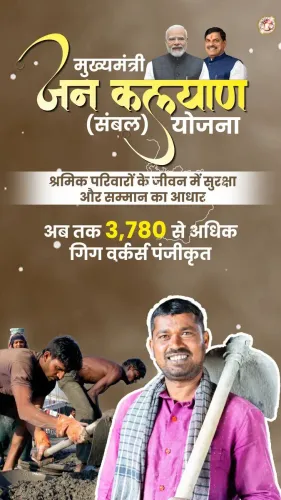
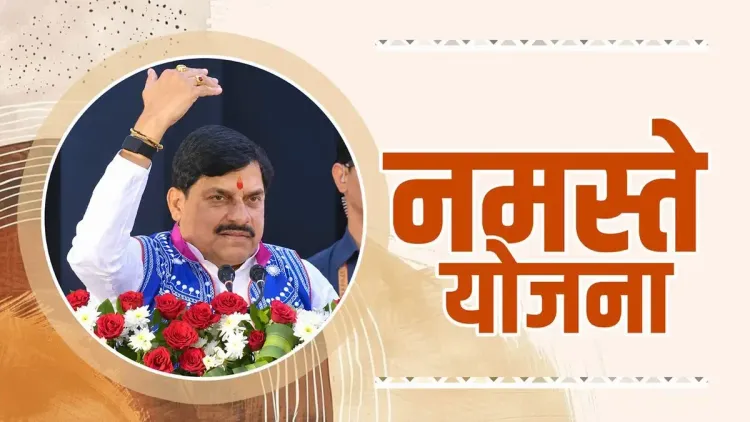
Madhya Pradesh's sanitation workers — often invisible to policy, often the last to benefit from it — are at the centre of a welfare push that Chief Minister Dr. Mohan Yadav highlighted on Saturday, 14 November 2026, underscoring the state's adoption of two interlocking central schemes to protect the men and women who keep India's cities clean.
Speaking via X, Dr. Yadav stated: 'Safai karmiyon ki suraksha ke liye Namaste Yojana laagu ki hai' — 'The NAMASTE scheme has been implemented for the safety of sanitation workers, under which safety equipment, training and health protection facilities are being provided. Along with this, the benefit of the Ayushman scheme is also being extended.'
What the NAMASTE Scheme Actually Does
The National Action for Mechanised Sanitation Ecosystem (NAMASTE) was launched by the Union Ministry of Social Justice and Empowerment in 2023 with a sharp and specific mandate: replace manual scavenging with mechanised cleaning equipment and equip safai karmis with occupational safety training and health support. The scheme is a direct descendant of the Swachh Bharat framework — but it goes further, targeting the human cost of a hazardous profession rather than just the cleanliness metrics.
At its core, NAMASTE delivers three things: protective gear and machinery so workers are not exposed to sewage and toxic gases in confined spaces; structured safety training to reduce accidents and fatalities; and a health-security net that links directly into existing insurance infrastructure.
Ayushman Bharat as the Safety Net Behind the Safety Net
Ayushman Bharat Pradhan Mantri Jan Arogya Yojana, rolled out in 2018, provides up to Rs 5 lakh in annual health insurance coverage per family for secondary and tertiary hospital care. By explicitly extending its benefits to sanitation workers under the NAMASTE umbrella, the state is ensuring that a worker hospitalised after a sewer-line accident does not face financial ruin on top of physical injury.
The pairing matters. Equipment and training reduce the probability of a health emergency; Ayushman coverage addresses the financial fallout when one still occurs. Together they represent a belt-and-suspenders approach to a workforce that has historically had neither.
State Adoption Within a National Push
Madhya Pradesh is not alone in this direction — several states have moved to integrate NAMASTE provisions with Ayushman health coverage — but state-level implementation quality, district coverage and actual equipment procurement timelines remain the real test. Dr. Yadav's post signals political ownership of the scheme at the top of the state government; whether district administrations have translated that into on-the-ground delivery is the question that will determine whether the welfare intent becomes welfare reality for Madhya Pradesh's safai karmis.
India's sanitation workforce has long worked at the intersection of risk and neglect. The push to mechanise, train and insure them is overdue — and the chief minister putting it on the record is a step toward accountability.
Point of View
The gap between scheme announcement and ground-level delivery — in terms of equipment stocks, trained supervisors and insurance enrolment — will determine whether this translates into genuine safety improvements. With Madhya Pradesh being a large state with significant urban sanitation needs, the district-level execution story will carry as much political weight as the chief minister's post.
NationPress
14 Nov 2026
Frequently Asked Questions
What is the NAMASTE scheme in India?
NAMASTE stands for National Action for Mechanised Sanitation Ecosystem, launched by the Union Ministry of Social Justice and Empowerment in 2023. It aims to replace manual scavenging with mechanised equipment and provides safety training and health support to sanitation workers across India.
What benefits do sanitation workers get under NAMASTE Yojana?
Under NAMASTE, sanitation workers receive protective safety equipment, structured occupational safety training and health protection facilities to reduce risks associated with manual cleaning of sewers and septic tanks.
How does Ayushman Bharat help safai karmis?
Ayushman Bharat Pradhan Mantri Jan Arogya Yojana provides up to Rs 5 lakh in annual health insurance coverage per family for secondary and tertiary hospital care, offering a financial safety net to sanitation workers who face high occupational health risks.
Is NAMASTE Yojana being implemented in Madhya Pradesh?
Yes, Madhya Pradesh Chief Minister Dr. Mohan Yadav confirmed on 14 November 2026 that the NAMASTE scheme is being implemented in the state, with safety equipment, training and Ayushman health coverage being extended to sanitation workers.
What is the connection between NAMASTE and Swachh Bharat?
NAMASTE is part of the broader Swachh Bharat framework but specifically focuses on the welfare and safety of the sanitation workforce — prioritising mechanisation to end manual scavenging and providing training and insurance rather than purely targeting cleanliness outcomes.