CM Madhya Pradesh Highlights Sambal Yojana for Labour Families
Synopsis
The Chief Minister's Office of Madhya Pradesh spotlighted the Mukhyamantri Jan Kalyan (Sambal) Yojana on 5 July 2026, calling it a strong foundation of security and dignity for unorganised labour families. The scheme, launched around 2017–18, provides health, insurance and education support to informal sector workers across the state.
Key Takeaways
The Chief Minister's Office of Madhya Pradesh posted on 5 July 2026 reaffirming the Sambal Yojana as a pillar of labour welfare.
The Mukhyamantri Jan Kalyan (Sambal) Yojana was originally launched around 2017–18 to extend social security to unorganised workers.
Benefits under the scheme include health support, accident insurance, and educational assistance for workers' families.
The Madhya Pradesh Labour Department is responsible for worker registration and benefit delivery.
The scheme aligns with the national Unorganised Workers Social Security Act framework.
Registration numbers and disbursement data will be key metrics to watch in the next legislative session.
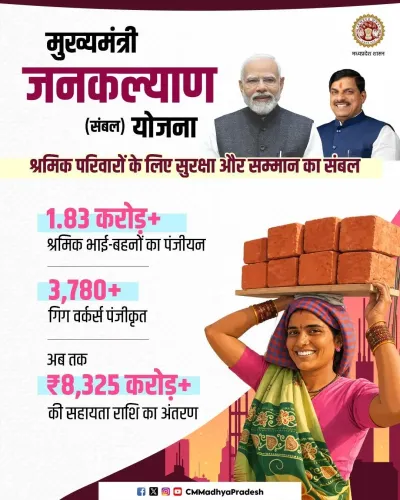
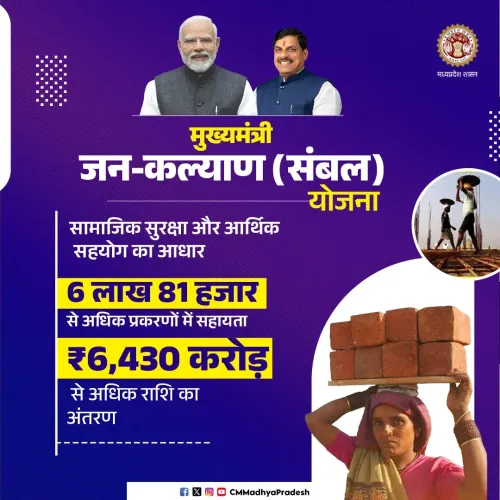
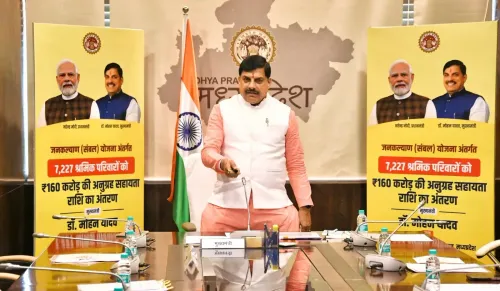
The Chief Minister's Office of Madhya Pradesh on Sunday, 5 July 2026 reaffirmed the state government's commitment to the Mukhyamantri Jan Kalyan (Sambal) Yojana, describing the scheme as a 'strong foundation of security and dignity' for working-class families across the state. The post, attributed to the office of Chief Minister Dr. Mohan Yadav, highlighted the scheme's role in improving the lives of unorganised labour households.
Context
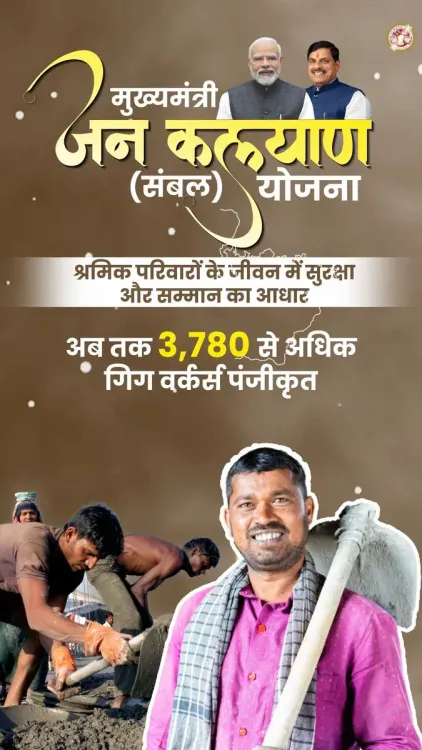
The official X account of the Chief Minister's Office shared a post in Hindi stating: 'Mukhyamantri Jan Kalyan (Sambal) Yojana' — translated as 'Chief Minister Public Welfare (Sambal) Scheme' — is a 'strong foundation of security and respect in the lives of labour families.' The message tagged Dr. Mohan Yadav and the Madhya Pradesh Labour Department, signalling a coordinated push to amplify the scheme's reach and public visibility.
The Sambal Yojana is one of the flagship welfare programmes of the Madhya Pradesh government, designed specifically to extend social security coverage to workers in the unorganised sector — a segment that has historically lacked access to formal insurance, healthcare, and education support.
Policy Backdrop
The scheme was originally launched around 2017–18 under the Madhya Pradesh government with the aim of registering unorganised workers and delivering direct benefits including health support, accident insurance, and educational assistance for their children. It operates in alignment with the broader national framework established under the Unorganised Workers Social Security Act.
Madhya Pradesh has periodically expanded such programmes under successive administrations. The Sambal scheme has gone through phases of revision and reinvigoration, with each iteration seeking to widen the beneficiary base and streamline benefit disbursement. Several other Indian states have introduced comparable schemes, reflecting a national pattern of targeted social protection for informal sector workers.
Stakeholders and Impact
The primary beneficiaries of the Sambal Yojana are unorganised and construction sector workers and their families — a demographic that constitutes a substantial portion of Madhya Pradesh's workforce. For these households, the scheme represents access to a safety net that would otherwise be unavailable through formal employment channels.
The Madhya Pradesh Labour Department is the nodal agency responsible for worker registration and benefit delivery under the scheme. Effective implementation depends on outreach efforts to ensure eligible workers are enrolled and that disbursements reach them without delays or administrative bottlenecks.
What's Next
Observers and welfare advocates will watch for concrete data on beneficiary registration numbers and benefit disbursements in the coming months. Any budget allocations or policy announcements tied to the scheme in the next state legislative session or the annual Labour Department report will be key indicators of the government's commitment to scaling up the programme.
As Madhya Pradesh continues to position the Sambal Yojana as a cornerstone of its labour welfare agenda, the scheme's real-world reach among the state's most economically vulnerable workers will ultimately determine its political and social impact.
Point of View
Used to remind target constituencies of government outreach. The tagging of both Chief Minister Dr. Mohan Yadav and the Labour Department suggests a coordinated communications strategy rather than a standalone post. The scheme's long lineage since 2017–18 also allows the government to claim continuity and institutional depth in social protection — a narrative that resonates with a large informal workforce.
NationPress
5 Oct 2026
Frequently Asked Questions
What is the Mukhyamantri Jan Kalyan Sambal Yojana in Madhya Pradesh?
The Mukhyamantri Jan Kalyan (Sambal) Yojana is a Madhya Pradesh government welfare scheme launched around 2017–18 that provides social security benefits — including health support, accident insurance, and educational assistance — to unorganised and informal sector workers and their families.
Who is eligible for the Sambal Yojana in MP?
Unorganised sector workers, including construction labourers and other informal workers in Madhya Pradesh, are the primary eligible beneficiaries. Registration is handled by the Madhya Pradesh Labour Department.
What benefits does the Sambal Yojana provide?
The scheme provides a range of social security benefits including health coverage, accident insurance, and educational support for the children of registered unorganised workers in Madhya Pradesh.
Who is the Chief Minister of Madhya Pradesh in 2026?
Dr. Mohan Yadav is the Chief Minister of Madhya Pradesh and is associated with promoting state labour welfare initiatives including the Sambal Yojana.
How can workers register for the Sambal Yojana?
Registration is managed by the Madhya Pradesh Labour Department. Eligible workers are encouraged to enrol through official state government channels and labour department outreach programmes.