CM Conrad Sangma: Wangala Drums 50th Edition Breaks Guinness Record
Synopsis
The 50th Hundred Drums Wangala Festival at Chibragre, Garo Hills, entered the Guinness World Records for the Largest Wangala Dance with 1,000 Dama drummers performing together. Meghalaya CM Conrad Sangma announced the milestone, citing a Rs 26 crore state investment and his late father P.A. Sangma's guiding vision.
Key Takeaways
The 50th Hundred Drums Wangala Festival at Wangala A·dam, Chibragre on November 14, 2026 entered the Guinness World Records for the Largest Wangala Dance.
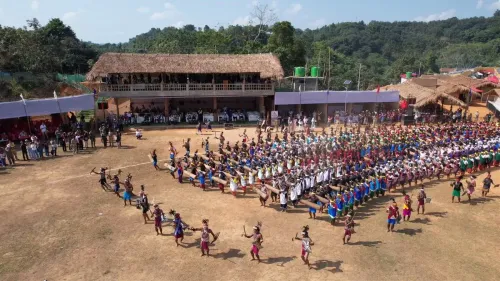
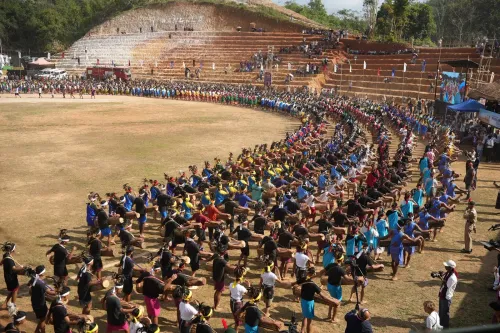
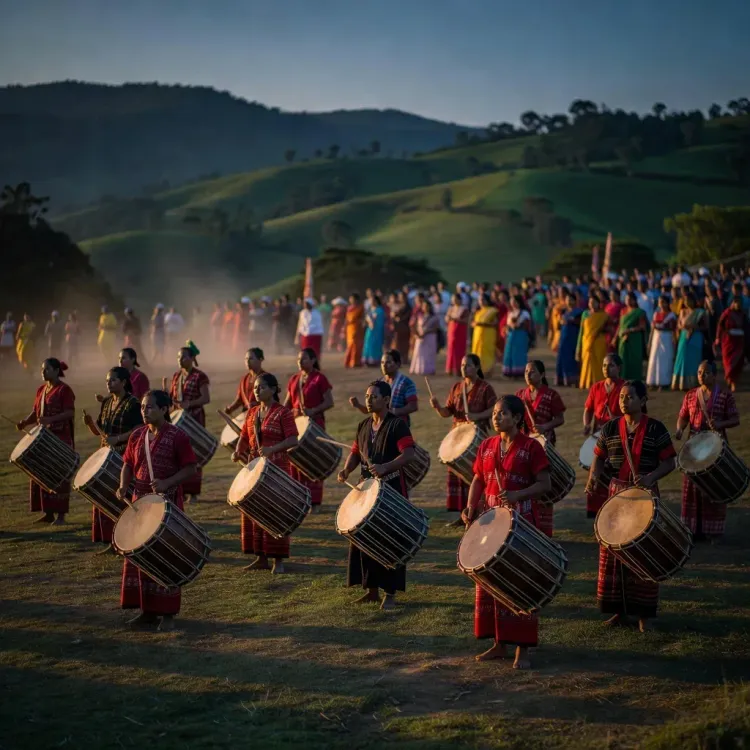
1,000 Dama drummers performed simultaneously, up from the founding 100 drums when the festival launched in 1976 .
The Government of Meghalaya invested Rs 26 crore in the Golden Jubilee — Rs 20 crore for venue development and Rs 6 crore for organising the event.
CM Conrad Sangma credited the milestone to the vision of his late father, former Lok Sabha Speaker P.A.
The state also funded the Guinness World Records application and official adjudication process.
Wangala is the traditional harvest thanksgiving festival of the Garo people of Meghalaya's Garo Hills region.
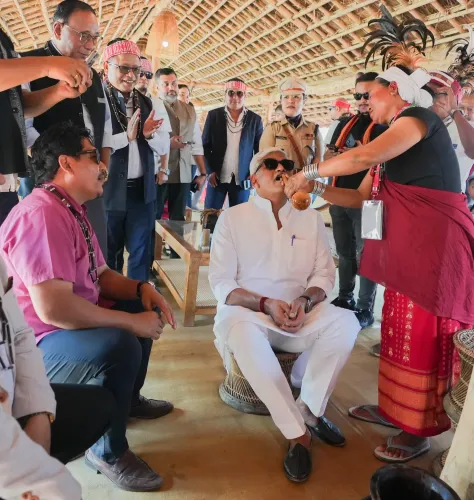
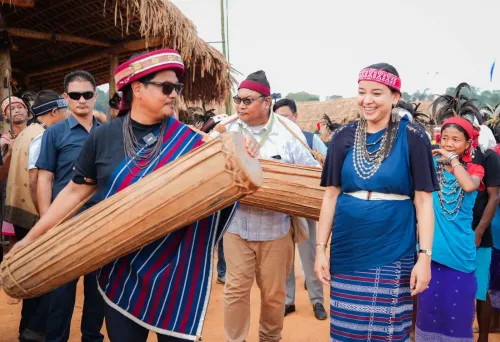
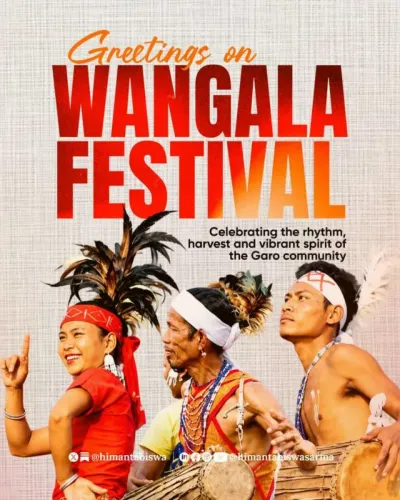
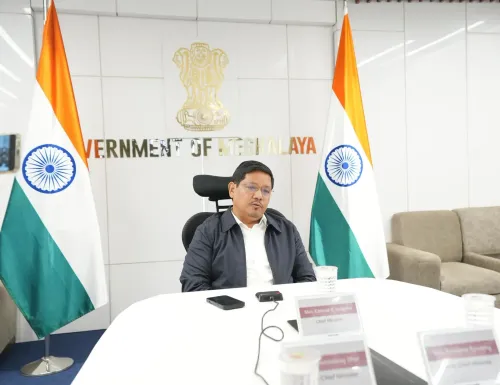
A thousand drums thundered as one in the Garo Hills of Meghalaya on Saturday, November 14, 2026 — and the world took notice. Meghalaya Chief Minister Conrad Sangma announced that the 50th Hundred Drums Wangala Festival, held at Wangala A·dam, Chibragre, has entered the Guinness World Records for the Largest Wangala Dance, with 1,000 Dama drummers performing together in what the festival calls the 'Rhythm of 1,000 Drums.'
From 100 Drums in 1976 to 1,000 at the Golden Jubilee
The story is one of compounding ambition across half a century. The Hundred Drums Wangala Festival was first held in 1976 as a platform to celebrate the Garo people's ancient harvest thanksgiving tradition, anchored by rhythmic drum dances that mark the close of the agricultural year. It opened with exactly 100 drums — the name that stuck. Fifty years on, that founding number has grown tenfold.
CM Sangma attributed the Golden Jubilee milestone to the vision of his late father, P.A. Sangma, the former Speaker of the Lok Sabha and one of Meghalaya's most towering political figures, who had long championed the festival's expansion. 'The festival began in 1976 with 100 drums,' CM Sangma wrote. 'At its Golden Jubilee it has reached 1,000, fulfilling the vision of Late P.A. Sangma.'
The Rs 26 Crore State Investment Behind the Record
The Guinness certification did not arrive by accident. The Government of Meghalaya, operating through Meghalaya Tourism, backed the Golden Jubilee with a full financial package. This included Rs 20 crore channelled through the Public Works Department to develop the Wangala A·dam venue at Chibragre into a purpose-built festival ground, plus Rs 6 crore for organising the event itself. Costs for the Guinness World Records application and official adjudication were also covered by the state.
That scale of public investment — Rs 26 crore in total — reflects a broader pattern across Northeast India, where state governments have poured resources into indigenous cultural festivals as anchors for heritage tourism and international visibility. A Guinness attempt, in that playbook, is as much a tourism campaign as a cultural gesture.
What Wangala Means — and Why the World Record Matters
Wangala is not a performance designed for outsiders. It is the Garo community's thanksgiving for the harvest — a sacred, communal act of gratitude rooted in centuries of tradition. The festival's formal name in the Garo language carries the weight of that origin. When CM Sangma closed his post with the word 'Mitela' — a Garo expression of collective goodwill and celebration — to 'everyone who carried this tradition for fifty years,' the choice of language was deliberate. This milestone belongs to the community first.
Yet the Guinness certification does something specific: it converts a local act of devotion into a globally legible achievement. 'Wangala is our thanksgiving for the harvest,' Sangma wrote, 'and today it belongs to the world.' For Garo Hills and for Meghalaya's cultural tourism ambitions, that phrase is both poetic and strategic.
Fifty years after a hundred drums first beat in Chibragre, the Garo Hills just made the whole world listen.
Point of View
Amplified through international certification, and repackaged as a tourism asset — without, at least in this case, visibly displacing the community at the centre. The Rs 26 crore investment signals that Meghalaya under CM Conrad Sangma is treating Garo Hills cultural heritage as an economic lever, not just a symbolic gesture. For a state whose tourism revenues depend heavily on its tribal identity and natural landscape, turning a 50-year-old drum festival into a globally certified event is a calculated bet on soft-power returns. The P.A. Sangma framing also does political work: it links the son's governance achievements to a paternal legacy, deepening the Sangma family's bond with the Garo electorate ahead of future electoral cycles.
NationPress
14 Nov 2026
Frequently Asked Questions
What Guinness World Record did the Wangala Festival break in 2026?
The 50th Hundred Drums Wangala Festival at Chibragre, Meghalaya, entered the Guinness World Records for the Largest Wangala Dance, with 1,000 Dama drummers performing together on November 14, 2026.
What is the Wangala Festival and why is it celebrated?
Wangala is the traditional harvest thanksgiving festival of the Garo people of Meghalaya's Garo Hills. It features rhythmic drum dances and communal celebrations marking the close of the agricultural year.
When did the Hundred Drums Wangala Festival start?
The Hundred Drums Wangala Festival was first held in 1976 with 100 drums. Its 2026 edition marks the Golden Jubilee — 50 years — and featured 1,000 drummers.
How much did the Meghalaya government spend on the 2026 Wangala Festival?
The Government of Meghalaya invested a total of Rs 26 crore — Rs 20 crore through the Public Works Department for the Wangala A·dam venue and Rs 6 crore for organising the festival, plus costs for the Guinness World Records adjudication.
Who was P.A. Sangma and what was his connection to the Wangala Festival?
P.A. Sangma was a former Speaker of the Lok Sabha and a prominent Meghalaya leader. CM Conrad Sangma is his son and credited P.A. Sangma's vision with driving the festival's growth from 100 to 1,000 drums over fifty years.