CM Conrad Sangma Hosts Union Tourism Minister at Wangala Golden Jubilee
Synopsis
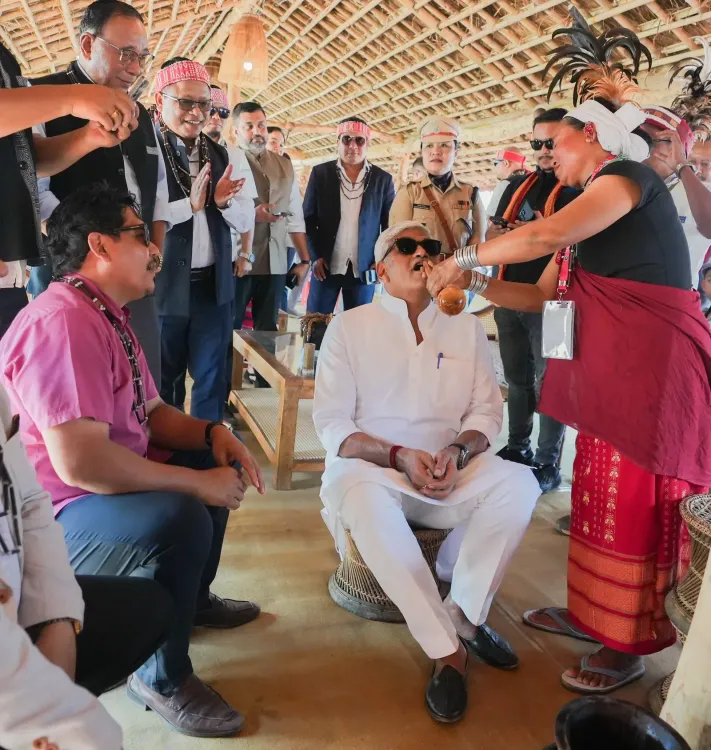
Meghalaya CM Conrad Sangma hosted Union Tourism Minister Gajendra Singh Shekhawat at the Golden Jubilee closing of the Wangala Festival on November 14, 2026, celebrating 50 years of the Garo community's iconic harvest celebration and its growing role in national cultural tourism.
Key Takeaways
Meghalaya CM Conrad Sangma welcomed Union Tourism Minister Gajendra Singh Shekhawat to the closing day of the Wangala Festival Golden Jubilee on November 14, 2026 .
The Wangala Festival marks its 50th anniversary this year, celebrated as the Golden Jubilee edition.
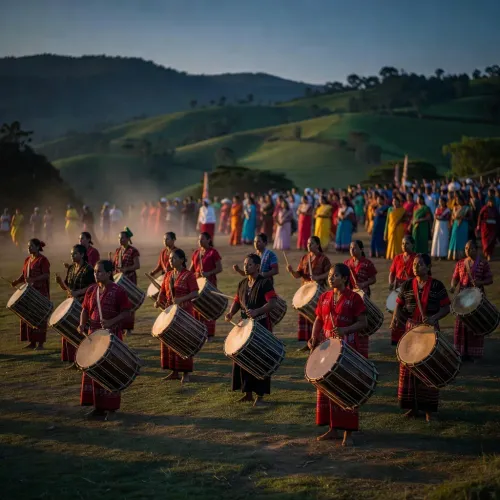
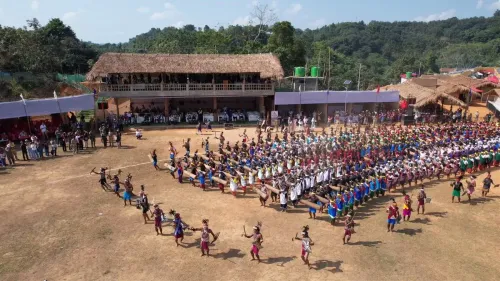
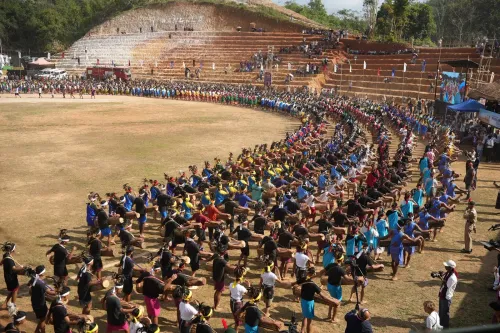
Wangala is the annual harvest festival of the Garo (A•chik) community of Meghalaya, renowned for its 1,000-drums performance.
Sangma described Wangala as 'a proud expression of our A•chik identity, culture and rich heritage.' The joint presence of state and central tourism authorities signals ongoing interest in developing Garo Hills cultural tourism infrastructure .
Meghalaya has positioned Wangala as a flagship event in its annual tourism calendar , with national branding support from @tourismgoi .
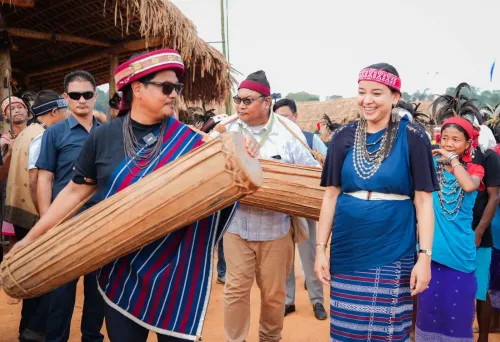
Fifty years of the Wangala Festival reached a milestone on Saturday, November 14, 2026, and Meghalaya Chief Minister Conrad Sangma marked the closing ceremony with a welcome that brought the Centre and Northeast together — hosting Union Tourism Minister Gajendra Singh Shekhawat at one of India's most distinctive tribal harvest celebrations.
A Golden Jubilee for the A•chik heartbeat
The Wangala Festival — the annual harvest celebration of the Garo, or A•chik, community — marks the close of the agricultural season with traditional rituals, dance, and the thunderous pulse of massed drumming. This year's edition carried the added weight of its 50th anniversary, earning it the title of a Golden Jubilee. Sangma called Wangala 'a proud expression of our A•chik identity, culture and rich heritage,' framing the festival not merely as celebration but as a living assertion of Garo peoplehood.
The centrepiece remains the 1,000-drums performance — an orchestrated spectacle in which hundreds of traditional dama drums beat in unison, a sound that resonates far beyond the foothills of Garo Hills. Sangma invoked that image directly, expressing hope that 'the resounding beats of the 1000 drums continue to unite our communities and usher in a bountiful harvest of peace and prosperity for Meghalaya and our nation.'
Shekhawat's presence: more than a courtesy call
Gajendra Singh Shekhawat, who holds the Union Tourism portfolio, attending the closing day of Wangala fits a deliberate pattern — central government ministers appearing at Northeastern tribal festivals as a signal that regional cultural heritage belongs in India's national tourism narrative. Meghalaya has long positioned Wangala as a flagship event on its annual tourism calendar, and a ministerial visit reinforces the case for continued central support and visibility.
Both the @tourismgoi and @meghtourism handles were tagged in Sangma's post, a small but pointed move: it channels attention toward the tourism infrastructure behind the festival, hinting at the state's interest in sustained partnership beyond the ceremony itself.
Northeast festivals as a national tourism lever
Meghalaya's strategic bet on its tribal festivals as eco- and cultural-tourism draws has grown steadily over the past decade. The state's majority tribal population and biodiversity-rich landscape give it a distinctive offer within the Northeast tourism corridor. Wangala, alongside other Garo Hills events, sits at the intersection of cultural preservation and economic aspiration — keeping traditions alive while drawing visitors and investment to one of India's less-visited but visually spectacular regions.
At fifty, Wangala is no longer a local ritual quietly observed in the hills. It is a branded, nationally acknowledged cultural event — and the Golden Jubilee, with a Union minister in attendance, makes that evolution unmistakable.
The question now is whether the symbolism of a ministerial handshake translates into concrete infrastructure, funding, or tourism-partnership announcements for Garo Hills — the next beat the community will be listening for.
Point of View
The optics reinforce his dual role as cultural custodian of the Garo community and a credible conduit between Meghalaya and the Centre. The 50th anniversary creates a natural inflection point: expect the state to leverage this milestone when negotiating central funds for Garo Hills tourism infrastructure. Whether celebratory symbolism converts into budgetary commitments will be the real measure of this partnership.
NationPress
14 Nov 2026
Frequently Asked Questions
What is the Wangala Festival of Meghalaya?
Wangala is the annual harvest festival of the Garo, or A•chik, community of Meghalaya, celebrated to mark the end of the agricultural season with traditional rituals, dances, and a spectacular performance featuring 1,000 drums.
Why is the 2026 Wangala Festival called the Golden Jubilee?
The 2026 edition marks the 50th anniversary of the Wangala Festival, earning it the designation of Golden Jubilee.
Who is Gajendra Singh Shekhawat and why did he attend Wangala?
Gajendra Singh Shekhawat is India's Union Minister of Tourism. His attendance at the Wangala Golden Jubilee closing ceremony reflects the central government's policy of supporting Northeastern tribal festivals as part of national tourism promotion.
Who are the A•chik people?
A•chik is the self-designation of the Garo tribal community of Meghalaya and neighbouring areas in Northeast India. The term means 'hill people' and is used to assert their distinct cultural and linguistic identity.
What is the significance of the 1,000 drums at Wangala?
The 1,000-drums performance is the centrepiece of Wangala, in which hundreds of traditional Garo drums beat in unison. It symbolises community unity, agricultural thanksgiving, and the living heritage of the A•chik people.