Gowri-Ganesha festival 2026: 3,000 extra CCTV cameras deployed across Bengaluru
Synopsis
Karnataka's Gowri-Ganesha festival drew massive crowds from 3 am at iconic temples, but the standout detail was the security scale in Bengaluru — 3,000 additional CCTV cameras, drone surveillance, and KSRP platoons deployed citywide. In Davanagere, a belief linking Ganesha idol soil to a Sufi saint captured the syncretic spirit of the celebrations.
Key Takeaways
Gowri-Ganesha festival was celebrated across Karnataka on 14 September 2026 with wide participation.
Around 3,000 additional CCTV cameras were installed in Bengaluru , supplementing the existing surveillance network in sensitive areas.
KSRP platoons and drones were deployed for security; the police command centre maintained round-the-clock monitoring.
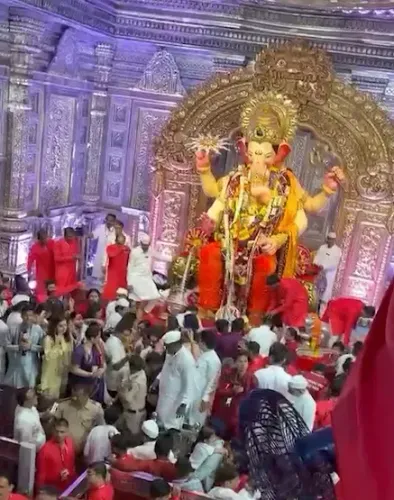
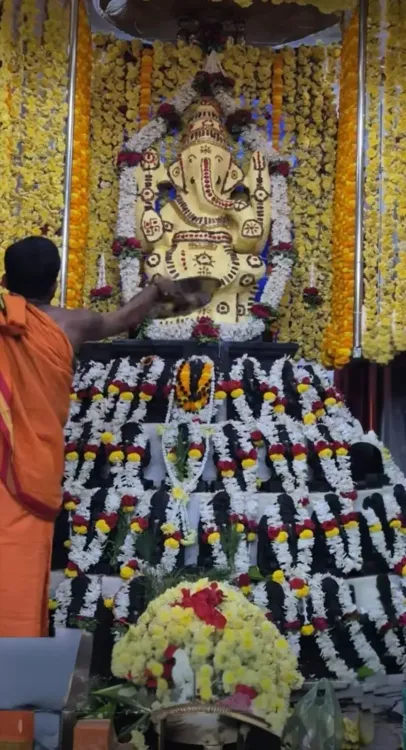
At Dodda Ganapathi Temple, Basavanagudi , a milk abhisheka using 1,000 litres of milk was performed at 2.30 am ; devotees queued from 3 am .
The 101 Ganesh Temple in Mysuru saw 101 families install 101 idols across four tiers inside the premises.
More than 2,500 Ganesha idols were installed in Davanagere , with police securing 13 hypersensitive areas .
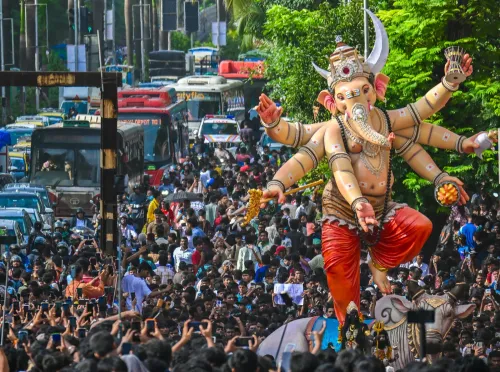
The Gowri-Ganesha festival was celebrated with widespread religious fervour across Karnataka on Monday, 14 September, with devotees thronging temples and markets to mark Ganesh Chaturthi. In Bengaluru, authorities deployed around 3,000 additional CCTV cameras on top of the existing surveillance network to monitor sensitive and hypersensitive areas throughout the city.
Security Arrangements in Bengaluru
Karnataka State Reserve Police (KSRP) platoons were stationed at key locations across the capital, while drones were pressed into service for aerial surveillance. Police issued specific directions on loudspeaker usage and put in place dedicated security arrangements along procession routes. The situation was being monitored in real time from the city's central police command centre, with round-the-clock vigil maintained to ensure peaceful celebrations.
Rush at Markets and Historic Temples
K.R. Market in Bengaluru saw heavy footfall from the early hours of the morning, with devotees arriving to purchase fruits, flowers, vegetables, and puja materials. Traffic around the market area was disrupted from as early as 5 am due to the large gathering. At the historic Dodda Ganapathi Temple in Basavanagudi, devotees began queuing up as early as 3 am. Temple priests performed special worship at around 2.30 am, followed by a milk abhisheka using approximately 1,000 litres of milk. Maha Mangalarati was conducted at 6 am, and the temple was scheduled to remain open until 12.30 am. Temple management head Srinivas confirmed that prasadam distribution was set to continue from 6 am until midnight.
Celebrations in Mysuru, Hubballi and Davanagere
In Mysuru, the celebrated 101 Ganesh Temple drew large crowds, with special worship commencing at around 3 am. According to the temple's chief priest Sunil, 101 families had collectively installed 101 Ganesha idols across four tiers within the temple premises — 32 on the first step, 26 on the second, 24 on the third, and 18 on the fourth — with a large Ganesha idol placed at the top. Devotees believe that visiting the temple, offering akshate, and submitting prayers provides relief from sins and doshas, with special worship conducted on every Sankashta Chaturthi.
In Hubballi, popularly known as Chota Mumbai, streets were packed as buyers arrived to purchase Ganesha idols, with several people from rural areas travelling in bullock carts to buy and carry idols home. In Davanagere, more than 2,500 Ganesha idols were being installed as part of the festival. Police stepped up security, particularly across 13 identified hypersensitive areas. Notably, residents preferred idols sourced from the Kunnur region, believing the local soil was blessed by revered Sufi saint Santa Shishunala Sharif — a detail that underscores the festival's inclusive character in the region.
Authorities Urge Communal Harmony
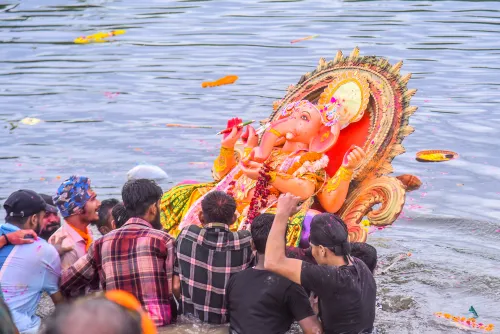
Authorities across Karnataka urged citizens to celebrate peacefully, maintain communal harmony, and adhere to safety regulations during processions and idol immersions. This comes amid a broader statewide security apparatus that has been activated for one of Karnataka's most widely observed festivals, reflecting both the scale of public participation and the administrative challenge it presents each year.
Point of View
000 extra cameras and drone surveillance for a religious festival speaks to a broader pattern of escalating security footprints at public events in Karnataka — raising questions about the balance between crowd safety and civil liberties that rarely get interrogated. The Davanagere detail — devotees preferring idols from soil blessed by a Sufi saint — is the story that mainstream coverage buries in the final paragraph but arguably deserves the lede: it illustrates how Karnataka's festival culture has historically woven together Hindu and Sufi traditions, even as communal tensions in the state's political discourse have sharpened. Authorities' appeals for 'communal harmony' are now boilerplate, but their very inclusion signals that the administration treats the festival's peace as something to be managed, not assumed.
NationPress
14 Sept 2026
Frequently Asked Questions
Where is the Gowri-Ganesha festival celebrated and what is it?
The Gowri-Ganesha festival is a major Hindu celebration observed across Karnataka, combining the worship of Goddess Gowri and Lord Ganesha over two consecutive days during Ganesh Chaturthi. In 2026, it was celebrated on 14 September with large gatherings at temples, markets, and procession routes statewide.
What security arrangements were made in Bengaluru for Ganesh Chaturthi 2026?
Bengaluru deployed around 3,000 additional CCTV cameras over its existing network, with Karnataka State Reserve Police platoons at key locations and drones for aerial surveillance. All movements were monitored from the central police command centre, and specific guidelines on loudspeakers and procession routes were issued.
What is special about the 101 Ganesh Temple in Mysuru?
The 101 Ganesh Temple in Mysuru features 101 Ganesha idols installed by 101 families across four tiers — 32 on the first step, 26 on the second, 24 on the third, and 18 on the fourth — with a large Ganesha idol at the top. Special worship is performed at every Sankashta Chaturthi, and devotees believe visiting the temple and offering akshate grants relief from sins and doshas.
Why do devotees in Davanagere prefer Ganesha idols from the Kunnur region?
Residents of Davanagere favour idols sourced from the Kunnur region because they believe the local soil was blessed by revered Sufi saint Santa Shishunala Sharif. More than 2,500 Ganesha idols were being installed across Davanagere as part of this year's festival celebrations.
What rituals were performed at Dodda Ganapathi Temple in Basavanagudi?
At the Dodda Ganapathi Temple in Basavanagudi, Bengaluru, temple priests performed special worship at 2.30 am on 14 September, followed by a milk abhisheka using around 1,000 litres of milk. Maha Mangalarati was conducted at 6 am, with prasadam distribution continuing from 6 am until midnight and the temple open until 12.30 am.