319 CAA beneficiaries in Gujarat's Saurashtra-Kutch to get citizenship on October 15
Synopsis
Gujarat's third CAA citizenship ceremony hands Indian nationality to 319 more migrants from Saurashtra-Kutch on October 15 — bringing the state's cumulative total across three events since August 2024 to 688. Deputy CM Harsh Sanghavi will preside in Rajkot, where 259 of the beneficiaries are based.
Key Takeaways
319 applicants from Saurashtra-Kutch in Gujarat are set to receive Indian citizenship certificates on 15 October 2026 .
Rajkot accounts for 259 beneficiaries; Morbi for 53 ; Kutch for 6 ; and Surendranagar for 1 .
Deputy Chief Minister Harsh Sanghavi will preside over the event at Pramukh Swami Auditorium , Rajkot.
The event is Gujarat's third CAA citizenship ceremony, following events on 18 August 2024 (188 beneficiaries) and 25 July 2025 (181 beneficiaries).
The Citizenship (Amendment) Act covers Hindus, Sikhs, Buddhists, Jains, Parsis, and Christians from Pakistan, Bangladesh, and Afghanistan who entered India on or before 31 December 2014 .
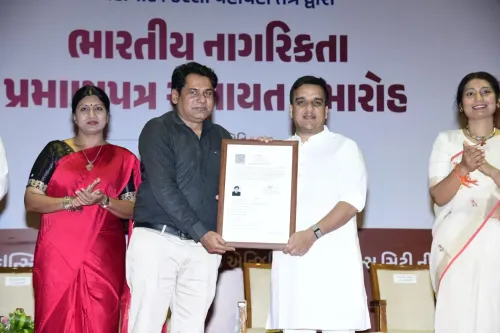
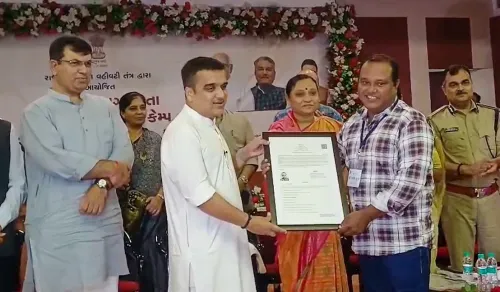
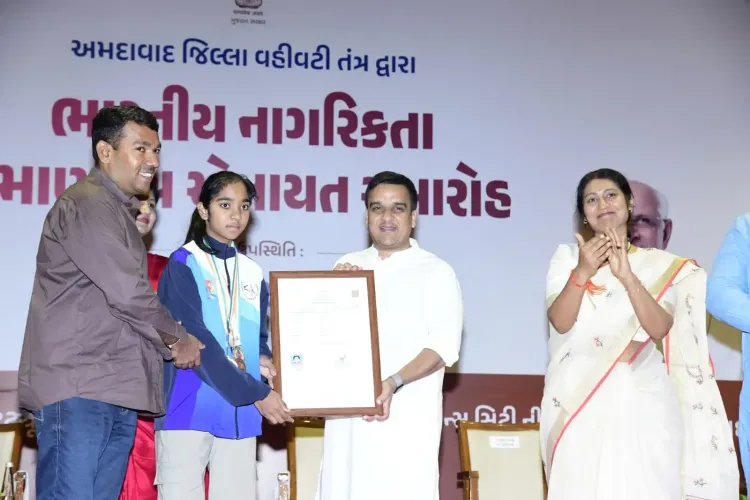
A total of 319 applicants from four districts in Gujarat's Saurashtra-Kutch region are set to receive Indian citizenship certificates on 15 October 2026, in a distribution programme presided over by Deputy Chief Minister Harsh Sanghavi at Pramukh Swami Auditorium in Rajkot. The event marks the third such citizenship ceremony held in Gujarat since the Citizenship (Amendment) Act (CAA) rules came into effect.
District-Wise Breakdown
Of the 319 beneficiaries, 259 are from Rajkot, 53 from Morbi, six from Kutch, and one from Surendranagar, according to a state government release. The beneficiaries are individuals who migrated to India from neighbouring countries and have resided in the country for years, meeting the eligibility criteria under the amended Act.
What the CAA Provides
The Citizenship (Amendment) Act offers a statutory pathway to Indian citizenship for Hindus, Sikhs, Buddhists, Jains, Parsis, and Christians who migrated from Pakistan, Bangladesh, and Afghanistan and entered India on or before 31 December 2014, subject to applicable legal requirements. The state government noted that the legislation provides formal legal recognition to eligible migrants who reportedly faced religious persecution in their countries of origin, enabling them to rebuild their lives in India with greater security.
Previous Ceremonies in Gujarat
Thursday's event follows two earlier rounds of certificate distribution in the state. On 18 August 2024, 188 applicants received citizenship certificates at a state-level programme in Ahmedabad, held in the presence of Union Home Minister Amit Shah. Subsequently, on 25 July 2025, another 181 applicants from Rajkot, Morbi, and Kutch were granted citizenship at a ceremony in Rajkot. The latest batch brings the cumulative total of CAA beneficiaries in Gujarat across these three programmes to 688.
Rights and Benefits Unlocked
Indian citizenship opens access to a range of rights and services for the new citizens, including entitlements related to education, healthcare, property ownership, ration cards, government welfare schemes, and voting rights, subject to relevant laws and individual eligibility criteria. For many beneficiaries who have lived in legal uncertainty for years, citizenship is expected to provide a significant improvement in day-to-day civic participation and economic stability.
What Comes Next
The 15 October ceremony will extend the citizenship process to a fresh cohort of eligible applicants in the Saurashtra-Kutch region. Authorities have not yet specified a timeline for subsequent rounds, but the Gujarat government has indicated that the process of granting citizenship to all eligible migrants under the CAA framework is ongoing.
Point of View
Steadily working through a backlog of eligible migrants concentrated in the Saurashtra-Kutch belt. What is notable is the deliberate optics: senior political figures have presided at each event, signalling that the BJP-led administration views the CAA's implementation as a key governance deliverable and not merely an administrative function. The cumulative count of 688 beneficiaries across three events also underscores that the eligible population in Gujarat is significant. The larger question — how many applicants remain in the pipeline and whether the pace of processing will accelerate — has not been publicly addressed by the state government.
NationPress
14 Oct 2026
Frequently Asked Questions
Who will receive Indian citizenship in Gujarat on 15 October 2026?
A total of 319 applicants from four districts in Gujarat's Saurashtra-Kutch region — Rajkot (259), Morbi (53), Kutch (6), and Surendranagar (1) — will receive Indian citizenship certificates on 15 October 2026 under the Citizenship (Amendment) Act.
What is the Citizenship (Amendment) Act and who does it cover?
The Citizenship (Amendment) Act (CAA) provides a pathway to Indian citizenship for Hindus, Sikhs, Buddhists, Jains, Parsis, and Christians who migrated from Pakistan, Bangladesh, and Afghanistan and entered India on or before 31 December 2014. It is intended for those who reportedly faced religious persecution in their countries of origin.
How many CAA citizenship ceremonies has Gujarat held so far?
Gujarat has held three CAA citizenship ceremonies. The first was on 18 August 2024 in Ahmedabad (188 beneficiaries), the second on 25 July 2025 in Rajkot (181 beneficiaries), and the third — for 319 applicants — is scheduled for 15 October 2026 in Rajkot.
What rights do new citizens gain under the CAA?
Indian citizenship allows beneficiaries to access rights and services including education, healthcare, property ownership, ration cards, government welfare schemes, and voting rights, subject to relevant laws and individual eligibility criteria.
Who will preside over the citizenship ceremony on 15 October in Rajkot?
Gujarat Deputy Chief Minister Harsh Sanghavi will preside over the certificate distribution programme at Pramukh Swami Auditorium in Rajkot on 15 October 2026.