CM Sukhu: 345 dialysis sessions in 2 months at AIMSS Chamiana

Synopsis
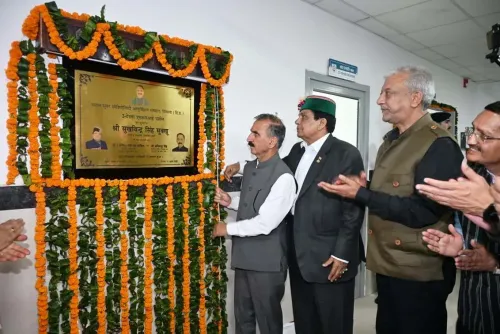
Himachal Pradesh CM Sukhvinder Singh Sukhu announced that AIMSS Chamiana's newly launched dialysis unit treated nearly 345 patients in its first two months, using 12 advanced machines, while also reducing the patient burden on IGMC Shimla.
Key Takeaways
345 patients successfully dialysed at AIMSS Chamiana within two months of the unit's launch, according to CM Sukhu.
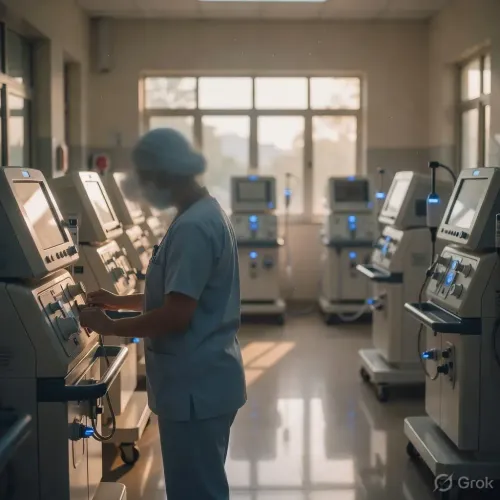
12 state-of-the-art dialysis machines are operational at the facility, providing modern, quality treatment.
The new unit has reduced patient pressure on Indira Gandhi Medical College and Hospital (IGMC), Shimla , the state's main tertiary referral centre.
The move aligns with the national Pradhan Mantri National Dialysis Programme (2016) goal of decentralising dialysis to district-level facilities.
Himachal Pradesh's hill geography makes local dialysis access especially critical, as patients previously had to travel long distances to Shimla for each session.
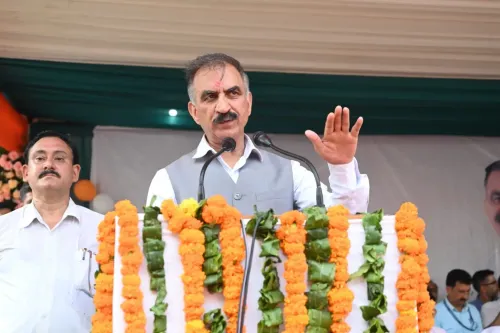
A mountain-state hospital that barely had dialysis beds two months ago has now treated close to 345 kidney patients — and the ripple effect is already being felt at Shimla's busiest referral centre. Himachal Pradesh Chief Minister Sukhvinder Singh Sukhu on Monday, 10 August 2026, highlighted the rapid uptake of the new dialysis unit at AIMSS Chamiana, calling it proof that his government is building health infrastructure calibrated to ordinary people's needs.
Posting in Hindi, the Chief Minister said: 'AIMSS चमियाणा में डायलिसिस की सुविधा शुरू होने के महज 2 महीनों में करीब 345 मरीजों की सफल डायलिसिस की जा चुकी है' — 'Within just two months of dialysis services beginning at AIMSS Chamiana, nearly 345 patients have been successfully dialysed.' He added that 12 state-of-the-art machines are delivering modern, quality treatment, and that the facility has simultaneously eased patient pressure on Indira Gandhi Medical College and Hospital (IGMC), Shimla.
Why IGMC's overcrowding made Chamiana urgent
IGMC Shimla is Himachal Pradesh's primary tertiary referral centre — the institution that every complicated case in the state eventually funnels toward. Kidney failure patients requiring regular dialysis sessions (typically two to three per week, every week) occupied beds and machine slots that IGMC could ill afford to dedicate to long-term chronic-care visits. Decentralising dialysis to AIMSS Chamiana — a facility in the Shimla district but outside the city's congested core — follows a pattern seen across Indian states: push routine but life-sustaining procedures to peripheral centres so tertiary hospitals can focus on acute and surgical cases.
Chamiana's 12 machines and the national dialysis push
The 12 advanced dialysis machines at AIMSS Chamiana sit within a broader national framework. The Pradhan Mantri National Dialysis Programme, launched in 2016, set the template for expanding free dialysis at district-level government hospitals across India. Himachal Pradesh has layered its own state health infrastructure programme on top of that foundation, upgrading district and sub-divisional centres to bring chronic-disease management closer to patients who would otherwise travel hours to Shimla for every session. For a hill state where roads close in winter and distances are measured in hours, not kilometres, proximity is not a convenience — it is clinical.
What the utilisation numbers signal
Nearly 345 sessions in roughly 60 days — even accounting for some patients requiring multiple sessions per week — points to a facility running at meaningful capacity from day one. That early utilisation rate suggests pent-up demand that IGMC alone could not absorb. The coming months will test whether machine uptime, trained technician availability, and supply-chain reliability can sustain that pace. Expansion to other districts, and outcome data on those 345 patients, will be the real measure of whether Chamiana is a model or a one-off.
A government that can show a dialysis unit filling up within weeks of opening has a concrete, human-scale answer to the abstract promise of 'health infrastructure.' For kidney patients in Himachal's hills, the machines are already turning.
Point of View
This could become a replicable model for other hill districts. The political dividend for the Congress government, however, depends entirely on whether the machines keep running after the press release fades.
NationPress
24 Sept 2026
Frequently Asked Questions
What is AIMSS Chamiana and where is it located?
AIMSS Chamiana is a government medical facility located in Chamiana, in the Shimla district of Himachal Pradesh. It recently received a dedicated dialysis unit equipped with 12 advanced machines.
How many patients have been treated at the AIMSS Chamiana dialysis unit?
According to Chief Minister Sukhvinder Singh Sukhu, nearly 345 patients were successfully dialysed at AIMSS Chamiana within the first two months of the unit becoming operational.
Why was a dialysis unit set up at AIMSS Chamiana instead of expanding IGMC Shimla?
IGMC Shimla, the state's main referral hospital, was facing heavy patient load from kidney patients requiring regular dialysis. Setting up a unit at AIMSS Chamiana decentralises the service, reduces congestion at IGMC, and brings treatment closer to patients in a state where travel is difficult.
What is the Pradhan Mantri National Dialysis Programme?
The Pradhan Mantri National Dialysis Programme was launched in 2016 to provide free dialysis services at district-level government hospitals across India, aiming to make this life-sustaining treatment accessible to patients who cannot afford private care.
Will more dialysis units be set up in other districts of Himachal Pradesh?
CM Sukhu's announcement focused on AIMSS Chamiana for now. Whether similar units will be established in other Himachal districts is a development to watch, as the state government has indicated a broader push to strengthen health infrastructure across the state.