Rajasthan Police arrest third accused in ₹76 lakh digital arrest fraud targeting Jaipur elderly couple
Synopsis
An elderly Jaipur couple lost ₹76 lakh to fraudsters who posed as NIA and ATS officials over WhatsApp, sent fake notices, and kept them under sustained psychological pressure until they liquidated their fixed deposits. The third arrest in the case — a Noida resident named Tahir — has now unravelled a layered cash-transfer chain involving a fruit firm, a middleman, and multiple bank accounts.
Key Takeaways
Rajasthan Police arrested Tahir , a resident of Gautam Buddha Nagar (Noida) , as the third accused in the ₹76 lakh digital arrest fraud case.
The elderly Jaipur couple was allegedly defrauded after fraudsters posed as NIA and ATS officials via WhatsApp and sent a fake NIA notice .
The victims liquidated their fixed deposits and transferred ₹76 lakh across multiple bank accounts under sustained psychological pressure.
Money trail links ₹21 lakh to firm 'Haniya Fruits' (accused Mujassim ); approximately ₹17 lakh routed through accounts arranged by Satpal Singh .
Police are continuing to trace additional individuals involved in the layered money transfers.
Cyber crime police advise the public: no legitimate agency conducts investigations through WhatsApp video calls .
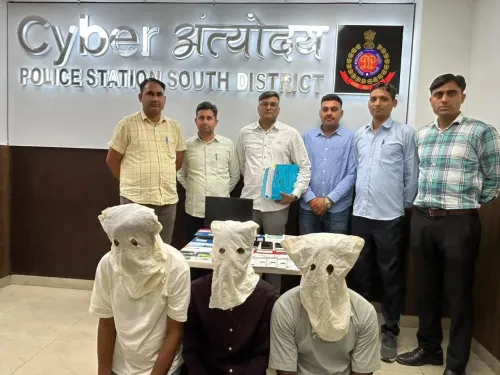
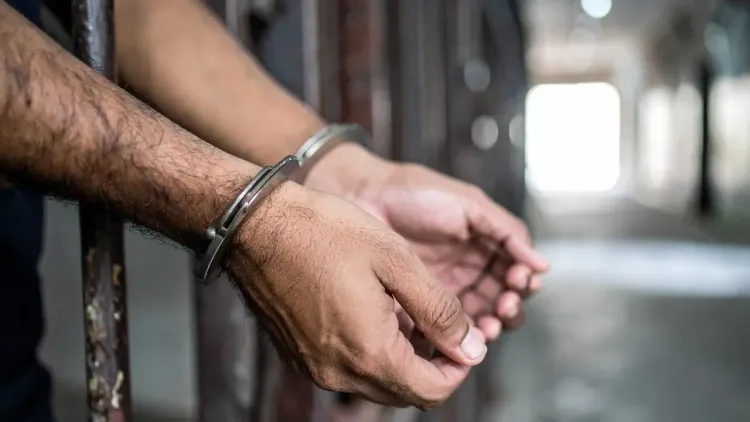
Rajasthan Police's State Central Cyber Crime Police Station (R4C) has arrested a third accused in a ₹76 lakh 'digital arrest' fraud case, in which an elderly couple from Jaipur was allegedly duped by fraudsters impersonating police and central investigative agency officials. The latest arrest, made on 16 September 2026, brings the total number of accused apprehended in the case to three.
Who Was Arrested
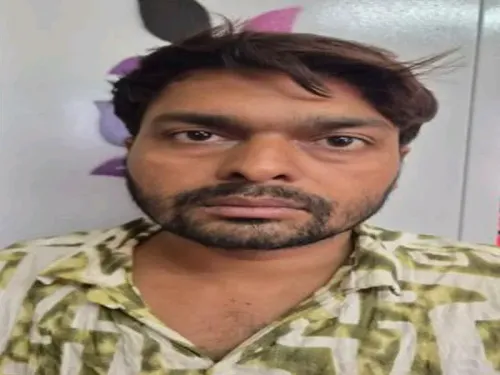
The newly arrested accused has been identified as Tahir, a resident of Gautam Buddha Nagar (Noida), Uttar Pradesh. The operation was carried out under the direction of Rajasthan Director General of Police (DGP) Rajiv Kumar Sharma and Additional Director General of Police (ADGP) Vijay Kumar Singh. A dedicated team led by Station House Officer (SHO) Gajendra Singh and constituted under Deputy Inspector General (Cyber Crime) Shantanu Kumar Singh executed the arrest following meticulous technical and financial analysis.
How the Fraud Was Carried Out
According to police, the fraudsters contacted the elderly couple via WhatsApp, posing as officials from the police, the Anti-Terrorism Squad (ATS), and the National Investigation Agency (NIA). They allegedly told the victims that their Aadhaar cards had been misused in terrorist activities and financial crimes involving crores of rupees.
To lend credibility to their claims, the accused reportedly sent a fake NIA notice to the couple through WhatsApp. Sustained psychological pressure was applied through continuous voice and video calls, keeping the victims under what investigators describe as a state of coerced compliance. Believing they were communicating with legitimate government officials, the couple allegedly liquidated their fixed deposits and transferred ₹76 lakh across multiple bank accounts specified by the fraudsters.
Money Trail and Role of Accused
Investigators traced the defrauded funds through a web of bank accounts. According to police findings, ₹21 lakh was deposited into the account of a firm named 'Haniya Fruits', operated by an accused identified as Mujassim. Mujassim allegedly directed Tahir to arrange additional bank accounts to facilitate further transfers. Tahir, in turn, reportedly contacted an acquaintance named Satpal Singh, who provided details of other accounts.
Approximately ₹17 lakh was subsequently routed through this channel. Satpal allegedly deducted his commission and handed over ₹7 lakh in cash to Tahir, of which ₹5 lakh was allegedly passed on to Mujassim and ₹2 lakh was allegedly retained by Tahir as his share.
Investigation and Public Advisory
The fraud came to light after the victims approached authorities. The cyber crime team analysed WhatsApp numbers, associated mobile numbers, and bank account statements to reconstruct the money trail. The investigative team included Police Inspector Ajay Kumar and Head Constables Ashok Kumar, Sachchidanand, and Lekhraj.
Notably, 'digital arrest' scams — in which fraudsters simulate official investigations to coerce victims into transferring money — have been reported with increasing frequency across India. This case is among the more organised instances, involving fake official documents, multi-platform communication, and layered money movement. Police confirmed that the investigation is ongoing, with efforts continuing to identify all individuals involved in receiving, transferring, or withdrawing the defrauded funds.
The cyber crime police have urged the public not to panic or transfer money when confronted with threats of arrest, stressing that no legitimate government agency conducts investigations via WhatsApp video calls.
Point of View
Sustained video-call surveillance, and professional-grade money laundering through shell firm accounts. What is striking is not the sophistication alone, but how readily fear of law enforcement is weaponised against the very demographic — elderly, financially comfortable, Aadhaar-linked — that the state claims to protect. Three arrests and a partially traced money trail suggest progress, but the modular structure of these networks means the organisers often remain several layers removed. Until enforcement tackles the top of the chain with the same energy it brings to mule-account holders, the arrests will keep arriving at the wrong end of the pyramid.
NationPress
16 Sept 2026
Frequently Asked Questions
What is the 'digital arrest' fraud in the Jaipur case?
In this case, fraudsters posed as NIA, ATS, and police officials over WhatsApp, threatened an elderly Jaipur couple with arrest over alleged Aadhaar misuse, and pressured them into transferring ₹76 lakh from their fixed deposits. 'Digital arrest' scams involve keeping victims psychologically confined — often via continuous video calls — until they comply with financial demands.
Who has been arrested so far in this case?
Three people have been arrested so far: the latest being Tahir, a resident of Gautam Buddha Nagar (Noida), Uttar Pradesh. The other two previously arrested accused include Mujassim, who operated a firm called 'Haniya Fruits' through which ₹21 lakh of the defrauded money was routed.
How did the fraudsters transfer the ₹76 lakh?
The money was moved through multiple bank accounts after being received from the victims. Around ₹21 lakh went into the 'Haniya Fruits' account linked to Mujassim, while approximately ₹17 lakh was routed through accounts arranged by Satpal Singh via Tahir. Satpal allegedly took a commission and passed ₹7 lakh in cash to Tahir, who retained ₹2 lakh and gave ₹5 lakh to Mujassim.
How can people protect themselves from digital arrest scams?
Rajasthan's cyber crime police stress that no genuine government agency — including the NIA, ATS, or police — conducts official investigations through WhatsApp calls or demands money transfers as part of an inquiry. Citizens are advised not to panic, not to transfer money, and to immediately report such contacts to the nearest cyber crime station or the national helpline 1930.
Is the investigation still ongoing?
Yes. Police confirmed the investigation is continuing, with efforts focused on identifying all individuals who received, transferred, or withdrew the defrauded funds. The full money trail is still being mapped across multiple bank accounts.