Vaishnaw Highlights 4 Karnataka Amrit Bharat Stations
Synopsis
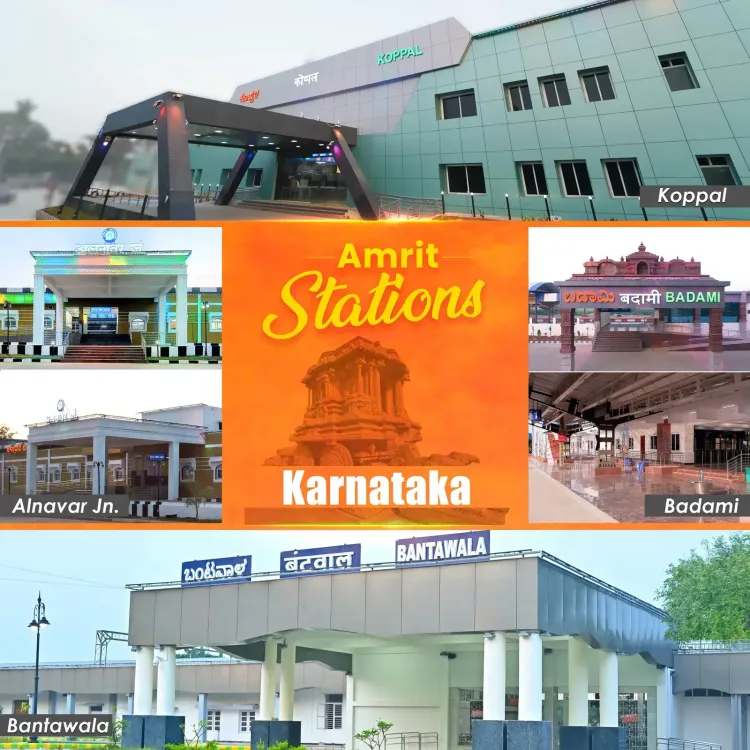
Union Minister Ashwini Vaishnaw spotlighted four Karnataka railway stations — Bantwal, Alnavar Junction, Koppal, and Badami — under the Amrit Bharat Station Scheme, noting their designs are rooted in the state's temple architecture, craft traditions, and historical landscapes, reflecting Karnataka's rich cultural heritage.
Key Takeaways
Four Karnataka stations — Bantwal , Alnavar Junction , Koppal , and Badami — are being redeveloped under the Amrit Bharat Station Scheme .
Station designs draw inspiration from Karnataka's temple architecture , craft heritage , forests , and historical landscapes .
The Amrit Bharat Station Scheme , announced in Union Budget 2023-24 , targets redevelopment of 1,275 stations across India.
Badami , known for its Chalukya rock-cut temples , is among the culturally significant stations included in the initiative.
The scheme mandates regional cultural identity in station design rather than a uniform national template.
Railway passengers and local artisans are among the primary stakeholders expected to benefit from the redevelopment.
Union Minister Ashwini Vaishnaw on Friday, 17 July 2026 spotlighted four Karnataka railway stations — Bantwal, Alnavar Junction, Koppal, and Badami — being redeveloped under the Amrit Bharat Station Scheme, emphasising that their new designs draw inspiration from the state's temple architecture, craft traditions, forests, and historical landscapes.
Context
The minister's post, part of a series on Amrit Bharat stations across India, highlighted these four Karnataka stations in Kannada, stating that the redeveloped stations 'ರಾಜ್ಯದ ಶ್ರೀಮಂತ ಸಾಂಸ್ಕೃತಿಕ ಪರಂಪರೆಯನ್ನು ಬಿಂಬಿಸುತ್ತವೆ' — 'reflect the state's rich cultural heritage.' The four stations span geographically diverse districts of Karnataka, from the coastal Dakshina Kannada district to the northern Bagalkot district.
Badami, in particular, is a town internationally recognised for its 6th-century Chalukya rock-cut temples, making it a symbolically significant inclusion in a heritage-themed station redevelopment programme. Alnavar Junction in Dharwad district and Koppal in Koppal district add regional spread to the state's representation under the scheme.
Policy Backdrop
The Amrit Bharat Station Scheme was announced during the Union Budget 2023-24 with a mandate to redevelop 1,275 railway stations across India, integrating local cultural motifs, modern passenger amenities, and improved accessibility into station design. The scheme is a flagship infrastructure initiative of the Ministry of Railways under Vaishnaw's stewardship.
A defining feature of the scheme is its insistence on regional identity: each station's architectural language is expected to reflect the heritage of its locality rather than adopt a uniform national template. Karnataka's inclusion of stations inspired by its temple architecture and craft traditions is consistent with this design philosophy applied across multiple states since 2023.
Stakeholders and Impact
Railway passengers in Bantwal, Alnavar Junction, Koppal, and Badami stand to benefit from upgraded infrastructure including improved platforms, waiting areas, and passenger facilities alongside the culturally themed facades. Local artisans and craftspersons whose traditional motifs inform the station designs may also see indirect recognition and economic opportunity through the redevelopment process.
For Badami, which already draws heritage tourism on account of its rock-cut caves, a culturally resonant railway station could reinforce the town's identity as an entry point for visitors. Similarly, stations in Koppal — a district with its own historical fort and medieval heritage — stand to benefit from the increased visibility that a redesigned station brings to the region.
What's Next
Completion timelines and inauguration milestones for these four Karnataka stations are expected to feature in upcoming railway budget reviews and state-level infrastructure assessments. The Ministry of Railways has been progressively announcing station-wise progress under the Amrit Bharat scheme, and formal inaugurations of redeveloped stations have been used as policy communication events by the ministry. Observers will watch whether the cultural integration in station design translates into measurable improvements in passenger experience and local heritage tourism footfall.
Point of View
Station by station and state by state. By anchoring Karnataka's station designs in temple architecture and craft traditions, the ministry is threading a cultural-nationalist narrative into an infrastructure programme, broadening its political resonance beyond mere utility. The choice of Badami, a globally recognised heritage site, as one of the four stations is unlikely to be incidental — it lends the scheme immediate visual and historical credibility. This approach positions the Amrit Bharat scheme not just as a passenger amenity upgrade but as a statement on India's civilisational identity expressed through public infrastructure.
NationPress
16 Oct 2026
Frequently Asked Questions
What is the Amrit Bharat Station Scheme?
The Amrit Bharat Station Scheme is an Indian Railways programme announced in Union Budget 2023-24 to redevelop 1,275 railway stations across India with modern amenities and designs inspired by local cultural and architectural heritage.
Which Karnataka stations are included in the Amrit Bharat scheme?
As highlighted by Union Minister Ashwini Vaishnaw, the four Karnataka stations under the Amrit Bharat scheme are Bantwal, Alnavar Junction, Koppal, and Badami.
What makes Badami railway station special under this scheme?
Badami is a historic town in Bagalkot district, Karnataka, renowned for its 6th-century Chalukya rock-cut temples. Its station redevelopment under the Amrit Bharat scheme is inspired by this temple architecture and heritage landscape.
How will the Amrit Bharat scheme benefit local communities in Karnataka?
The scheme is expected to benefit railway passengers through upgraded facilities and local artisans whose traditional craft motifs inform the new station designs, potentially also boosting heritage tourism in towns like Badami and Koppal.
When was the Amrit Bharat Station Scheme launched?
The Amrit Bharat Station Scheme was announced in the Union Budget 2023-24 and has been progressively implemented by the Ministry of Railways under Union Minister Ashwini Vaishnaw since 2023.