Vaishnaw Highlights 13 MP Amrit Stations Rooted in Heritage
Synopsis
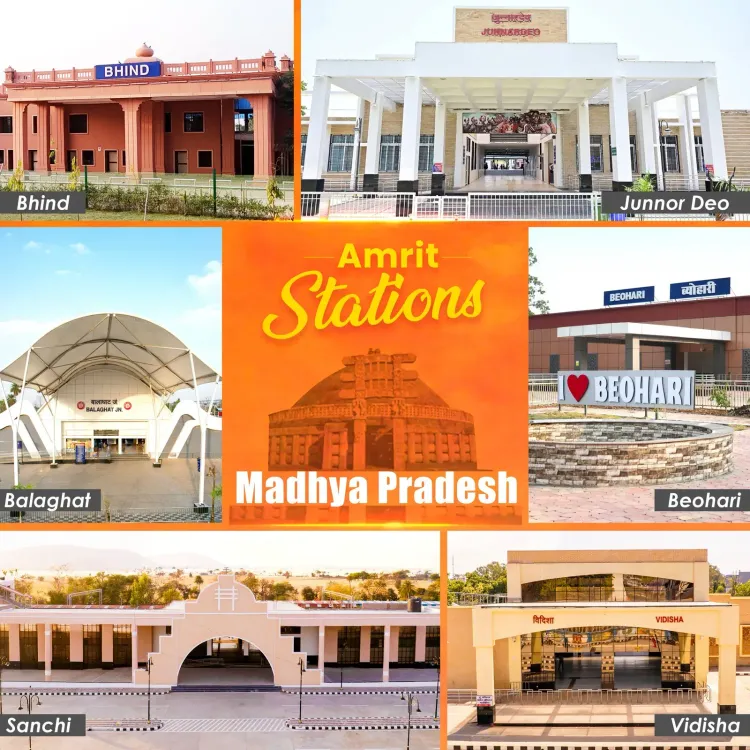
Union Minister Ashwini Vaishnaw has named 13 Madhya Pradesh stations — including the UNESCO-linked Sanchi — being redeveloped under the Amrit Bharat Station Scheme, with designs rooted in Buddhist, Bundelkhand, tribal, and forest heritage.
Key Takeaways
13 stations in Madhya Pradesh — Junnor Deo, Bhind, Harpalpur, Chhatarpur, Tikamgarh, Balaghat, Chhindwara, Nainpur Junction, Ashok Nagar, Sanchi, Shivpuri, Vidisha, and Beohari — are being redeveloped under the Amrit Bharat Station Scheme.
The Amrit Bharat Station Scheme , launched in February 2023 , targets modernisation of over 1,300 stations with local cultural motifs embedded in their design.
Sanchi , a UNESCO World Heritage Site known for ancient Buddhist monuments, is among the listed stations.
The scheme was backed by the Union Budget 2022-23 under the PM Gati Shakti framework.
The redevelopment spans culturally diverse zones — Buddhist heritage, Bundelkhand history, tribal art belts, and forest landscapes.
Local tourism, heritage artisans, and railway passengers are the primary beneficiaries of the upgrades.
Union Minister Ashwini Vaishnaw on 17 July 2026 spotlighted thirteen railway stations across Madhya Pradesh being redeveloped under the Amrit Bharat Station Scheme, emphasising their design roots in the state's Buddhist, Bundelkhand, tribal, and forest identities.
Context
The minister listed the stations as: Junnor Deo, Bhind, Harpalpur, Chhatarpur, Tikamgarh, Balaghat, Chhindwara, Nainpur Junction, Ashok Nagar, Sanchi, Shivpuri, Vidisha, and Beohari. The post is part of a numbered thread — marked '4/' — suggesting a broader state-by-state or category-by-category rollout of Amrit Bharat updates. Vaishnaw noted that these stations 'showcase the many cultural and historical identities of the heart of India.'
Notably, Sanchi — a UNESCO World Heritage Site famous for its ancient Buddhist stupas — figures prominently among the listed stations, lending the redevelopment exercise a heritage-preservation dimension beyond standard infrastructure upgrades.
Policy Backdrop
The Amrit Bharat Station Scheme was formally launched by the Ministry of Railways in February 2023 to modernise more than 1,300 stations nationwide. A defining feature of the scheme is the mandatory integration of local cultural motifs and heritage elements into station architecture, making each redeveloped station a reflection of its regional identity.
The initiative received explicit mention and funding support in the Union Budget 2022-23 as part of the PM Gati Shakti framework, which seeks to synchronise infrastructure development across ministries. The Madhya Pradesh stations listed by Vaishnaw span geographically and culturally distinct zones — from the tribal belts of Balaghat and Chhindwara to the historic Bundelkhand towns of Chhatarpur and Tikamgarh.
Stakeholders and Impact
Railway passengers stand to benefit from upgraded amenities, while the local tourism sector — particularly around heritage nodes like Sanchi and Vidisha — could see increased footfall as redeveloped stations double as cultural gateways. Heritage artisans and local craftspeople are also stakeholders, given the scheme's emphasis on embedding indigenous art forms into station design.
Madhya Pradesh is home to a dense concentration of protected monuments, tribal communities, and forest reserves, making it a particularly rich canvas for the scheme's cultural-integration mandate. The inclusion of stations such as Nainpur Junction — a gateway to the Kanha-Pench forest corridor — signals that ecological and wildlife tourism circuits are also being considered in the redevelopment logic.
What's Next
Railway Board updates and parliamentary questions are expected to shed light on completion timelines and passenger amenity audits for the listed stations. The numbered-thread format of Vaishnaw's posts suggests further state-specific Amrit Bharat disclosures are forthcoming, potentially covering all major states before the next budget cycle.
For Madhya Pradesh, the broader implication is that station redevelopment could become an anchor for domestic tourism promotion, with modernised facilities at heritage sites like Sanchi and Vidisha potentially reducing friction for pilgrimage and cultural tourism circuits that currently rely on road transport.
Point of View
Tribal, and Bundelkhand heritage in a single thread, Vaishnaw is reinforcing a political messaging strategy that ties infrastructure delivery to civilisational pride. The inclusion of a UNESCO site like Sanchi is not incidental; it elevates the scheme's optics from routine modernisation to heritage stewardship. As general elections and state assembly cycles approach, such granular, state-specific rollouts also serve as tangible proof-points of governance delivery for a electorally significant state.
NationPress
16 Oct 2026
Frequently Asked Questions
What is the Amrit Bharat Station Scheme?
The Amrit Bharat Station Scheme is a Ministry of Railways programme launched in February 2023 to redevelop over 1,300 railway stations across India with modern amenities and designs that reflect local cultural and heritage themes.
Which Madhya Pradesh stations are being redeveloped under Amrit Bharat?
The 13 Madhya Pradesh stations named by Union Minister Ashwini Vaishnaw are Junnor Deo, Bhind, Harpalpur, Chhatarpur, Tikamgarh, Balaghat, Chhindwara, Nainpur Junction, Ashok Nagar, Sanchi, Shivpuri, Vidisha, and Beohari.
Is Sanchi station being redeveloped under Amrit Bharat?
Yes, Sanchi — located near the UNESCO World Heritage Site of the same name — is among the 13 Madhya Pradesh stations listed for redevelopment under the Amrit Bharat Station Scheme.
What cultural themes are being used in Madhya Pradesh Amrit Bharat stations?
The stations draw on Buddhist monuments, Bundelkhand heritage, tribal art traditions, and forest landscapes, reflecting the diverse cultural and historical identities of Madhya Pradesh.
How is the Amrit Bharat Scheme funded?
The Amrit Bharat Station Scheme received explicit funding support in the Union Budget 2022-23 as part of the PM Gati Shakti multi-modal infrastructure framework.