CM Rekha Gupta: 7.25 Lakh Women Join Delhi Laxmi Yojana
Synopsis
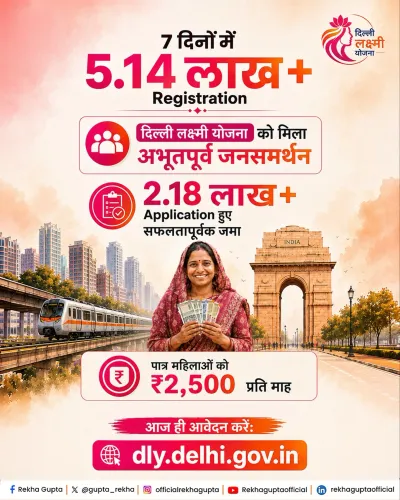
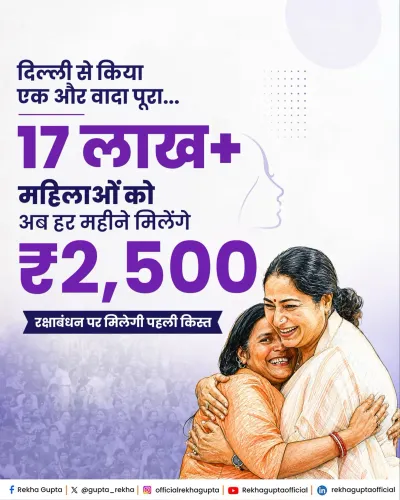
Delhi Chief Minister Rekha Gupta announced on Independence Day 2026 that 7,25,000 women have registered under the Delhi Laxmi Yojana, a scheme offering ₹2,500 per month to economically needy women, with a target of reaching 17 lakh beneficiaries.
Key Takeaways
Delhi Laxmi Yojana provides ₹2,500 per month to economically needy women in Delhi.
7,25,000 women have registered under the scheme since its launch, as of August 15, 2026 .
The Delhi government's target is to cover 17 lakh beneficiaries under the scheme.
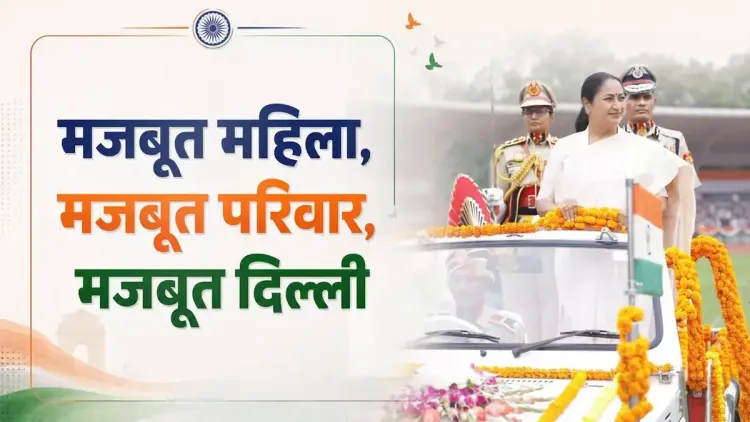
The announcement was made by CM Rekha Gupta on Independence Day , tied to the hashtag #SashaktNaariSamriddhDelhi .
The scheme is a direct benefit transfer initiative by the BJP-led Delhi government , part of a broader national trend of state-level women-focused cash transfers.
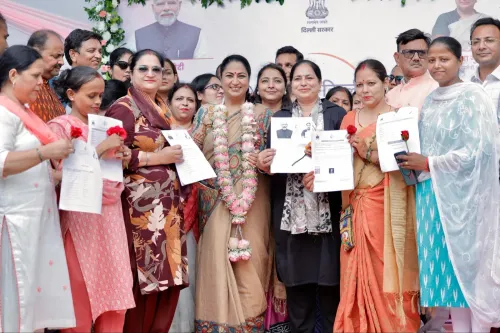
On Independence Day, August 15, 2026, Delhi Chief Minister Rekha Gupta announced that 7,25,000 women have already registered under the Delhi Laxmi Yojana — the BJP-led Delhi government's monthly cash transfer scheme that promises ₹2,500 per month to economically needy women across the capital.
What the Delhi Laxmi Yojana promises
The scheme is designed to deliver direct financial support to women from lower-income households in Delhi. At ₹2,500 per month, a beneficiary receives ₹30,000 annually — a meaningful supplement to household income in a high cost-of-living city. CM Gupta framed the milestone in her post as a point of pride: 'मुझे खुशी है' ('I am happy'), she wrote, that so many women enrolled in such a short window since launch.
7.25 lakh registered — and the road to 17 lakh
The registration figure of 7,25,000 represents roughly 43 percent of the government's stated target of 17 lakh beneficiaries. That target, if met, would make the Delhi Laxmi Yojana one of the larger women-focused direct benefit transfer programmes at the state level in India. The announcement was timed to Independence Day, amplified with the hashtag #SashaktNaariSamriddhDelhi — 'Empowered Women, Prosperous Delhi' — signalling the government's intent to frame women's welfare as a pillar of its Delhi development narrative.
A familiar playbook, a competitive Delhi context
Monthly cash transfers targeted at women have become a defining feature of state-level politics across India in recent years, with governments of varying political stripes deploying similar schemes to consolidate support among women voters. For the BJP in Delhi — a party that returned to power in the capital after a decade-long gap — the Laxmi Yojana represents an early, high-visibility welfare bet. Announcing a registration milestone on Independence Day is a deliberate choice: national symbolism amplifies the reach, and the occasion frames the scheme as a patriotic act of governance rather than a routine transfer.
The next test is execution. Whether the 17 lakh target is met, whether disbursements flow on schedule, and how eligibility criteria are defined in practice will determine whether the scheme becomes a genuine policy success or a headline that outpaces delivery.
Point of View
Returning to power after a decade, this scheme is an early proof-of-governance moment — and announcing a strong registration number on Independence Day is a calculated move to maximise visibility. The 17 lakh beneficiary target is ambitious; the real political and policy test will be whether disbursements are timely, transparent, and reach the most marginalised women rather than clustering among the relatively better-connected. How Rekha Gupta's government manages the gap between the current 7.25 lakh registrations and the 17 lakh goal will shape the scheme's legacy well before the next election cycle.
NationPress
30 Sept 2026
Frequently Asked Questions
What is the Delhi Laxmi Yojana?
The Delhi Laxmi Yojana is a monthly cash transfer scheme launched by the BJP-led Delhi government under Chief Minister Rekha Gupta, providing ₹2,500 per month to economically needy women in Delhi.
How many women have registered for Delhi Laxmi Yojana?
As of August 15, 2026, approximately 7,25,000 women have registered under the Delhi Laxmi Yojana, according to CM Rekha Gupta.
What is the target beneficiary count for Delhi Laxmi Yojana?
The Delhi government has set a target of covering 17 lakh (1.7 million) women beneficiaries under the Delhi Laxmi Yojana.
How much money do women get under Delhi Laxmi Yojana?
Eligible women receive ₹2,500 per month under the Delhi Laxmi Yojana, amounting to ₹30,000 per year.
How can women register for Delhi Laxmi Yojana?
The Delhi government has opened a registration process for the scheme; the specific portal or offline registration details would be available through official Delhi government channels.