8 CISF personnel, driver injured in bus accident near Vaishno Devi shrine
Synopsis
A bus carrying off-duty CISF personnel overturned on the Tarakote route near the Mata Vaishno Devi shrine in Reasi, injuring eight security personnel and a civilian driver. Three are in serious condition at Narayana Hospital in Katra — a grim reminder of J&K's chronic mountain road safety crisis, especially during peak pilgrimage season.
Key Takeaways
Eight CISF personnel and civilian driver Virender Singh were injured on 28 June when their bus overturned near Mata Vaishno Devi shrine in Reasi district , J&K.
Three personnel — Head Constable Sammy Kumar , Head Constable M.M.
Dubey , and Constable P.K.
Traya — are in serious condition at Narayana Hospital, Katra .
The remaining injured, including a sub-inspector and the civilian driver, are stable at the Community Health Centre, Katra .
The bus was on the Tarakote route and the personnel were returning to camp after duty at the shrine.
The accident highlights persistent road safety concerns in J&K, where mountain terrain, overloading, and inadequate infrastructure remain major hazards.
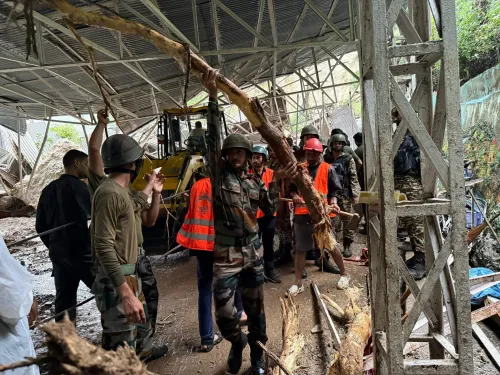
Eight Central Industrial Security Force (CISF) personnel and a civilian driver were injured on Sunday, 28 June when their bus overturned near the Mata Vaishno Devi shrine in Reasi district, Jammu & Kashmir, according to police. The vehicle was travelling along the Tarakote route to the shrine when the accident occurred.
Condition of the Injured
Three of the injured CISF personnel are reported to be in serious condition — Head Constable Sammy Kumar, Head Constable M.M. Dubey, and Constable P.K. Traya. All three have been admitted to Narayana Hospital in Katra town for treatment.
The remaining injured, including a sub-inspector and civilian driver Virender Singh, were taken to the Community Health Centre in Katra, where their condition is said to be stable, officials confirmed.
What Led to the Accident
The CISF personnel were deployed in the shrine area and were reportedly returning to their camp after duty when the bus overturned. The exact cause of the accident is yet to be officially established. The Tarakote route, like much of the road network in hilly Reasi district, features sharp curves and steep gradients that demand heightened driving caution.
The Broader Road Safety Crisis in J&K
This incident is part of a persistent pattern of road accidents across Jammu & Kashmir, where treacherous mountain terrain, rash driving, and inadequate infrastructure together create dangerous conditions. Districts such as Doda, Ramban, and Kishtwar are particularly vulnerable, with narrow, winding roads, sheer drops, and blind spots — many of which lack basic safety features like parapet walls, crash barriers, and proper warning signage.
Overloading of passenger vehicles, operation of ageing and mechanically unfit buses, and the absence of rigorous traffic enforcement further compound the risk. Seasonal hazards — including landslides, fog, heavy rainfall, and falling stones — make navigation even more perilous on key stretches.
Systemic Factors Behind the Fatalities
According to officials, human error remains the dominant cause of road accidents in the region. Over-speeding, overtaking on blind curves, distracted driving due to mobile phone use, and impaired driving — particularly late at night — account for a significant proportion of crashes. Unqualified drivers, including minors on two-wheelers, and the widespread failure to use helmets and seatbelts continue to drive up injury and fatality rates.
Authorities have repeatedly called for stricter enforcement and infrastructure upgrades, but implementation has remained uneven across the region's remote districts. With the Vaishno Devi pilgrimage season drawing large volumes of traffic, the pressure on mountain roads is at its peak.
Point of View
Particularly during the high-footfall pilgrimage season. What makes it notable is that the victims were security personnel returning from duty, not pilgrims, underscoring that the risk is universal and systemic. Repeated calls for better crash barriers, stricter enforcement, and vehicle fitness checks have produced little measurable change on the ground. Until accountability is tied to specific road-safety outcomes in high-risk districts like Reasi and Ramban, these accidents will continue to be reported as isolated events rather than the structural failure they represent.
NationPress
27 Sept 2026
Frequently Asked Questions
What happened near Vaishno Devi shrine on 28 June?
A bus carrying eight CISF personnel overturned on the Tarakote route near the Mata Vaishno Devi shrine in Reasi district, Jammu & Kashmir, on 28 June. Eight security personnel and civilian driver Virender Singh were injured in the accident.
How serious are the injuries?
Three CISF personnel — Head Constable Sammy Kumar, Head Constable M.M. Dubey, and Constable P.K. Traya — are in serious condition and have been admitted to Narayana Hospital in Katra. The remaining injured, including a sub-inspector and the civilian driver, are in stable condition at the Community Health Centre in Katra.
Why was the CISF bus on the Tarakote route?
The CISF personnel were deployed at the Mata Vaishno Devi shrine area and were heading back to their camp after completing their duty shift when the accident occurred.
What are the main causes of road accidents in Jammu & Kashmir?
Road accidents in J&K are primarily attributed to treacherous hilly terrain, rash and over-speeding driving, inadequate road infrastructure, and overloaded vehicles. Seasonal hazards like landslides, fog, and heavy rain further increase risk, particularly in districts like Doda, Ramban, and Kishtwar.
Which hospital are the seriously injured being treated at?
The three seriously injured CISF personnel are receiving treatment at Narayana Hospital in Katra town, while the others with stable conditions are admitted to the Community Health Centre in Katra.