White House Claims D.C. Homicides Down 44% After Task Force Year
Synopsis
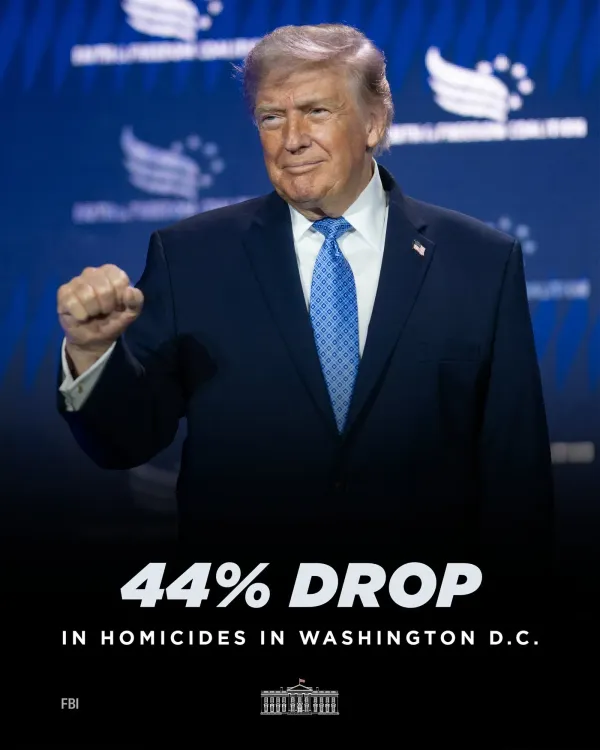
The White House announced that Washington D.C. recorded 6,000 arrests and a 44% drop in homicides in the one year since the Make D.C. Safe and Beautiful Task Force launched, crediting President Trump for the capital's improved safety.
Key Takeaways
The White House posted on 12 August 2026 claiming 6,000 arrests and a 44% homicide decline in Washington D.C. over the past year.
Safe and Beautiful Task Force was launched in 2025 to concentrate federal law-enforcement resources in the U.S. capital.
Washington D.C.'s unique jurisdictional status gives the federal executive branch direct authority to deploy policing resources within city limits.
The Trump administration has a documented pattern of using arrest figures and crime-rate drops to demonstrate law-and-order policy impact, dating to the first term.
The specific figures cited have not yet been independently verified against Metropolitan Police Department or FBI crime data.
Updated official crime datasets and potential congressional hearings on the task force's scope and funding are the key developments to watch.
Six thousand arrests. Homicides slashed by nearly half. One year in, the White House is declaring Washington D.C. a transformed city — and handing the credit squarely to President Donald Trump.
What the Make D.C. Safe and Beautiful Task Force claims
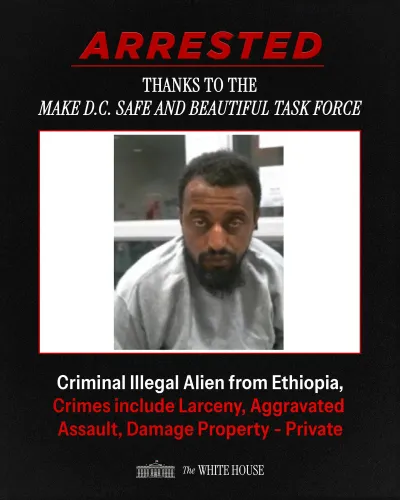
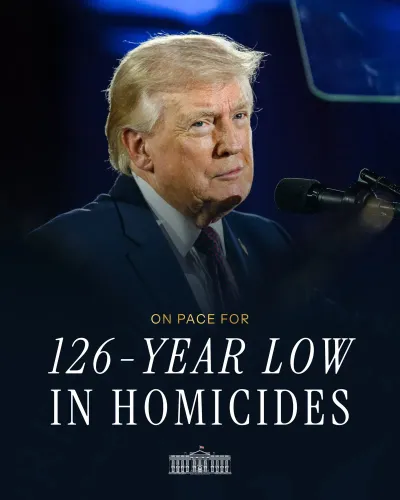
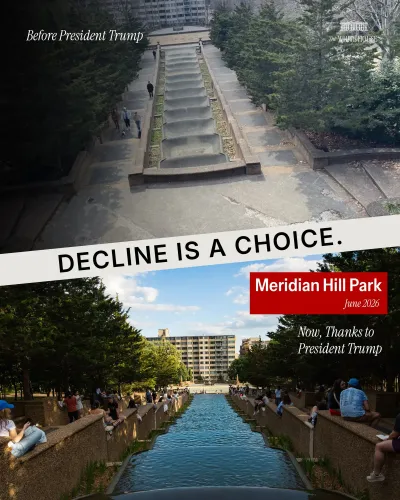
On 12 August 2026, the White House posted a striking set of figures: 6,000 arrests made and homicides down 44% in the U.S. capital since the Make D.C. Safe and Beautiful Task Force launched one year ago. The post declared Washington D.C. 'a SAFE city' and closed with a direct thank-you to President Trump — framing the numbers as a personal policy victory for the administration.
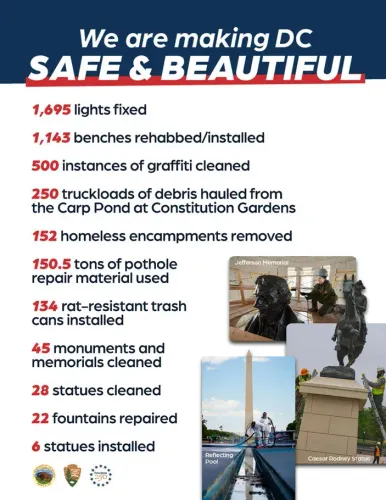
The task force, stood up in 2025, was designed to concentrate federal law-enforcement resources on crime reduction and urban improvement in the federal district. Washington D.C. sits under a unique jurisdictional arrangement: unlike any U.S. state, its policing and governance are subject to direct congressional and executive oversight, giving the White House unusual leverage to deploy federal assets within city limits.
A law-and-order playbook with deep roots
The move fits a pattern the Trump administration has returned to repeatedly. During Trump's first term, federal law-enforcement resources were deployed into D.C. during periods of civil unrest, and the administration consistently highlighted arrest figures and crime-rate drops as proof of policy impact. The Make D.C. Safe and Beautiful Task Force is the most structured expression yet of that instinct — a named, branded initiative with measurable targets attached.
Framing a capital city's safety as a presidential achievement also carries symbolic weight beyond D.C.'s roughly 700,000 residents. Washington is the face America shows the world. A safer capital, the argument goes, is a stronger signal of federal competence — and a ready contrast to critics who argue the administration's law-and-order approach is heavy-handed.
Numbers to watch, questions still open
The specific figures — 6,000 arrests and a 44% homicide decline — have been stated by the White House but have not yet been independently corroborated against Metropolitan Police Department or FBI crime data. Whether the drop reflects the task force's direct impact, broader national crime trends, or a combination of factors will be the central question when updated official datasets are released. Congressional scrutiny of the task force's scope and funding is also a live possibility.
What is already clear: the White House is treating this one-year mark as a political milestone worth broadcasting loudly — and the numbers, if they hold up to independent review, would represent one of the steepest single-year homicide declines in the capital's recent history.
Point of View
The administration is building a replicable template it could apply to other cities where federal intervention is politically viable. The 44% homicide figure, if independently confirmed, would be a genuinely significant public-safety outcome; if it diverges from official data, it becomes a credibility liability. For Indian observers, the episode illustrates how federal governments in large democracies use capital-city governance as a high-visibility test case for broader law-and-order mandates.
NationPress
13 Aug 2026
Frequently Asked Questions
What is the Make D.C. Safe and Beautiful Task Force?
The Make D.C. Safe and Beautiful Task Force is a federal initiative launched in 2025 by the Trump administration to reduce crime and improve urban conditions in Washington D.C. by concentrating federal law-enforcement resources in the capital.
How much did homicides drop in Washington D.C. according to the White House?
The White House claimed homicides in Washington D.C. fell by 44% in the one year since the task force launched, though this figure has not yet been independently verified against official Metropolitan Police Department or FBI data.
Why does the federal government have special authority over Washington D.C.?
Washington D.C. is a federal district, not a U.S. state. The U.S. Constitution gives Congress — and by extension the executive branch — direct oversight authority over the district, allowing the federal government to deploy resources and shape policing in ways it cannot do in individual states.
How many arrests were made under the D.C. task force?
The White House stated that 6,000 arrests were made in Washington D.C. over the one year since the Make D.C. Safe and Beautiful Task Force began operations in 2025.
Has Trump intervened in Washington D.C. policing before?
Yes. During Trump's first term, federal law-enforcement resources were deployed into Washington D.C. during periods of civil unrest, establishing a precedent for executive intervention in the capital's public-safety situation.