White House Backs Model Cities Initiative for More Police, Tougher Enforcement
Synopsis
The White House announced the Model Cities Initiative on June 5, 2026, promising more police officers on American streets and higher incarceration rates. President Trump and the Department of Justice are positioned as the lead architects of the federal urban crime-reduction effort.
Key Takeaways
The White House publicly promoted the Model Cities Initiative on June 5, 2026 .
The initiative aims to place more police officers on American streets and increase the number of criminals behind bars .
President Trump and the Department of Justice are named as the primary drivers of the programme.
The approach mirrors earlier federal efforts such as Operation Legend (2020) and the policing grants authorised under the 1994 Violent Crime Control Act .
Congressional decisions on DOJ FY2027 appropriations will determine the programme's funding and scale.
Specific participating cities and a formal launch date for the initiative have not yet been publicly confirmed.
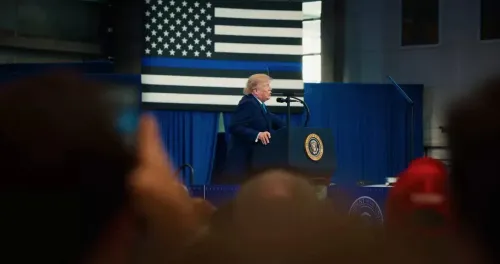
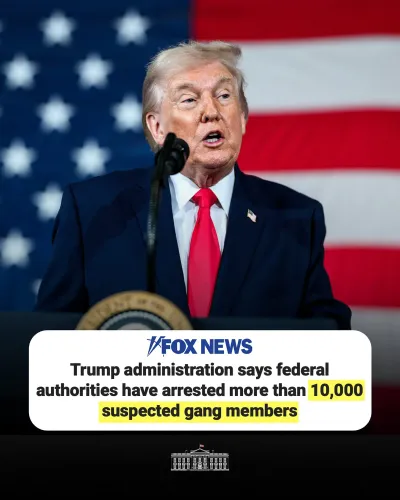
The White House on Friday, June 5, 2026, promoted the Model Cities Initiative, describing it as a federal effort to deploy more police officers on American streets and increase incarceration of criminals, with President Donald Trump and the Department of Justice cited as driving forces behind the programme.
Context
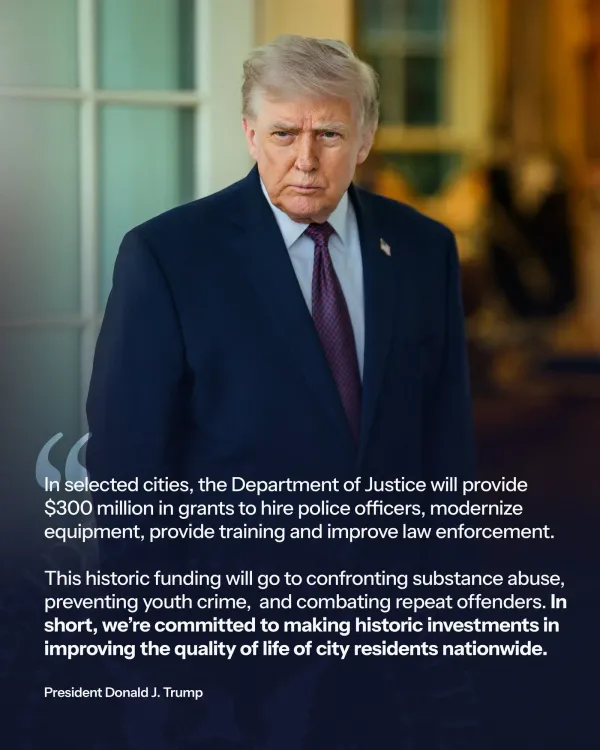
The official White House post stated that the Model Cities Initiative 'fights for a safer America, with MORE police officers on our streets and MORE criminals behind bars.' It added that President Trump and the Justice Department are 'committed to cleaning up American streets for good.' The message signals an active federal posture on urban crime reduction heading into the second half of 2026.
The initiative sits within a broader law-and-order framework that the Trump administration has consistently championed, pairing federal resources with local policing to target street crime in urban areas.
Policy Backdrop
The current push echoes the administration's earlier Operation Legend, launched in 2020, which deployed federal law-enforcement personnel to cities experiencing violent-crime spikes. That programme drew on a template established by the 1994 Violent Crime Control and Law Enforcement Act, which authorised federal grants for hiring additional officers and expanding prison capacity.
The Department of Justice has historically served as the coordinating body for such federal-local partnerships, channelling prosecutorial priorities and grant funding toward jurisdictions targeted by the White House. The emphasis on visible officer presence and higher incarceration rates mirrors rhetoric and policy design seen in both the 1990s and the 2017–2021 period of the first Trump term.
Stakeholders and Impact
Urban police departments stand to receive additional federal support under the initiative, potentially in the form of hiring grants, equipment, or embedded federal agents. Residents of targeted cities could see measurable changes in patrol density and response times if the programme is implemented at scale.
Civil liberties advocates and criminal-justice reform groups have historically contested approaches that prioritise incarceration rates, arguing that over-policing can disproportionately affect minority communities. Their responses to the Model Cities Initiative are likely to shape the political debate around the programme in Congress and in affected municipalities.
What's Next
Congressional action on DOJ appropriations for FY2027 will be a critical indicator of how much funding the initiative ultimately receives. The release of FBI Uniform Crime Reports covering 2025 data is also expected to inform the administration's public case for expanded enforcement.
Specific operational details — including participating cities and a formal launch date for the Model Cities Initiative — have not yet been made public, meaning the programme's full scope remains to be defined as implementation proceeds.
Point of View
' the messaging frames federal intervention as both necessary and ongoing rather than episodic. This mirrors a pattern from the first Trump term — using high-visibility enforcement programmes to consolidate a law-and-order brand ahead of legislative battles over DOJ funding. The initiative's long-term credibility will hinge on whether operational details and measurable outcomes follow the rhetoric.
NationPress
21 Oct 2026
Frequently Asked Questions
What is the Model Cities Initiative in the United States?
The Model Cities Initiative is a federal programme promoted by the Trump administration that directs resources toward deploying more police officers in urban areas and increasing incarceration of criminals. Specific details about participating cities and its formal launch date have not yet been publicly confirmed.
How is the Department of Justice involved in the Model Cities Initiative?
The Department of Justice is cited by the White House as a key partner in the initiative, consistent with its traditional role of coordinating federal prosecutorial priorities and grant funding with local police departments in targeted cities.
How does the Model Cities Initiative compare to Operation Legend?
Both programmes represent federal interventions in urban crime, with Operation Legend in 2020 deploying federal agents directly to cities with violent-crime spikes. The Model Cities Initiative appears to follow a similar template of pairing federal resources with local policing.
What did the White House say about the Model Cities Initiative?
The White House stated that the initiative 'fights for a safer America, with MORE police officers on our streets and MORE criminals behind bars,' and that President Trump and the Justice Department are 'committed to cleaning up American streets for good.'
What happens next for the Model Cities Initiative?
Congressional action on DOJ appropriations for FY2027 and the release of FBI Uniform Crime Reports covering 2025 data are the two key developments that will shape the initiative's funding and political momentum.