90,000 sewer workers profiled for PPE kits and insurance: Social Justice Secretary
Synopsis
Over 90,000 sewer and septic tank workers have been profiled and nearly all validated for PPE kits, health insurance, and capital subsidies under a Union government welfare drive — while 3.78 lakh waste pickers are also being brought under the safety net with Ayushman Card coverage and protective gear, marking a significant scale-up in occupational protection for India's most hazardous informal workforce.
Key Takeaways
90,942 sewer and septic tank workers profiled; 89,248 validated under the Social Justice Ministry initiative.
87,037 sanitation workers have received PPE kits ; 76,247 covered under health insurance schemes.
3,78,547 waste pickers profiled; 2,52,163 validated via e-KYC ; 1,24,835 processed for Ayushman Cards .
Capital subsidy of ₹34.17 crore released to 983 workers for procurement of 364 sanitation vehicles.
753 safety devices dispatched to Emergency Response Sanitation Units (ERSUs) in municipal corporations and districts.
Scheme expanded in June 2024 to cover waste pickers in urban and rural solid waste management.
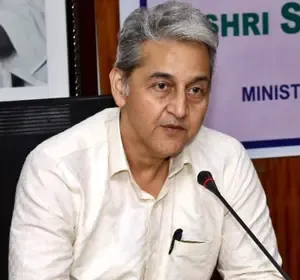
Union Social Justice and Empowerment Secretary Sudhansh Pant on 13 September 2026 revealed that nearly 90,000 sewer and septic tank workers across India have been profiled and validated under a government initiative aimed at ensuring occupational dignity, providing protective equipment, health insurance, and financial assistance to sanitation workers.
Key Profiling and Validation Numbers
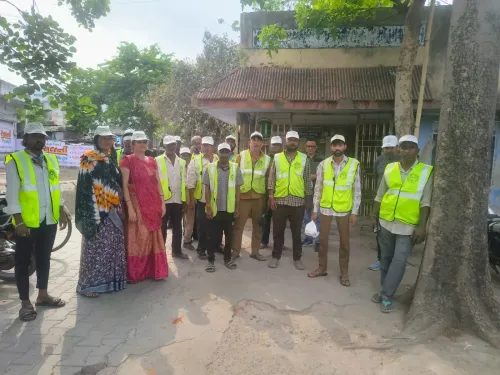
Of the 90,942 sewer and septic tank workers profiled, 89,248 have been validated, according to an official statement. Personal Protective Equipment (PPE) kits have been distributed to 87,037 sanitation workers, while 76,247 workers are now covered under various health insurance schemes that support safer working conditions and healthcare access.
Waste Pickers Brought Under the Safety Net
The scheme's reach extends beyond sewer workers. A total of 3,78,547 waste pickers have been profiled, of whom 2,52,163 have been validated through e-KYC. Around 1,31,864 waste pickers have received PPE kits, and data for 1,24,835 waste pickers has been processed for generation of Ayushman Cards, which provide health coverage under the government's flagship insurance programme.
Notably, the scheme's coverage was expanded in June 2024 to include waste pickers engaged in solid waste management in both urban and rural areas — a significant broadening of its welfare mandate.
Financial Assistance and Mechanised Sanitation
To facilitate access to sanitation vehicles and mechanised operations, an upfront capital subsidy of ₹34.17 crore has been released to 983 sanitation workers for the procurement of 364 vehicles. This support is designed to reduce manual labour dependency and open livelihood opportunities for workers in the sector.
Safety Infrastructure and Awareness
To further strengthen on-ground safety, 753 safety devices have been dispatched to Emergency Response Sanitation Units (ERSUs) established in larger municipal corporations and districts. Alongside this, 1,562 workshops on the prevention of hazardous cleaning of sewers and septic tanks have been conducted across the country.
This comes amid longstanding concerns over the deaths of manual scavengers and sewer workers due to toxic gas exposure, a problem that rights groups argue remains severely underreported. India has laws banning manual scavenging, yet enforcement has historically been inconsistent. The government's push to mechanise and insure workers reflects both a welfare and a compliance imperative.
Secretary Pant said these measures reflect the Ministry's commitment to strengthening occupational safety, improving welfare access, and upholding the dignity of workers in sanitation and solid waste management. Further expansion of coverage and validation is expected as the scheme matures.
Point of View
But the gap between profiling and actual coverage tells the real story — over 3.78 lakh waste pickers have been profiled, yet fewer than 1.32 lakh have received PPE kits, and Ayushman Card generation is still in the processing stage for many. The expansion to rural waste pickers in June 2024 was an important policy shift, but last-mile delivery in smaller municipalities and panchayats remains the persistent weak link in such welfare schemes. India's record on manual scavenging deaths shows that administrative profiling alone does not translate into on-ground safety without robust ERSU deployment and real-time accountability. The ₹34.17 crore vehicle subsidy is a step toward mechanisation, but 364 vehicles for a workforce of nearly one lakh is a fraction of what is needed to meaningfully reduce hazardous manual entry.
NationPress
13 Sept 2026
Frequently Asked Questions
How many sewer workers have been covered under the government's PPE and insurance scheme?
Of the 90,942 sewer and septic tank workers profiled, 89,248 have been validated. PPE kits have been provided to 87,037 workers, while 76,247 are covered under health insurance schemes, according to the Social Justice Ministry.
What benefits are waste pickers receiving under this initiative?
A total of 3,78,547 waste pickers have been profiled, of whom 2,52,163 have been validated through e-KYC. Around 1,31,864 have received PPE kits, and data for 1,24,835 has been processed for Ayushman Card generation for health coverage.
What financial assistance is being given to sanitation workers for vehicles?
An upfront capital subsidy of ₹34.17 crore has been released to 983 sanitation workers to support the procurement of 364 sanitation vehicles. This aims to promote mechanised sanitation and reduce hazardous manual cleaning.
What are Emergency Response Sanitation Units and how are they being equipped?
Emergency Response Sanitation Units (ERSUs) are safety infrastructure set up in larger municipal corporations and districts to respond to sanitation emergencies. The government has dispatched 753 safety devices to these units to strengthen on-ground response.
When was the scheme expanded to include waste pickers?
The scheme's coverage was expanded in June 2024 to include waste pickers engaged in solid waste management in both urban and rural areas, extending welfare, PPE, and health insurance support to this previously excluded group.