J&K govt releases ₹175 crore to rescue SEHAT scheme after hospital exit threat
Synopsis
J&K's universal cashless health scheme came within days of collapse after private hospitals threatened to quit over ₹250 crore in unpaid dues. A last-minute ₹175 crore government package has bought time — but the structural reimbursement problem that caused the crisis remains unresolved.
Key Takeaways
The J&K government approved a ₹175 crore package on 19 June to settle overdue SEHAT scheme reimbursements.
The JKPHDA had threatened to withdraw from the scheme from 1 July , citing outstanding liabilities exceeding ₹250 crore .
Funds will be routed through the State Health Agency (SHA) ; disbursement to individual hospitals is expected within days.
J&K is the only UT in India where SEHAT coverage is universal — available to every household regardless of income.
Critical services including dialysis , oncology , cardiac care , and ICU treatment were at risk of disruption.
Hospitals have deferred their exit but warn that a long-term fix to reimbursement timelines is still needed.
The Jammu and Kashmir government on Friday, 19 June approved a ₹175 crore relief package to salvage the Ayushman Bharat PM-JAY SEHAT scheme after private hospitals and dialysis centres across the union territory threatened to withdraw from the programme, citing crippling payment delays. The intervention has, at least temporarily, pulled the flagship cashless healthcare initiative back from the brink.
What Triggered the Crisis
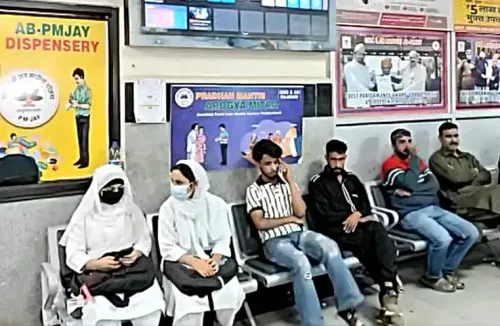
The Jammu and Kashmir Private Hospitals and Dialysis Centres Association (JKPHDA) had announced plans to de-empanel from the SEHAT scheme effective 1 July, warning that prolonged reimbursement delays had pushed member institutions into severe financial stress. According to the association, outstanding liabilities had exceeded ₹250 crore, with dues accumulated over at least three months left uncleared.
Critical services — including dialysis, oncology care, intensive care, cardiac procedures, and emergency medical services — were reportedly at risk of disruption, raising alarm among beneficiaries who depend entirely on the scheme for cashless treatment.
Government's Emergency Response
The Health and Medical Education Department sanctioned ₹175 crore specifically to settle long-pending reimbursement claims owed to empanelled private healthcare institutions. The funds are to be routed through the State Health Agency (SHA), after which the reimbursement process will commence. Officials acknowledged that the transfer and distribution may take a few more days to complete.
During discussions with senior SHA officials, representatives of private hospitals were given assurances that the sanctioned amount would be released without further delay. Following those assurances, the JKPHDA agreed to defer its proposed withdrawal and continue providing services under the scheme in the interim.
Why SEHAT Matters in J&K
Jammu and Kashmir is the only union territory in the country where every household — regardless of income — is entitled to coverage under the SEHAT scheme. This universal entitlement sets it apart from the national PM-JAY framework, which is means-tested. Any disruption to the scheme would directly affect millions of residents who have no alternative financial safety net for hospitalisation.
Notably, this is not the first time reimbursement backlogs have strained the scheme's private-hospital network. The recurrence points to a structural gap between the pace of claim generation and the government's disbursement cycle.
What Hospitals Are Saying
Despite agreeing to stay on board, hospital authorities reiterated that the ₹175 crore release is a partial measure. They emphasised that all pending payments — particularly those accumulated over the past three months — must be cleared at the earliest to ensure uninterrupted functioning of hospitals and dialysis centres across the UT. Healthcare stakeholders expressed cautious optimism that the financial infusion would stabilise operations and restore confidence among empanelled providers.
What Happens Next
The immediate focus is on the SHA completing fund disbursement to individual hospitals within the coming days. Longer term, the episode has exposed the need for a more robust and timely claims-settlement mechanism if the SEHAT scheme is to remain viable. Industry observers argue that without a structural fix to reimbursement timelines, the risk of another standoff remains high.
Point of View
Not a cure. J&K's SEHAT scheme carries a uniquely ambitious mandate — universal coverage with no income bar — but that promise is only as strong as the government's ability to pay its empanelled providers on time. Outstanding dues crossing ₹250 crore before a single hospital exits is a governance failure, not a funding shortage. The real question is whether the SHA will institutionalise a faster claims-settlement cycle, or whether the next standoff is simply being deferred by a few months.
NationPress
19 Sept 2026
Frequently Asked Questions
What is the SEHAT scheme in Jammu and Kashmir?
The SEHAT (Social, Economic and Health Assistance for Transformation) scheme is J&K's extension of the Ayushman Bharat PM-JAY programme, offering cashless medical treatment to every household in the union territory regardless of income. J&K is the only UT in India with this universal entitlement.
Why did private hospitals threaten to exit the SEHAT scheme?
The Jammu and Kashmir Private Hospitals and Dialysis Centres Association announced plans to withdraw from the scheme from 1 July, citing outstanding reimbursement dues exceeding ₹250 crore and prolonged delays in claim settlements that were severely straining hospital finances.
What did the J&K government do to prevent the exit?
The Health and Medical Education Department sanctioned ₹175 crore to clear pending reimbursement claims. Following assurances from State Health Agency officials that funds would be released promptly, the JKPHDA agreed to defer its proposed withdrawal.
When will the ₹175 crore reach the hospitals?
The funds are to be routed through the State Health Agency, after which reimbursements will be processed. Officials have said the transfer and distribution may take a few more days to complete.
Which medical services were at risk if hospitals had exited the scheme?
Dialysis, oncology care, intensive care, cardiac procedures, and emergency medical services were among the critical treatments at risk of disruption had private hospitals proceeded with their planned withdrawal from the SEHAT scheme.