Chhattisgarh: Security forces recover 955 Maoist detonators in Bijapur forest
Synopsis
A joint security team in Bijapur, Chhattisgarh recovered 955 detonators and an array of electronic components — including antennas, PCBs, and charging equipment — from an underground Maoist cache near Pujarikanker village. Officials say the stockpile was intended for IED manufacturing and remote-trigger systems, revealing the operational sophistication still present in one of India's most conflict-prone districts.
Key Takeaways
A joint District Force and CoBRA Battalion team recovered a Maoist explosives cache near Pujarikanker village , Bijapur , on 6 November 2026 .
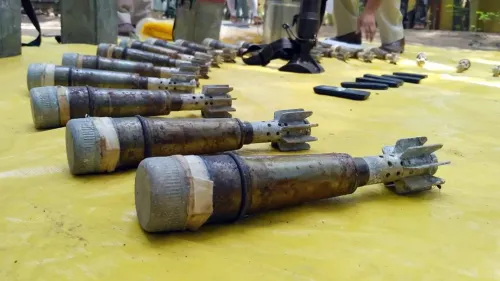
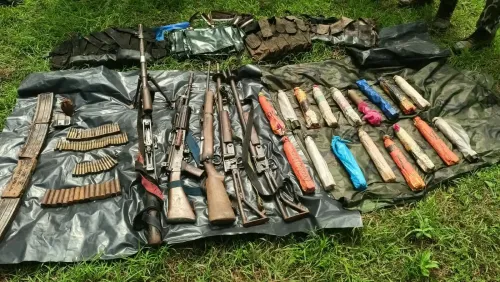
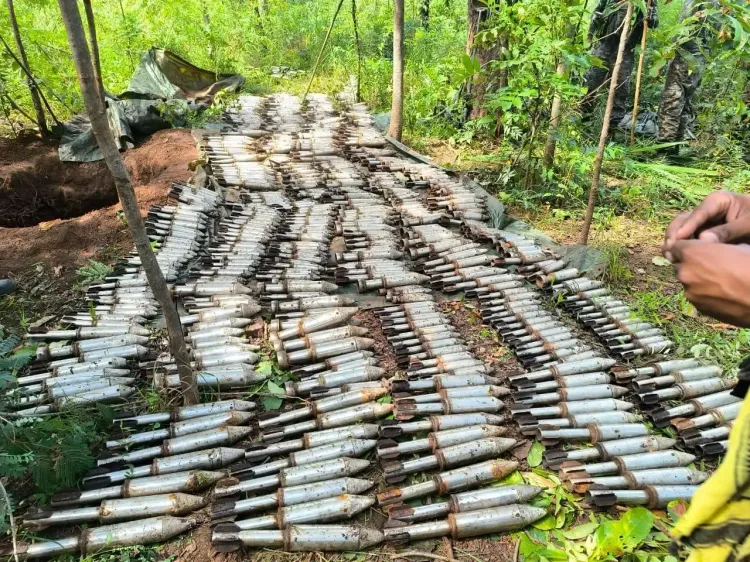
The seizure included 455 electric detonators and 500 non-electric detonators — a total of 955 detonators .
Electronic equipment recovered included antennas, PCBs, multimeters, and charging cradles , indicating plans for advanced IED triggering systems.
Naxal-related literature was also recovered from the underground site.
All materials have been seized by Usur police station ; legal proceedings are underway under relevant law.
Officials say sustained intelligence-driven operations are gradually weakening Maoist capacity in the region.
Security forces conducting a joint anti-Naxal operation in Bijapur district, Chhattisgarh, unearthed a large underground cache of explosives and electronic equipment concealed by Maoists in dense forest terrain on Thursday, 6 November 2026. The recovery, made near Pujarikanker village under the Usur police station limits, points to a sophisticated Maoist logistics network, according to officials.
How the Operation Unfolded
Acting on specific intelligence provided by the intelligence wing of a CoBRA Battalion, a combined team comprising personnel from the District Force and the CoBRA Battalion launched the search operation in hilly, forested terrain southeast of Pujarikanker. Rahul Bansal, Additional Superintendent of Police, Bijapur, confirmed the recovery following a careful, safety-conscious search of the underground site.
The CoBRA Battalion — a specialised jungle warfare unit of the Central Reserve Police Force — has been at the forefront of intelligence-driven anti-Naxal operations in Chhattisgarh, and Thursday's find follows a pattern of such recoveries over recent months.
What Was Recovered
The seized explosive materials included 455 electric detonators and 500 non-electric detonators — a combined total of 955 detonators. Alongside these, a range of electronic and communications equipment was recovered, underscoring the operational intent behind the cache.
The electronic haul included two multimeters, two radio set battery charger cradles, two copper prototyping boards (PCBs), one multi-USB port card reader, one mobile charger, one laptop adapter, one 12-volt FM/AM retractable power antenna, one telescopic antenna, one Type-B data cable, approximately eight metres of electric wire, one relay control circuit board, and one snap hook. Naxal-related literature was also found at the site.
What Officials Said
Bansal stated that the cache appeared to have been stored for use in future attacks or for manufacturing improvised explosive devices (IEDs). The presence of sophisticated electronic components — including antennas, circuit boards, and charging equipment — indicates, according to officials, that the Maoists were in the process of assembling advanced communication and remote-triggering systems.
'The presence of sophisticated electronic components, including antennas, circuit boards and charging equipment, indicates that the Maoists were preparing advanced communication and triggering systems,' Bansal said.
Legal Proceedings and Security Posture
All recovered explosives, electronic devices, and literature have been formally seized by the Usur police station. Further investigation and legal proceedings have been initiated under relevant sections of law, officials confirmed.
Security forces remain on high alert across the region and continue intensive anti-Naxal operations based on real-time intelligence inputs. Officials emphasised that sustained pressure through intelligence-driven operations is gradually weakening the insurgents' capacity to carry out violent activities in Bijapur and surrounding areas.
Broader Context
Bijapur district sits at the heart of the so-called 'Red Corridor' in Chhattisgarh and has historically been one of the most active zones for Left Wing Extremism in India. The recovery of communications and triggering hardware alongside conventional explosives is notable — it suggests Maoists are not merely stockpiling ordnance but actively building the electronic infrastructure to deploy IEDs remotely, a tactic that has claimed the lives of security personnel in past ambushes in the region. This comes amid a broader security push by the Centre to eliminate Left Wing Extremism from its last remaining strongholds by 2026.
Point of View
Circuit boards, and charging cradles recovered alongside nearly a thousand detonators suggest Maoists in Bijapur were building not just stockpiles but remote-triggering capability — the kind used in roadside IED ambushes that have historically inflicted the heaviest casualties on security personnel. The government's stated goal of eliminating Left Wing Extremism by 2026 faces a reality check here: the insurgency may be shrinking territorially, but the technological sophistication of its remaining cells appears to be holding steady. Intelligence-led recoveries like this one are significant, but the deeper question is whether the network that assembled and buried this cache has been dismantled — or simply dispersed.
NationPress
6 Nov 2026
Frequently Asked Questions
What was recovered in the Bijapur Maoist cache on 6 November 2026?
Security forces recovered 455 electric detonators and 500 non-electric detonators, totalling 955 detonators, along with electronic equipment including antennas, PCBs, multimeters, and charging cradles. Naxal-related literature was also found at the underground site near Pujarikanker village in Bijapur, Chhattisgarh.
Which security units conducted the operation?
A joint team comprising personnel from the District Force and a CoBRA Battalion carried out the operation. The search was triggered by specific intelligence provided by the intelligence wing of the CoBRA Battalion, a specialised jungle warfare unit of the Central Reserve Police Force.
What do officials say the cache was intended for?
Officials say the stockpile was stored for use in future attacks or for manufacturing improvised explosive devices (IEDs). The presence of electronic components such as antennas, relay circuit boards, and charging equipment indicates the Maoists were preparing advanced communication and remote-triggering systems.
Where exactly was the cache found?
The cache was unearthed in a hilly, forested area southeast of Pujarikanker village, which falls under the Usur police station limits in Bijapur district, Chhattisgarh.
What legal action has been taken after the recovery?
All recovered explosives, electronic devices, and literature have been formally seized by the Usur police station. Authorities have initiated investigation and legal proceedings under relevant sections of law, and security forces remain on high alert in the region.