Exam reforms task force: Gujarat CM, Deputy CM back Nilekani-led panel
Synopsis
With exam controversies still fresh, PM Modi has assembled a six-member high-powered task force — led by Aadhaar architect Nandan Nilekani — to overhaul India's examination system. Gujarat's top leadership has publicly backed the move, framing it as a governance-over-politics moment. The real test will be whether the panel's recommendations produce enforceable change.
Key Takeaways
Prime Minister Narendra Modi constituted a high-powered task force on examination reforms, headed by Nandan Nilekani , Infosys co-founder and UIDAI founding chairman.
The six-member panel also includes former ISRO Chairman S.
Somnath , former IB Director Tapan Deka , IIT Madras Director V.
Kamakoti , former Education Secretary Anita Karwal , and logistics expert Amrit Lal Meena .
Gujarat CM Bhupendra Patel called it 'a visionary step' to safeguard youth and secure the examination system.
Deputy CM Harsh Sanghavi said the decision reflects 'a governance model that values capability, experience, and outcomes above political affiliations.' The move follows national controversy over competitive examination irregularities; the government has also announced stronger legal provisions against exam-related offences.
Gujarat Chief Minister Bhupendra Patel and Deputy Chief Minister Harsh Sanghavi have welcomed Prime Minister Narendra Modi's decision to constitute a high-powered task force on examination reforms, led by technology entrepreneur and Infosys co-founder Nandan Nilekani. The leaders described the move as 'a step towards strengthening transparency and trust in India's examination system.'
What the Task Force Is and Who Leads It
Prime Minister Modi announced on Sunday that the Centre had constituted the panel, with Nandan Nilekani — co-founder of Infosys and founding chairman of the Unique Identification Authority of India (UIDAI) — heading it. The task force is mandated to recommend reforms that make the country's examination system more reliable, transparent, and technology-driven.
The six-member panel includes former Indian Space Research Organisation (ISRO) Chairman S. Somnath, former Intelligence Bureau (IB) Director Tapan Deka, IIT Madras Director V. Kamakoti, former Education Secretary Anita Karwal, and logistics expert Amrit Lal Meena.
What Gujarat's Leadership Said
Responding on social media platform X, Chief Minister Bhupendra Patel called it 'a visionary step by Prime Minister Narendra Modi to safeguard the future of our youth and secure our examination system.' He added that the task force 'will ensure transparency, trust, and tech-driven integrity in exams across the nation.'
Deputy Chief Minister Harsh Sanghavi struck a broader note, stating: 'Politics may divide, but nation-building demands the best minds.' He further said the decision 'reflects a governance model that values capability, experience, and outcomes above political affiliations.'
Why the Government Acted Now
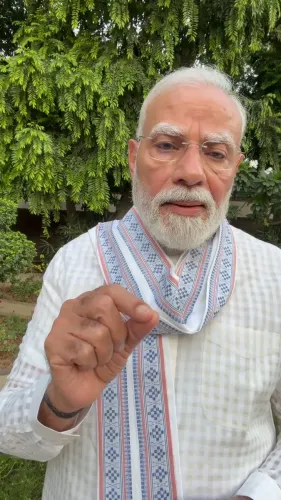
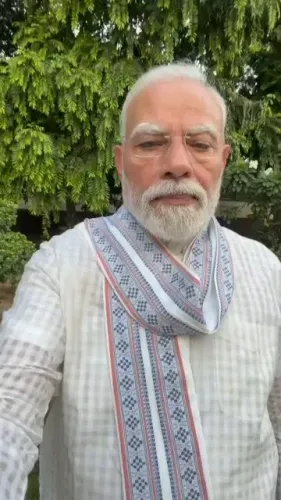
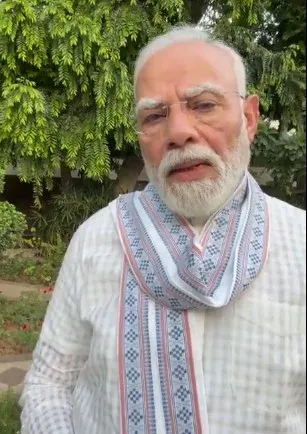
The move follows renewed national scrutiny of examination integrity after controversies surrounding competitive examinations. Prime Minister Modi, in a video statement, said the government intends to 'maximise the use of technology to make examinations more dependable and transparent,' with future policy direction to be guided by the panel's recommendations.
Alongside the task force formation, Modi confirmed that the government had already acted against those involved in examination irregularities and is pursuing additional legal measures, including stronger provisions to deal with examination-related offences.
What Comes Next
The task force is expected to submit its recommendations to strengthen the credibility of public examinations. With Nilekani's track record in building Aadhaar's digital infrastructure, the panel's composition signals a strong technology-first approach to overhauling how India conducts high-stakes exams. Whether the recommendations translate into enforceable reform — and on what timeline — remains to be seen.
Point of View
Not a one-off crisis. But the panel's strength is also its limitation — a recommendations body has no enforcement power. India's exam controversies are as much about administrative capture and leak networks as they are about technology gaps; Nilekani can fix the latter but the former demands political will that no task force can substitute. Gujarat's effusive endorsement is predictable coalition optics, but the more meaningful test will be whether the Centre acts on the panel's findings before the next round of high-stakes exams.
NationPress
27 Jul 2026
Frequently Asked Questions
What is the high-powered task force on examination reforms?
It is a six-member panel constituted by the Centre and headed by Nandan Nilekani, tasked with recommending reforms to make India's examination system more reliable, transparent, and technology-driven. The panel also includes former ISRO Chairman S. Somnath, former IB Director Tapan Deka, IIT Madras Director V. Kamakoti, former Education Secretary Anita Karwal, and logistics expert Amrit Lal Meena.
Why was the exam reforms task force formed?
The task force was formed following renewed national scrutiny of examination integrity after controversies surrounding competitive examinations. PM Modi stated the government intends to maximise technology use to make exams more dependable and will base future policy on the panel's recommendations.
Who is Nandan Nilekani and why was he chosen to lead the panel?
Nandan Nilekani is the co-founder of Infosys and the founding chairman of the Unique Identification Authority of India (UIDAI), the body behind Aadhaar. His appointment signals a technology-first approach to overhauling high-stakes public examinations in India.
What did Gujarat CM Bhupendra Patel say about the task force?
Chief Minister Bhupendra Patel, responding on social media platform X, called it 'a visionary step by Prime Minister Narendra Modi to safeguard the future of our youth.' He said the panel 'will ensure transparency, trust, and tech-driven integrity in exams across the nation.'
What action has the government already taken on examination irregularities?
Alongside forming the task force, PM Modi confirmed the government had already acted against those involved in examination irregularities and is pursuing additional legal measures, including stronger provisions to deal with examination-related offences.