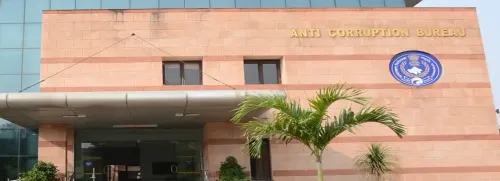
Jammu and Kashmir ACB Unleashes Major Raids on Illegal Mining in Udhampur and Reasi
Synopsis
The Jammu and Kashmir Anti-Corruption Bureau has taken decisive action against illegal mining in Udhampur and Reasi. Through surprise inspections, they aim to halt unlawful extraction and protect the environment, revealing a concerning nexus between officials and mineral bidders.
Key Takeaways
Significant Raids: ACB conducts surprise inspections in Udhampur and Reasi.
Environmental Protection: ACB aims to halt illegal mining to safeguard the environment.
Corruption Nexus: Investigation reveals collusion between officials and illegal miners.
Seized Evidence: ACB confiscates critical documents and electronic devices.
Commitment to Accountability: ACB is focused on dismantling corrupt networks in the region.
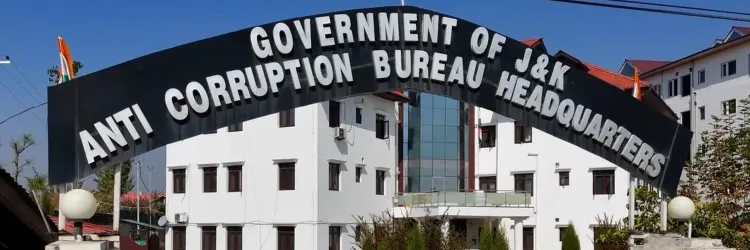
Jammu, Feb 27 (NationPress) In a significant operation against unlawful mining activities, the Jammu and Kashmir Anti-Corruption Bureau (ACB) executed unexpected raids in the districts of Udhampur and Reasi, as reported by officials.
A statement from the Jammu and Kashmir ACB highlighted, "In a firm effort to safeguard the local environment and tackle corruption, the Anti-Corruption Bureau has initiated comprehensive Joint Surprise Checks (JSCs) aimed at illegal mining activities throughout Udhampur and Reasi districts."
"This operation stemmed from credible complaints regarding rampant illegal mineral extraction within the Jammu division," it continued.
"Initial findings suggested a possible collusion between mineral bidders and specific officials in the Mining and Ecological Departments, enabling these operations to persist without oversight," the statement added.
"To swiftly put an end to the illegal extraction and exploitation of natural resources, specialized ACB teams, led by Gazetted Officers, conducted synchronized, surprise inspections at several stone crushing facilities across both districts."
"Notable discoveries from the operation include: ACB investigators conducted thorough searches, seizing essential electronic devices, important records, and highly implicating documents."
"Numerous allegedly fraudulent 'Form-A' transit documents were retrieved directly from the active sites."
"All examined stone crushers were found to be engaged in illegal mining activities. These facilities operated in severe breach of their authorized terms, leading to irreversible ecological damage to the area," the statement concluded.
The ACB remains committed to dismantling corrupt systems and preventing the exploitation of Jammu's natural resources, with further investigations based on collected evidence already in progress.
The ACB serves as the primary anti-corruption entity in Jammu and Kashmir.
Initially, corruption and bribery offenses against government personnel were governed solely by the provisions of the Ranbir Penal Code, 1989, with up to 1,949 cases recorded and probed by local law enforcement.
Following the establishment of the Jammu and Kashmir Prevention of Corruption Act, 2006, a dedicated "Anti-Corruption Wing" was created within the state Crime Branch to handle cases under this Act.
Moreover, in 1962, a distinct entity known as the "Anti-Corruption Organisation" was established to investigate all bribery and corruption cases.
As time has progressed, various legislative measures have been introduced to effectively combat corruption.
Among these, the Prevention of Corruption Laws (Amendment) Act, 1983, notably renamed the "Anti-Corruption Organisation" to the "State Vigilance Organisation," and introduced the Jammu and Kashmir Public Men and Public Servants Declaration of Assets and Other Provisions Act, 1983.
Consequently, this Act brought elected officials from various public bodies, including MLAs and Ministers, under the jurisdiction of Corruption laws, mandating the annual filing of property returns by all public servants and men. Non-compliance was deemed an offense under the Prevention of Corruption Act, 2006.
To enhance the investigation process, two police stations were established—one in Jammu and another in Srinagar—on April 23, 1976.
These police stations are responsible for addressing offenses under the Prevention of Corruption Act, 2006.
Point of View
The recent raids by the Jammu and Kashmir Anti-Corruption Bureau reflect an essential step in addressing corruption and environmental degradation. The ACB's ongoing investigations showcase a commitment to transparency and accountability in safeguarding the region's resources.
NationPress
30 Sept 2026
Frequently Asked Questions
What prompted the ACB to conduct these raids?
The ACB initiated the raids following serious complaints about widespread illegal mineral extraction in the Jammu division, indicating a potential collusion between mineral bidders and officials.
What were the findings of the ACB's operation?
The operation revealed active illegal mining at stone crushers, with ACB teams confiscating electronic devices, incriminating documents, and forged transit papers.
How does the ACB combat corruption in Jammu and Kashmir?
The ACB utilizes various legislative measures, including the Jammu and Kashmir Prevention of Corruption Act, 2006, to investigate and address corruption cases.
What is the significance of the ACB's actions?
The ACB's actions are crucial for protecting the environment and ensuring accountability among public officials, thereby reducing corruption in natural resource management.
What is the history of anti-corruption efforts in Jammu and Kashmir?
Anti-corruption efforts in Jammu and Kashmir date back to 1962, with the establishment of organizations and laws aimed at tackling bribery and corruption.