Supreme Court: Accused has no right to lawyer's continuous presence in police interrogation
Synopsis
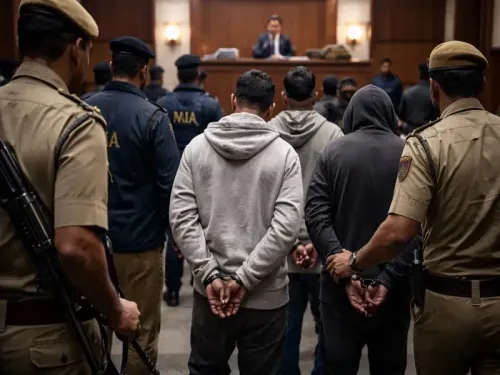
The Supreme Court has drawn a clear line: an accused can meet their lawyer during police interrogation, but cannot demand the lawyer stay in the room throughout. Interpreting Section 38 of the new BNSS for the first time in a custodial death case, the ruling reshapes how magistrates can frame custody conditions — and hands investigators more operational room than lower courts had allowed.
Key Takeaways
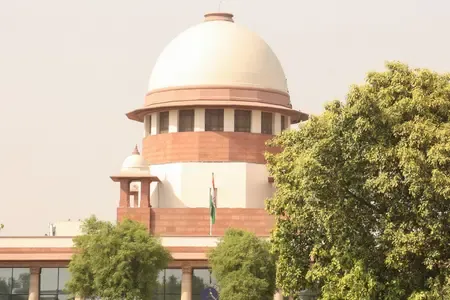
The Supreme Court ruled on 27 July that Section 38 of the BNSS guarantees the right to meet a lawyer during interrogation, not the lawyer's continuous physical presence.
A bench of Justice Vikram Nath and Justice Sandeep Mehta modified conditions imposed in a custodial death case involving a suspended Andhra Pradesh police inspector.
The accused's lawyer may be present at a visible distance but cannot intervene in the investigation 'at any cost,' the court directed.
Confinement of interrogation to Central Prison, Rajamahendravaram was struck down as 'neither justified nor sustainable.' CCTV and audio-visual recording of interrogation sessions was retained as a safeguard for both the accused and the investigating agency.
Constitutional protections under Article 21 against coercion and third-degree methods remain binding regardless of judicial directions.
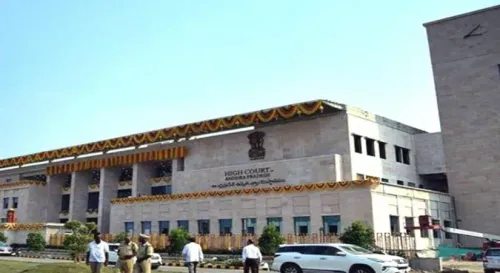
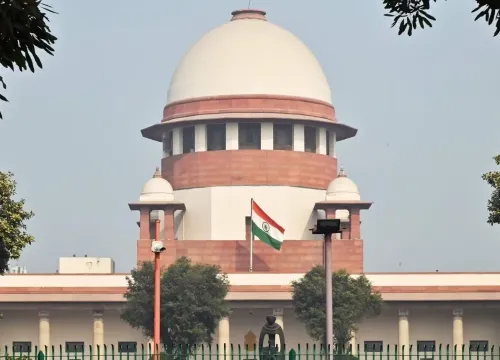
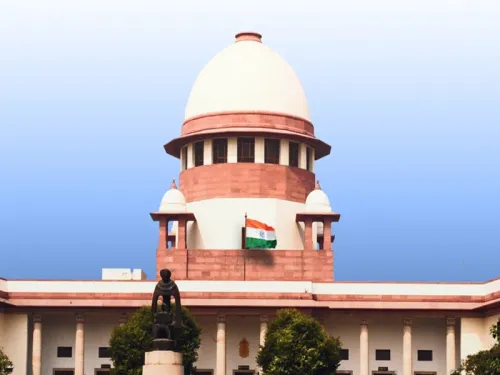
The Supreme Court of India on Monday, 27 July ruled that an accused person does not hold an unqualified right to have a lawyer physically present throughout police interrogation, clarifying that Section 38 of the Bharatiya Nagarik Suraksha Sanhita (BNSS) guarantees only the right to meet an advocate during questioning — not the advocate's uninterrupted presence at every moment. The ruling came in an appeal filed by the Andhra Pradesh government against conditions imposed by a trial court and partly upheld by the Andhra Pradesh High Court in a custodial death case involving a suspended police inspector.
What the Supreme Court Ruled
A bench of Justice Vikram Nath and Justice Sandeep Mehta held that a plain reading of Section 38 of the BNSS does not contemplate 'the continuous, ongoing physical presence of an advocate for the entirety of each interrogation session.' The bench modified several conditions the lower courts had imposed while granting police custody of the accused.
The court directed that the accused's lawyer may remain at a location from where the accused is visible during interrogation, but cannot be permitted to intervene in the investigation 'at any cost.' The bench described some of the earlier safeguards as having grown impractical and as hampering effective investigation.
The Custodial Death Case in Context
The case centres on a suspended police inspector accused in a custodial death where the victim's body remains untraced and key recoveries are yet to be made. The Andhra Pradesh government had argued before the apex court that the restrictions imposed by lower courts rendered effective custodial interrogation virtually impossible, a concern the Supreme Court described as 'realistic and justified.'
The bench also struck down the condition confining the entire custodial interrogation to the Central Prison at Rajamahendravaram, holding that such a restriction was 'neither justified nor sustainable' given the nature of the investigation.
CCTV and Videography Safeguards Retained
While modifying several conditions, the court retained the requirement of CCTV coverage and audio-visual recording of interrogation sessions, noting that such safeguards protect the accused against coercion and simultaneously shield the investigating agency from unfounded allegations.
However, it held that mandating uninterrupted videography of every movement of the accused during transit over long distances was 'unworkable in practice,' citing logistical constraints including signal loss, battery limitations, and security considerations.
Constitutional Safeguards Remain Intact
The bench was careful to affirm that constitutional protections against coercion, assault, or third-degree methods are inherent under Article 21 of the Constitution and remain binding on the investigating agency regardless of specific judicial directions. The ruling thus draws a distinction between the right to legal access and the operational conduct of interrogation.
Notably, this interpretation of the BNSS — which replaced the Code of Criminal Procedure (CrPC) — carries significant precedential weight as courts and police agencies across India continue to navigate the contours of the new criminal procedure law. The judgment is expected to influence how magistrates frame custody conditions in sensitive cases going forward.
Point of View
But it carries an inherent tension: the very cases where continuous legal presence matters most are custodial death cases, where the risk of coercion is highest. The court's reliance on CCTV as the primary safeguard is pragmatic, but unresolved questions about footage access, chain of custody, and real-time monitoring mean that the protection is only as strong as the institution implementing it. Lower courts had arguably overcorrected; the Supreme Court has now recalibrated — but the burden of ensuring that recalibration does not become a licence for abuse rests entirely on the investigating agency's accountability, which in this very case is already under scrutiny.
NationPress
27 Jul 2026
Frequently Asked Questions
What did the Supreme Court rule about a lawyer's presence during police interrogation?
The Supreme Court ruled on 27 July that an accused does not have an unqualified right to have a lawyer continuously present throughout police interrogation. Section 38 of the BNSS guarantees only the right to meet an advocate during questioning, not the advocate's uninterrupted physical presence at every moment of an interrogation session.
What is Section 38 of the BNSS?
Section 38 of the Bharatiya Nagarik Suraksha Sanhita (BNSS) — which replaced the Code of Criminal Procedure — grants an accused the right to meet an advocate of their choice during interrogation. The Supreme Court has now clarified this does not extend to the lawyer's continuous presence throughout every interrogation session.
What case prompted this Supreme Court ruling?
The ruling arose from an appeal by the Andhra Pradesh government against conditions imposed by a trial court and partly upheld by the Andhra Pradesh High Court while granting police custody of a suspended police inspector accused in a custodial death case. The victim's body remains untraced and key recoveries are pending.
Are CCTV recordings still required during interrogation?
Yes. The Supreme Court retained the requirement of CCTV coverage and audio-visual recording of interrogation sessions, holding that these safeguards protect the accused against coercion and protect the investigating agency against unfounded allegations. However, uninterrupted videography during long-distance transit was held to be unworkable.
Does this ruling affect constitutional protections against custodial torture?
No. The Supreme Court explicitly affirmed that constitutional safeguards under Article 21 — protecting an accused against coercion, assault, and third-degree methods — remain fully binding on the investigating agency irrespective of any specific judicial directions or this ruling's modifications.