Adani pledges ₹1 lakh crore for West Bengal, calls East India's next growth engine
Synopsis
Gautam Adani has picked West Bengal as his 'second karmabhoomi' and is backing that sentiment with ₹1 lakh crore — spanning ports, power, green cement, hyperscale data centres, and a 2,000-bed hospital. The scale of the commitment repositions eastern India, and Bengal in particular, as a serious contender for the next phase of India's economic expansion.
Key Takeaways
Gautam Adani pledged over ₹1 lakh crore in investment in West Bengal over the next decade at the Indian Chamber of Commerce in Kolkata on 24 September 2026 .
The investment covers ports, logistics, power generation, power transmission, roads, bridges, ropeways, green cement, and hyperscale data centres.
Adani committed to building the Adani Arogya Mandir , a 2,000-bed hospital in New Town , with half its beds reserved for those who cannot afford quality care.
He described West Bengal as a 'strategic national node' with access — via the Bay of Bengal — to markets covering 60% of global GDP and 65% of the global population.
Adani called Bengal his intended 'second karmabhoomi', comparing it to Mundra in Gujarat, where his business career began 30 years ago .
Cultural commitments include revitalisation of Kumartuli Ghat , a Durga Puja programme, and conservation of the historic Writers' Building .
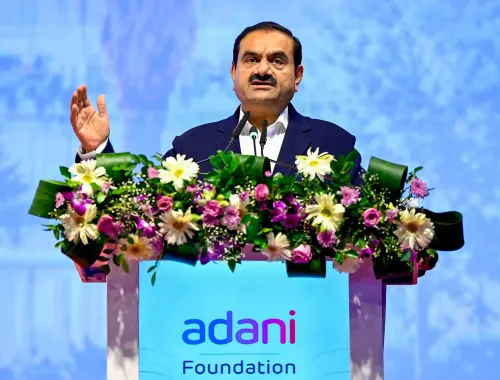
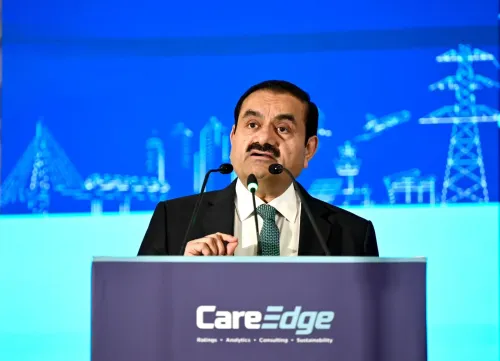
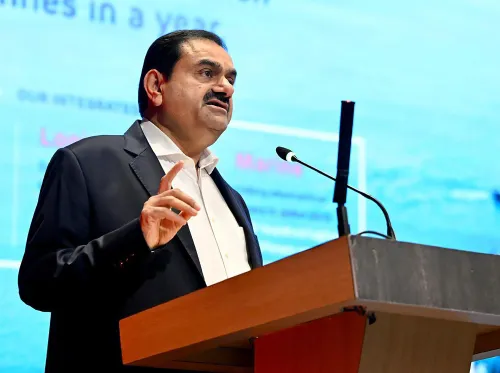
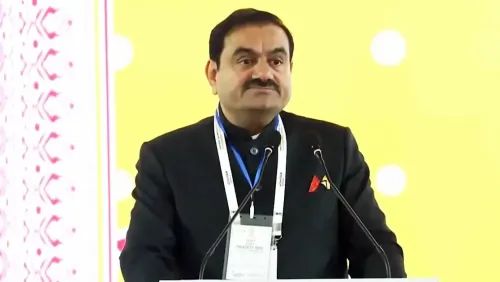
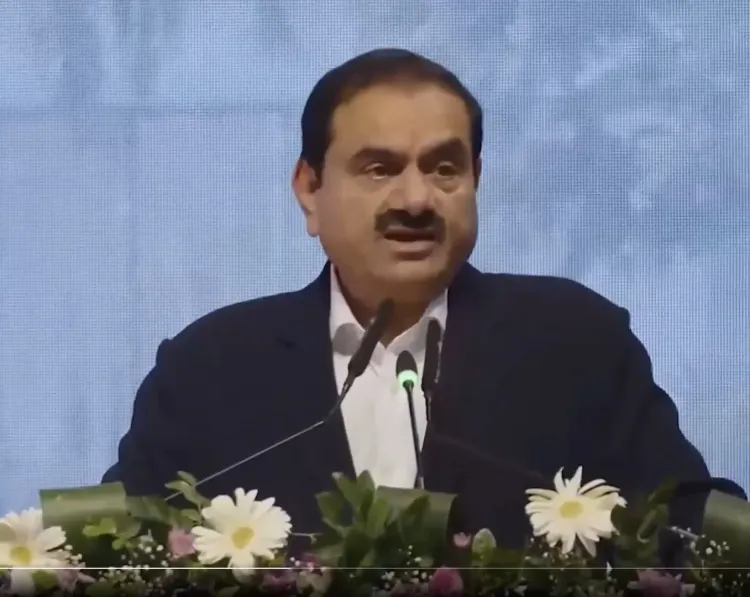
Adani Group Chairman Gautam Adani on Thursday, 24 September 2026, pledged to invest over ₹1 lakh crore in West Bengal over the next decade, declaring that eastern India must become the country's next major economic centre as it chases its next trillion dollars of GDP growth. The announcement was made at an address to the Indian Chamber of Commerce in Kolkata.
The East as India's Next Growth Centre
Adani argued that India's economic momentum has, for several decades, been concentrated in its western and southern corridors, and that a structural shift is now overdue. 'For India's next trillion dollars of growth, the East must rise. And this is where Bengal becomes essential to fulfil the vision of Viksit Bharat,' he said, adding that no other location in the country combines Bengal's geographic, industrial, and cultural advantages in quite the same way.
He outlined Bengal's strategic positioning in considerable detail: to its west lie the mineral and industrial heartlands of Odisha, Jharkhand, and Chhattisgarh; to its north and east is the gateway to India's Northeast. Through the Bay of Bengal, he noted, lie some of the fastest-growing markets of Southeast Asia and the Indo-Pacific — collectively representing access to 60 per cent of global GDP and 65 per cent of the global population.
What the ₹1 Lakh Crore Commitment Covers
The planned investment spans a wide range of infrastructure and industrial verticals. 'Over the coming decade, our intent is to deploy over one lakh crore rupees across Bengal. This will span ports, logistics, power generation, power transmission and distribution, roads, bridges and ropeways, green cement, as well as hyperscale data centres,' Adani said.
Notably, the group also committed to building the Adani Arogya Mandir, a 2,000-bed world-class medical institute in New Town, Kolkata. Half of those beds, Adani emphasised, will be dedicated to patients who cannot afford quality healthcare — a signal that the group intends the investment to carry a social dividend alongside its commercial returns.
Cultural Commitments Alongside Infrastructure
Beyond physical infrastructure, Adani outlined cultural pledges aimed at what he described as honouring Bengal's identity. These include supporting the revitalisation of the iconic Kumartuli Ghat, building a curated Durga Puja programme to celebrate Bengal's artistes, taking 'Maa' to audiences worldwide, and supporting the conservation of the historic Writers' Building.
'While we build for Bengal's future, we must also honour what makes Bengal timeless — and that is its ghats, its literature, its architecture, its festivals, and its extraordinary cultural confidence,' he said.
Bengal as Adani's 'Second Karmabhoomi'
Adani drew a personal parallel to the origins of the Adani Group, recalling that Mundra in Gujarat was his 'first karmabhoomi' when he began his entrepreneurial journey 30 years ago. 'Today, with the same humility and sense of responsibility, it is my prayer to Maa that Bengal in the East becomes my second karmabhoomi,' he said.
He was careful to frame the ambition in terms of Bengal's own identity rather than replication of Gujarat's model. 'Not because Bengal must become another Gujarat — but because Bengal must become the strongest version of Bengal itself, drawing upon its geography, its intellect, its industrial legacy, and its historic ability to awaken the nation,' Adani added.
This comes amid a broader national push — under the Viksit Bharat framework — to rebalance India's economic geography, with eastern states increasingly positioned as the next frontier for large-scale infrastructure deployment. Whether a commitment of this scale translates into on-ground execution will be closely watched by investors, state policymakers, and the communities the projects are meant to serve.
Point of View
But the eastern India investment story has seen high-profile commitments before that took years — or stalled — in execution. Bengal's structural advantages in geography and connectivity are real, but the state's historical friction with large industrial projects means the gap between announcement and ground-breaking will be the true test. The inclusion of a 2,000-bed hospital with subsidised beds is a deliberate signal to navigate local political sensitivities; whether cultural gestures like the Writers' Building conservation earn goodwill or appear performative will depend on how swiftly physical investments materialise. India's development balance sheet cannot be corrected by rhetoric alone — the East needs follow-through, not just new champions.
NationPress
24 Sept 2026
Frequently Asked Questions
How much has Adani Group pledged to invest in West Bengal?
Adani Group has pledged to invest over ₹1 lakh crore in West Bengal over the next decade. The investment spans ports, logistics, power generation and distribution, roads, bridges, ropeways, green cement, and hyperscale data centres.
What is the Adani Arogya Mandir announced in Kolkata?
The Adani Arogya Mandir is a proposed 2,000-bed world-class medical institute to be built in New Town, Kolkata. Half of its beds will be reserved for patients who cannot afford quality medical care.
Why does Gautam Adani say Bengal is critical for India's growth?
Adani argued that Bengal occupies a unique strategic position: its west borders mineral-rich Odisha, Jharkhand, and Chhattisgarh; its north-east is the gateway to India's Northeast; and through the Bay of Bengal it connects to Southeast Asian and Indo-Pacific markets covering 60% of global GDP and 65% of the global population. He described it as a 'strategic national node' for India's next trillion dollars of growth.
What cultural projects has Adani committed to in West Bengal?
Adani Group has committed to supporting the revitalisation of Kumartuli Ghat, building a curated Durga Puja programme to promote Bengal's artistes, taking 'Maa' to global audiences, and funding the conservation of the historic Writers' Building in Kolkata.
What did Gautam Adani mean by calling Bengal his 'second karmabhoomi'?
Adani used the term 'karmabhoomi' — place of work and purpose — to describe his personal commitment to Bengal, drawing a parallel with Mundra in Gujarat where his business career began 30 years ago. He stressed that Bengal should not replicate Gujarat's model but become the strongest version of itself.