Adani Group FY26 revenue hits ₹2.92 lakh crore, up 7.4% year-on-year

Synopsis
At its 34th AGM, Adani Group reported ₹2.92 lakh crore in consolidated revenue for FY26 — a 7.4% rise — while unveiling a ₹2 lakh crore private power capex programme, a nuclear energy push targeting 10 GW by 2035, and a Vizhinjam port that crossed one million TEUs in its debut year. The scale of the ambition is striking; the execution track record will be the real story to watch.
Key Takeaways
Adani Group posted consolidated portfolio revenue of ₹2.92 lakh crore in FY2025-26 , up 7.4% year-on-year.
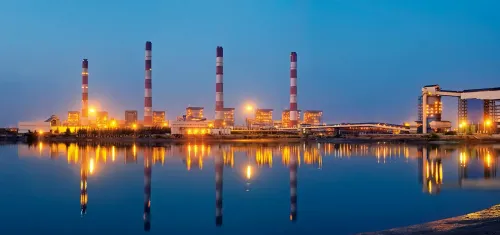
Adani Power is executing India's largest-ever private sector power capex of over ₹2 lakh crore , targeting 45 GW capacity in five years.
Adani Atomic Energy is targeting 10 GW of nuclear capacity by 2035 , with land already identified.
Adani Ports handled over 500 million tonnes of cargo in FY26; Vizhinjam Port crossed 1 million TEUs in its first year.
Navi Mumbai International Airport , inaugurated in December 2025 , has a 90-million-passenger capacity and was built in just over four years.
The Group's data centre business is targeting a 3 GW platform by 2030 , anchored by a gigawatt-scale MoU with Google in Visakhapatnam .
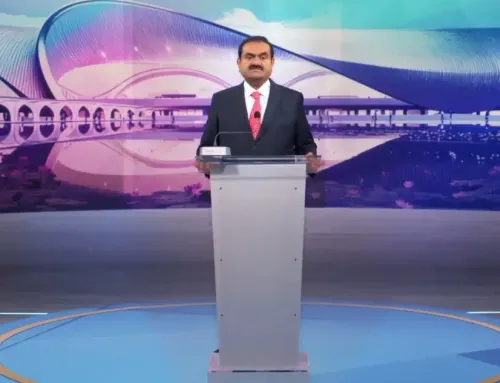
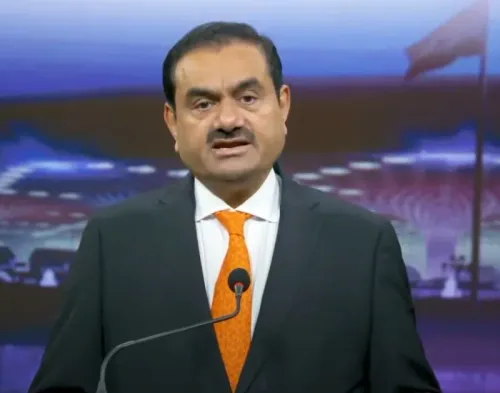
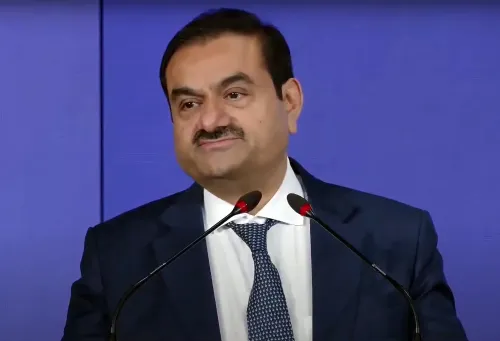
Adani Group Chairman Gautam Adani on Wednesday, 24 June 2026, reported that the conglomerate's consolidated portfolio revenue reached ₹2.92 lakh crore in FY2025-26, marking a year-on-year growth of 7.4 per cent. Addressing shareholders at the Group's 34th Annual General Meeting (AGM) in Ahmedabad, Adani described the year as one of 'disciplined growth and strong execution', positioning the Group among the few global enterprises he said are 'not reacting to the future but are prepared for it.'
Energy Expansion: Power, Gas, and a Nuclear Bet
At Adani Power, the Group is executing what it describes as India's largest-ever private sector power capital expenditure programme — an outlay of over ₹2 lakh crore — with a target of reaching 45 GW of generation capacity within the next five years. Separately, the Group announced a partnership with Bhutan's Druk Green Power Corporation (DGPC) to jointly develop 5,000 MW of hydropower projects in Bhutan.
At Adani Energy Solutions, the transmission order book climbed to ₹72,000 crore, bolstered by the Khavda South Olpad HVDC line — a project Adani said reinforces the Group's standing as India's only private-sector player with proven HVDC capability.
The Group's entry into nuclear energy through Adani Atomic Energy was flagged as a long-horizon bet. With land already identified, the division is targeting 10 GW of nuclear capacity by 2035, aimed at serving national demand for clean, round-the-clock power. Meanwhile, Adani Total Gas crossed 1.1 million Piped Natural Gas (PNG) home connections, with further ramp-up planned in response to rising domestic demand and current geopolitical pressures on energy supply chains.
Ports and Logistics: 500 Million Tonnes and a Transshipment Milestone
Adani Ports handled over 500 million tonnes of cargo in FY2025-26, which the Group described as an unmatched national benchmark, with a stated pathway to one billion tonnes by 2030. The integrated network of ports, Special Economic Zones (SEZs), and logistics assets, Adani argued, positions the Group to lower the cost and complexity of India's trade.
A standout highlight was Vizhinjam Port, which crossed one million TEUs in its first year of operations — a pace Adani called the fastest ever achieved by any Indian port and 'a strong signal of India's arrival on the global transshipment map.'
Airports, Data Centres, and Digital Infrastructure
In aviation, the Group marked two milestones: the opening of Navi Mumbai International Airport — inaugurated by Prime Minister Narendra Modi in December 2025 — and a new integrated terminal at Guwahati Airport, also inaugurated by the Prime Minister. Both airports subsequently featured on a list of the World's Seven Most Beautiful Airports. Navi Mumbai's airport, built in just over four years, carries a capacity of 90 million passengers.
On digital infrastructure, the Group's data centre business is targeting a 3 GW platform by 2030. A binding memorandum of understanding for a gigawatt-scale data centre with Google in Visakhapatnam was cited as evidence of confidence from global technology players, with Microsoft, Uber, and Flipkart also named as partners.
Cement, Defence, and Aerospace
Adani Cement expanded its total capacity to 110 MMTPA during the year, contributing to projects including the Chenab Railway Bridge and Navi Mumbai International Airport. In defence and aerospace, the Group deepened partnerships with Leonardo and Embraer to build helicopter and regional aircraft manufacturing ecosystems in India, alongside maintenance, repair and overhaul (MRO) services and pilot training.
What Comes Next
The scale of commitments across energy, logistics, digital, and defence signals that the Adani Group is betting heavily on India's infrastructure supercycle. Whether execution keeps pace with the ambition — particularly on the ₹2 lakh crore power capex and the nuclear timeline — will be the defining question for the Group's next chapter.
Point of View
But the headline that deserves scrutiny is the ₹2 lakh crore private power capex pledge — the largest such commitment in India's private sector history. Adani's simultaneous bets on coal power, renewables, hydro, and now nuclear reflect a hedge-everything energy strategy, but also a concentration of national infrastructure risk in a single private group. The nuclear foray is the most consequential long-term signal: if Adani Atomic Energy secures regulatory clearances and delivers on the 10 GW target by 2035, it reshapes India's energy mix in ways that go well beyond any single AGM announcement. The Vizhinjam milestone — one million TEUs in year one — is perhaps the most independently verifiable win, and the most significant for India's trade ambitions.
NationPress
24 Jun 2026
Frequently Asked Questions
What was Adani Group's total revenue in FY2025-26?
Adani Group's consolidated portfolio revenue stood at ₹2.92 lakh crore in FY2025-26, reflecting a year-on-year growth of 7.4 per cent. Chairman Gautam Adani disclosed the figures at the Group's 34th Annual General Meeting in Ahmedabad on 24 June 2026.
What is Adani Power's capacity target and investment plan?
Adani Power is implementing what the Group calls India's largest-ever private sector power capex programme, with an outlay of over ₹2 lakh crore and a target of 45 GW of generation capacity over the next five years.
What is Adani Atomic Energy and what is its target?
Adani Atomic Energy is the Group's nuclear energy division, announced as part of its long-term clean energy strategy. It is targeting 10 GW of nuclear capacity by 2035, with land already identified for the project.
What milestone did Vizhinjam Port achieve in FY26?
Vizhinjam Port crossed one million TEUs in its first year of operations — a pace Gautam Adani described as the fastest ever achieved by any Indian port. The achievement was cited as a signal of India's entry onto the global transshipment map.
Which global technology companies have partnered with Adani's data centre business?
Adani Group has signed a binding MoU for a gigawatt-scale data centre with Google in Visakhapatnam. The Group also cited Microsoft, Uber, and Flipkart as partners placing confidence in its digital infrastructure platform, which is targeting 3 GW of capacity by 2030.