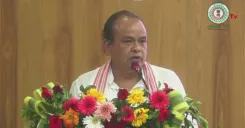
CM Fadnavis: Separate Anti-Drug Units in Every Maharashtra Police Station
Synopsis
Chief Minister Devendra Fadnavis has announced a dedicated anti-narcotics unit in every Maharashtra police station, signalled during the Monsoon Session 2026. The move decentralises drug enforcement to the ground level, following similar reforms in other Indian states under the NDPS Act framework.
Key Takeaways
The Chief Minister's Office of Maharashtra announced separate anti-narcotics units in every police station in the state on 24 June 2026 .
Devendra Fadnavis is the driving force behind the initiative, continuing a policy focus on narcotics enforcement he pursued during his earlier term as Chief Minister.
The reform targets the most granular level of policing — individual police stations — across Maharashtra's 36 districts .
The move mirrors similar anti-narcotics cell structures introduced in Gujarat , Delhi , and Karnataka over the past decade.
Budgetary and recruitment details are expected to be finalised during the Monsoon Session 2026 .
Possible coordination with the central Narcotics Control Bureau (NCB) may be announced as the policy is formalised.
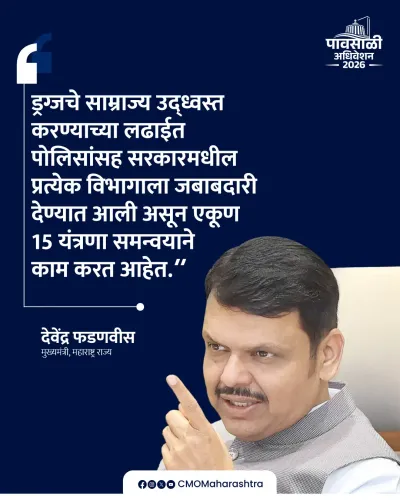
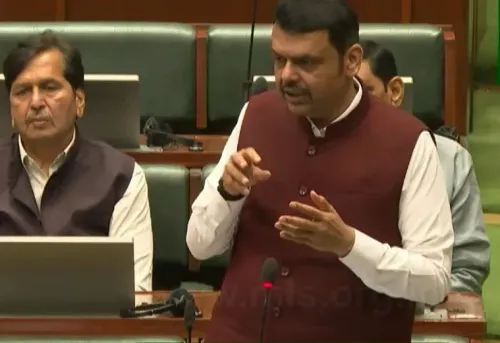
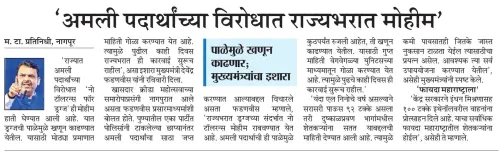
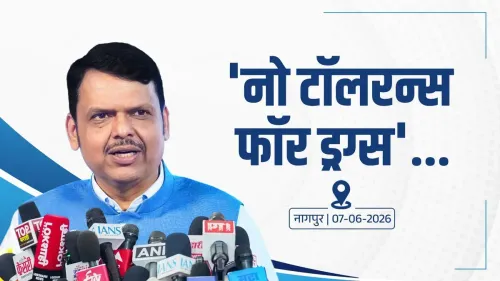
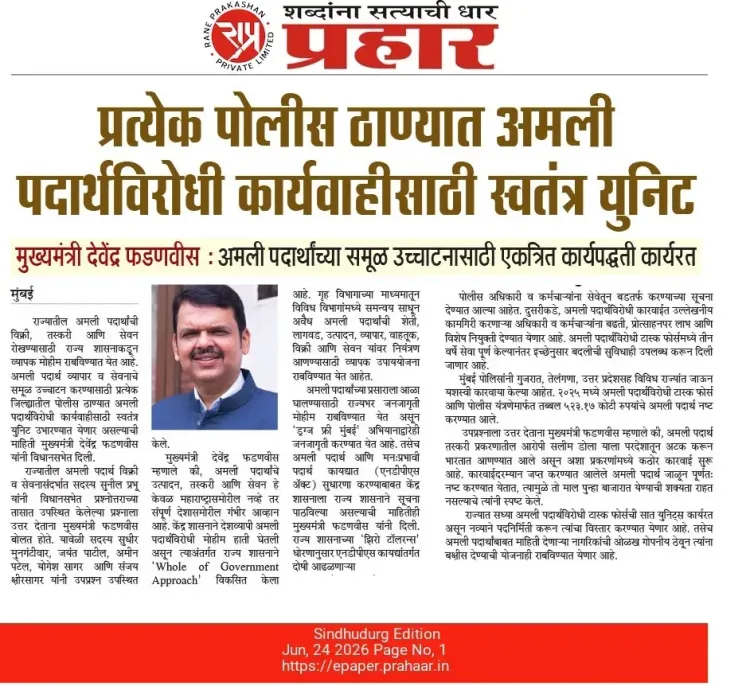
The Chief Minister's Office of Maharashtra announced on Wednesday, 24 June 2026 that the state government, under Chief Minister Devendra Fadnavis, will establish dedicated anti-narcotics units in every police station across Maharashtra — a move signalled during the ongoing Monsoon Session 2026.
Context
The CMO's post, directed at @Dev_Fadnavis, stated in Marathi: 'प्रत्येक पोलीस ठाण्यात अमली पदार्थविरोधी कार्यवाहीसाठी स्वतंत्र युनिट' — meaning 'a separate unit for anti-narcotics action in every police station.' The announcement ties the initiative directly to the Chief Minister and frames it as a structural reform to Maharashtra's law-enforcement architecture.
The proposal would place dedicated narcotics-enforcement personnel at the police-station level, the most granular unit of policing in the state, rather than concentrating anti-drug operations only at the district or commissionerate level.
Policy Backdrop
This is not Fadnavis's first engagement with police specialisation on narcotics. During his earlier term as Chief Minister between 2014 and 2019, the Maharashtra government emphasised dedicated police cells for narcotics control, laying some administrative groundwork for such reforms.
Across India, states including Gujarat, Delhi, and Karnataka have incrementally created anti-narcotics cells inside district police stations over the past decade, aiming to improve detection rates and reduce case pendency under the Narcotic Drugs and Psychotropic Substances (NDPS) Act. Maharashtra's move follows this broader national pattern of decentralising narcotics enforcement.
Stakeholders and Impact
Maharashtra Police, which operates across 36 districts and major urban centres including Mumbai, Pune, and Nagpur, would be the primary institution tasked with implementing the new units. State police personnel would require redeployment, training, and potentially fresh recruitment to staff the dedicated cells at every station.
Urban youth — identified as a key demographic vulnerable to drug abuse — stand to be most directly affected by enhanced ground-level enforcement. Civil-society groups working on drug rehabilitation have long argued that early detection at the local police-station level is critical to disrupting supply chains before they embed in residential areas.
What's Next
Budgetary provisions and formal recruitment orders for the new units are expected to emerge from deliberations during the Monsoon Session 2026. Coordination with the central Narcotics Control Bureau (NCB) may also be announced as the initiative takes shape.
The depth and pace of implementation will depend on the state's ability to allocate funds and trained manpower — details that legislative proceedings over the coming weeks are likely to clarify. How the units are integrated with existing crime-branch narcotics wings will be a key structural question for Maharashtra Police leadership.
Point of View
If implemented uniformly, would mark one of Maharashtra's most ambitious narcotics-enforcement reorganisations. The timing during the Monsoon Session suggests the government is seeking legislative momentum and public visibility on the drug-menace issue simultaneously. However, the real test will be in resourcing: dedicated units without ring-fenced budgets and trained personnel risk becoming paper structures. The move also signals a potential tightening of coordination with the central NCB, which could reshape the federal law-enforcement dynamic on narcotics in Maharashtra.
NationPress
24 Jun 2026
Frequently Asked Questions
What did Maharashtra CM Fadnavis announce about anti-drug police units?
Chief Minister Devendra Fadnavis announced that a separate anti-narcotics unit will be established in every police station across Maharashtra, as communicated by the Chief Minister's Office on 24 June 2026 during the Monsoon Session.
Which law governs anti-narcotics action by Maharashtra Police?
Anti-narcotics enforcement in Maharashtra, as in all Indian states, is primarily governed by the Narcotic Drugs and Psychotropic Substances (NDPS) Act, under which police register cases, make arrests, and pursue prosecutions.
Have other Indian states created dedicated anti-drug units at police stations?
Yes. States including Gujarat, Delhi, and Karnataka have incrementally established dedicated anti-narcotics cells inside district police stations over the past decade to improve detection rates and reduce case pendency under the NDPS Act.
What is the Monsoon Session 2026 and why is it relevant?
The Monsoon Session 2026 is the current sitting of the Maharashtra state legislature. It is relevant because budgetary provisions and recruitment orders for the new anti-narcotics units are expected to be tabled and debated during this session.
Will Maharashtra's new anti-drug units coordinate with the central Narcotics Control Bureau?
Coordination with the central Narcotics Control Bureau (NCB) is being watched as a likely next step, though no formal announcement on the arrangement has been made yet.