Sindh Bar Council condemns life sentences for Baloch activists, cites due process failure
Synopsis
Pakistan's own legal establishment has broken ranks — the Sindh Bar Council is calling out life sentences handed to four Baloch activists, including BYC leader Mahrang Baloch, as a potential perversion of judicial process. When lawyers, not just protesters, say courts are being used to silence dissent, it signals a crisis of institutional legitimacy that goes well beyond one verdict.
Key Takeaways
A Pakistani Anti-Terrorism Court sentenced four Baloch activists to life imprisonment, including BYC leader Mahrang Baloch and BSO Chairman Balach Qadir .
The case relates to the killing of a Frontier Corps official; local media reported the verdict on Monday, 23 June .
Sindh Bar Council members condemned the sentences on 24 June , citing lack of independence, fairness, and due process.
The council's statement declared that 'dissent is not a crime' and called peaceful civil rights advocacy an 'inalienable attribute of a free people.' The Bar Council warned that courts perceived as instruments of state power — rather than guardians of constitutional freedom — undermine public confidence in justice.
Pakistan's Sindh Bar Council members on 24 June strongly condemned the life imprisonment sentences handed to four Baloch activists, including Baloch Yakjehti Committee (BYC) leader Mahrang Baloch, warning that the verdict raises grave concerns about judicial independence, fairness, and due process. The condemnation followed a ruling by a Pakistani Anti-Terrorism Court on Monday that sentenced the activists in connection with the killing of a Frontier Corps official.
The Verdict and Those Convicted
Alongside Mahrang Baloch, the Anti-Terrorism Court sentenced Baloch Students Organisation (BSO) Chairman Balach Qadir, central leader Abu Bakr Kalanchi, and BYC leader Sibghatullah Shahji to life imprisonment, according to local media reports. The four were convicted in a case linked to the killing of a Frontier Corps official, though the Bar Council's statement pointedly questioned whether the proceedings met basic standards of legal integrity.
What the Bar Council Said
In a formal statement, the Sindh Bar Council members argued that the 'majesty of law' derives not from the severity of punishment but from the integrity of the judicial process. 'Courts are not established to manufacture conformity, nor to sanctify the exercise of power; they exist to protect liberty, to restrain arbitrariness, and to uphold the dignity of the human person,' the statement read.
The council went further, warning that when judicial institutions are perceived as instruments for silencing dissent rather than guardians of constitutional freedoms, the damage 'strikes at the very soul of the Constitution and undermines public confidence in the administration of justice.'
Dissent Is Not Sedition, Bar Council Asserts
The statement categorically rejected the proposition that civil rights activism constitutes a threat to the state. 'Dissent is not a crime, disagreement is not sedition, and the peaceful assertion of civil liberties can never be treated as an act of disloyalty to the state,' it declared, describing the right to question authority and advocate for the marginalised as 'an inalienable attribute of a free people and the lifeblood of constitutional democracy.'
The signatories also rejected what they called the 'dangerous proposition' that those who peacefully advocate for human dignity, equality before the law, and constitutional freedoms pose a threat — describing such individuals instead as 'defenders of the highest democratic ideals.' They added: 'To punish them for exercising these rights is not a display of the State's strength; it is an admission of its insecurity.'
Broader Context: Baloch Activism Under Pressure
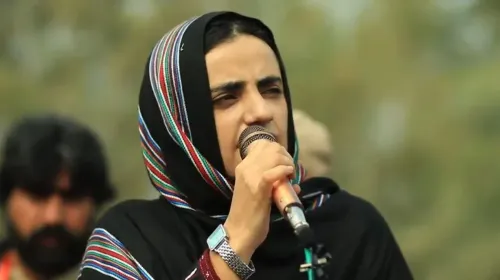
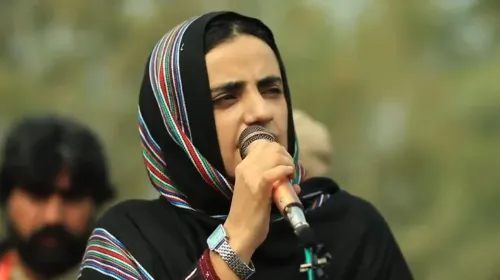
The convictions come amid sustained international scrutiny of Pakistan's treatment of Baloch civil society. Mahrang Baloch has emerged as one of the most prominent voices of the BYC, a movement that has organised large-scale sit-in protests demanding accountability for enforced disappearances in Balochistan. Critics and human rights groups have long argued that anti-terrorism legislation in Pakistan is routinely applied to suppress political dissent rather than address genuine security threats. The Bar Council's intervention is notable precisely because it comes from within the legal establishment — lawyers, not opposition politicians — lending institutional weight to concerns that might otherwise be dismissed as partisan.
What Happens Next
It remains unclear whether the convicted activists or their legal representatives will appeal the sentences. The Bar Council's statement stops short of calling for a specific legal remedy but signals that sections of Pakistan's legal community regard the verdict as a test case for judicial independence. Rights organisations are expected to amplify calls for a review, and the case is likely to draw further attention from international human rights bodies monitoring Balochistan.
Point of View
And the international community has repeatedly flagged this; what is less common is the domestic bar publicly questioning the integrity of the proceedings. The real issue is structural: when a court with 'anti-terrorism' in its name hands down life sentences to protest leaders, the burden of proof on the state to demonstrate a genuine security nexus — not political inconvenience — should be highest. That burden, critics argue, was not visibly met here. Whether the legal community's dissent translates into an appeal, a review, or simply remains a statement of conscience will define whether Pakistan's judiciary can credibly claim independence on politically sensitive cases.
NationPress
22 Sept 2026
Frequently Asked Questions
Who is Mahrang Baloch and why was she sentenced?
Mahrang Baloch is the leader of the Baloch Yakjehti Committee (BYC), a prominent Baloch civil society movement known for organising protests against enforced disappearances in Balochistan. A Pakistani Anti-Terrorism Court sentenced her to life imprisonment in connection with a case relating to the killing of a Frontier Corps official, according to local media reports.
Who else was sentenced alongside Mahrang Baloch?
Three others received life sentences in the same verdict: Baloch Students Organisation (BSO) Chairman Balach Qadir, central leader Abu Bakr Kalanchi, and BYC leader Sibghatullah Shahji.
Why did the Sindh Bar Council condemn the verdict?
The Sindh Bar Council condemned the sentences because, in its view, the verdict raises serious concerns if it resulted from proceedings that lacked independence, fairness, due process, and the fundamental principles of justice. The council argued that courts exist to protect liberty, not to silence dissent.
What did the Sindh Bar Council say about dissent and the law?
The council's statement held that 'dissent is not a crime, disagreement is not sedition, and the peaceful assertion of civil liberties can never be treated as an act of disloyalty to the state.' It described those who advocate for human dignity and constitutional freedoms as 'defenders of the highest democratic ideals.'
What happens next in the case?
It is not yet confirmed whether the convicted activists or their legal representatives will file an appeal. The Sindh Bar Council's statement signals that sections of Pakistan's legal community regard the verdict as a test of judicial independence, and international human rights bodies are expected to scrutinise the case further.