Adani Ports expands AI partnership with Kaleris across 15 terminals
Synopsis
Adani Ports is not just upgrading terminals — it is building a single AI-powered digital backbone across 15 container terminals at nine ports, backed by $100 million in dedicated automation spend within an $850 million tech envelope. The target: unlock 91 MMT of extra capacity by 2030, nearly 10% of installed base, through a partnership that has already proven itself across six ports.
Key Takeaways
APSEZ expanded its partnership with US-based Kaleris on 16 June to cover 15 container terminals across nine domestic and international ports .
Up to $100 million will be deployed in two phases for automation and optimisation through the Kaleris deal, within a broader $850 million technology and decarbonisation commitment.
The rollout is expected to unlock an additional 91 MMT of cargo handling capacity by 2030 , equivalent to nearly 10% of APSEZ's installed capacity.
APSEZ targets one billion tonnes of annual cargo handling capacity by 2030 .
The expansion builds on a first phase already completed across six ports .
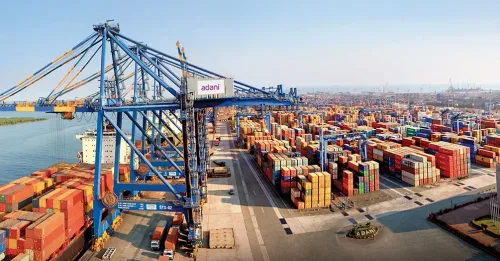
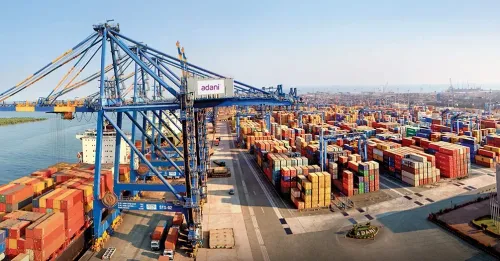
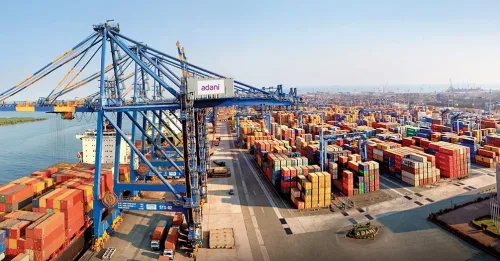
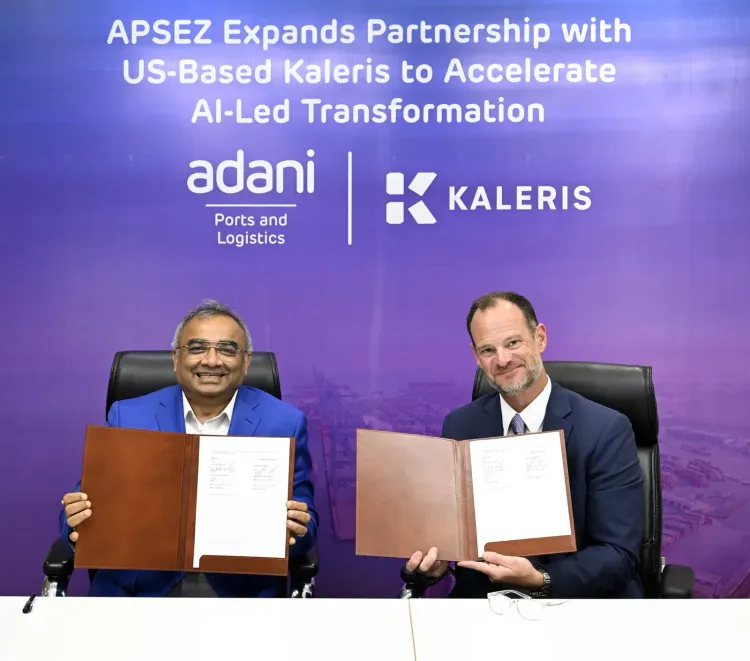
Adani Ports and Special Economic Zone Limited (APSEZ) on Tuesday, 16 June expanded its strategic partnership with US-based Kaleris to accelerate artificial intelligence-led transformation across its ports and logistics network. The expanded collaboration will deploy advanced automation and digital operating solutions across 15 container terminals, as APSEZ moves to cement its position as a technology-driven port operator ahead of FY31.
Scope of the Expanded Partnership
Under the multi-year agreement, Kaleris will roll out its terminal operating system and AI-augmented container handling and optimisation solutions across 15 APSEZ container terminals located at nine domestic and international ports. The expansion builds on the first phase of deployments already completed across six ports, signalling confidence in early results from the initial rollout.
The collaboration forms a central pillar of APSEZ's broader strategic vision leading up to FY31, which details a $850 million capital commitment toward technology modernisation and decarbonisation. Of this, up to $100 million will be deployed in two phases specifically to accelerate automation and optimisation through the Kaleris partnership.
What the Technology Will Deliver
Ashwani Gupta, Whole-time Director and Chief Executive Officer of APSEZ, said AI-enabled automation would define the next phase of competitiveness in the ports and logistics sector. 'While APSEZ has already deployed an end-to-end digital platform from shore to door, which provides seamless track-and-trace and integrated command and control capabilities, the Kaleris integration will enhance productivity, improve turnaround time, and consistently deliver a superior customer experience,' Gupta said.
The rollout is expected to create a unified digital backbone across APSEZ's maritime and logistics network, enabling advanced planning, automation, and operational optimisation at scale.
Capacity Unlock and Growth Targets
APSEZ expects the collaboration to unlock an additional 91 million metric tonnes (MMT) of cargo handling capacity by 2030 — equivalent to nearly 10% of its installed capacity. This forms part of the company's broader ambition to achieve a cargo handling capacity of one billion tonnes annually by 2030 and build a technology-led integrated transport platform.
Kirk Knauff, President and CEO of Kaleris, said: 'APSEZ is demonstrating the real impact of an AI-enabled port network at scale. Expanding to all 15 terminals reflects the results already achieved and the trust behind this partnership.'
Strategic Context
This comes amid intensifying global competition in port logistics, with major operators worldwide racing to deploy AI and automation to cut turnaround times and reduce costs. APSEZ's phased, results-linked approach — beginning with six ports before scaling to fifteen — is notably methodical compared with peers who have announced large-scale digitisation programmes without comparable phase-gate structures. Notably, the $100 million Kaleris-specific outlay sits within a far larger $850 million technology and decarbonisation envelope, suggesting APSEZ is treating digitalisation and sustainability as co-equal priorities through FY31.
Point of View
Capacity-constrained, and under pressure to compete with global hubs. The $100 million automation outlay is meaningful, but the real test is whether the 91 MMT capacity unlock materialises on schedule — port automation projects globally have a patchy delivery record. More importantly, APSEZ's one-billion-tonne ambition by 2030 is audacious; India's total port capacity today is well below that threshold, meaning APSEZ is essentially betting it can single-handedly shift the country's logistics ceiling. That is a strategic wager as much as a technology one.
NationPress
27 Sept 2026
Frequently Asked Questions
What is the Adani Ports and Kaleris partnership about?
APSEZ has expanded a multi-year agreement with US-based Kaleris to deploy AI-augmented terminal operating systems and container handling solutions across 15 container terminals at nine domestic and international ports. The deal is part of APSEZ's $850 million technology modernisation and decarbonisation plan through FY31.
How much is Adani Ports investing in the Kaleris partnership?
Up to $100 million will be deployed in two phases specifically for automation and optimisation through the Kaleris collaboration. This sits within a larger $850 million capital commitment APSEZ has made toward technology modernisation and decarbonisation leading up to FY31.
What additional capacity will the Kaleris deal unlock?
APSEZ expects the collaboration to unlock an additional 91 million metric tonnes of cargo handling capacity by 2030, which is equivalent to nearly 10% of its current installed capacity.
How many ports are covered under the expanded agreement?
Kaleris will deploy its solutions across 15 APSEZ container terminals located at nine domestic and international ports. This expands on a first phase already completed across six ports.
What is APSEZ's overall cargo capacity target by 2030?
APSEZ aims to achieve a cargo handling capacity of one billion tonnes annually by 2030, as part of its ambition to build a technology-led integrated transport platform.