Gujarat Police overhauls repair rules after delays, irregularity allegations
Synopsis
Gujarat Police has scrapped the three-quotation rule for individual repair jobs — a system that accounted for ₹17.48 crore of ₹19 crore in 2025-26 maintenance spending and attracted allegations of irregularities. The new SOP replaces it with direct material procurement, standing stocks, and monthly officer-certified audits, signalling a structural fix to a procurement process that critics say was ripe for manipulation.
Key Takeaways
Gujarat Police has replaced the three-quotation system for individual repair works with direct material procurement and standing stocks.
A 2025-26 review found 4,119 of 4,789 repair works, costing ₹17.48 crore out of ~₹19 crore total, were routed through the old system, which allegedly caused delays and irregularities.
Malik has issued the new SOP covering all police residential and office buildings across Gujarat .
A Class-I or Class-II officer must certify stock verification by the 5th of every month ; office heads must inspect stocks quarterly.
Works costing more than ₹50,000 are classified as 'special repairs' and require consultation with the Gujarat State Police Housing Corporation Ltd Executive Engineer.
Three quotations will still be required for major repairs, but only after prior written approval from the Commissioner of Police or Range Head .
The Gujarat Police has revamped its maintenance procurement system, announcing the discontinuation of the three-quotation requirement for individual repair jobs at police residential buildings and office premises across the state. Under the revised framework, offices will instead procure materials directly and maintain standing stocks — a move aimed at accelerating repairs and strengthening financial accountability.
What Prompted the Overhaul
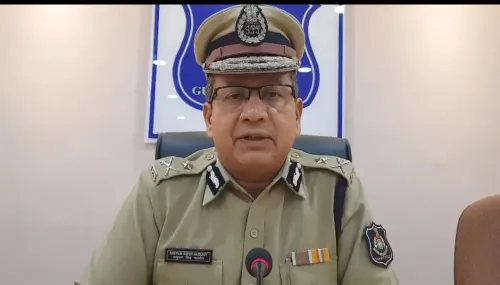
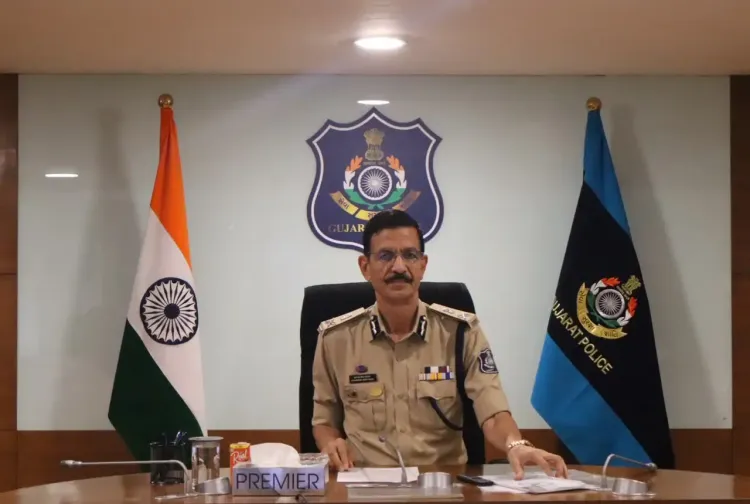
A review of repair works carried out in 2025-26 revealed that 4,119 out of 4,789 works — costing ₹17.48 crore out of a total expenditure of approximately ₹19 crore — were routed through the three-quotation process. The system reportedly led to approval delays, administrative bottlenecks, and allegations of irregularities, prompting Director General of Police (DGP) G.S. Malik to issue a new standard operating procedure (SOP) covering routine and special repairs of both residential and non-residential police buildings statewide.
Key Changes Under the New SOP
Under the revised system, offices will obtain three quotations for materials rather than for individual repair assignments. Adequate stocks of civil and electrical supplies — including electrical fittings, spare parts, and plumbing materials — will be maintained on the model already used for clothing items at Police Headquarters. This is intended to ensure that routine issues such as leaking taps, faulty lights and fans, wiring defects, and pipeline leaks can be resolved without waiting for fresh quotations each time.
Materials will be sourced at competitive rates from authorised dealers, with records maintained to facilitate audits. The SOP explicitly calls for the use of quality materials from reputed companies to reduce the frequency of repeated repairs. Semi-skilled labourers engaged for repair work will be paid at daily wage rates prescribed by the Labour and Employment Department.
Oversight and Accountability Mechanisms
All offices must maintain stock and issue registers in a prescribed format. A Class-I or Class-II officer will physically verify materials and issue a certificate by the fifth day of every month. The head of each office must personally inspect the stock once every three months — specifically by 10 January, 10 April, 10 July, and 10 October.
Separate registers will record repair complaints related to residential buildings and offices, along with the dates on which each complaint is resolved — creating a traceable paper trail for maintenance accountability.
When Three Quotations Still Apply
Where major repairs cannot be addressed through direct material procurement and require the three-quotation route, prior written approval from the competent authority — the Commissioner of Police or the Range Head, as applicable — will be mandatory before work commences at the commissionerate, district, or unit level. Works valued at more than ₹50,000 will be classified as 'special repairs', and proposals for these must be prepared in consultation with the Executive Engineer of Gujarat State Police Housing Corporation Ltd.
Scope and Stated Goals
The new procedure will apply to police residential facilities and office premises across Gujarat. The stated objectives are to reduce administrative delays, improve day-to-day maintenance, and strengthen accountability in the use of public funds. This comes amid broader efforts by state police administrations nationwide to tighten internal procurement practices following audit findings of procedural lapses.
Point of View
But its success will hinge entirely on whether the oversight mechanisms — quarterly head-of-office inspections and monthly certificates — are actually enforced or quietly treated as paperwork. India's police housing stock has chronically underperformed on upkeep; this SOP, if implemented with fidelity, could serve as a replicable model for other state forces facing similar audit findings.
NationPress
24 Oct 2026
Frequently Asked Questions
Why did Gujarat Police change its repair procurement rules?
Gujarat Police changed its rules after a review of 2025-26 repair works found that the existing three-quotation process for individual jobs had led to approval delays, administrative difficulties, and allegations of financial irregularities. The old system covered ₹17.48 crore of approximately ₹19 crore in total repair spending.
What is the new system that Gujarat Police will follow for repairs?
Under the new SOP issued by DGP G.S. Malik , offices will procure materials directly from authorised dealers and maintain standing stocks of civil and electrical supplies, rather than seeking three quotations for each individual job. Three quotations will still be required for materials purchased, and for major works, prior written approval from the Commissioner of Police or Range Head is mandatory.
Who is responsible for oversight under the new Gujarat Police repair SOP?
A Class-I or Class-II officer must physically verify materials and issue a certificate by the fifth day of every month. The head of each office must personally inspect stocks once every three months — by 10 January , 10 April , 10 July , and 10 October .
What qualifies as a 'special repair' under the new SOP?
Any repair work costing more than ₹50,000 is classified as a special repair. Proposals for such works must be prepared in consultation with the Executive Engineer of Gujarat State Police Housing Corporation Ltd and require prior written approval from the competent authority before work begins.
Which buildings does the new Gujarat Police repair SOP cover?
The SOP applies to all police residential facilities and office premises across Gujarat . It covers routine civil and electrical repairs, including issues such as leaking taps, faulty fans and lights, wiring defects, and pipeline leaks.