Dedicated Freight Corridor boosts Gujarat logistics ahead of VGRC 2025
Synopsis
India's Golden Quadrilateral was running at 150% capacity — and Gujarat's Varnama DFC is the pressure valve. Freight speeds have nearly tripled to 70 kmph, transit times for milk from Mehsana to Delhi have been cut by 60%, and rail freight costs less than a quarter of road. With 110–140 trains a day expected on dedicated tracks, this is one of the most consequential logistics shifts Gujarat has seen in a generation.
Key Takeaways
Freight train speeds at Varnama DFC have risen from 25–26 kmph to around 70 kmph , with a DFCCIL target of 100 kmph .
Daily freight trains on the Vadodara–Mumbai route are expected to rise from 50–70 to 110–140 once full diversion is complete in two to three months .
Truck-on-Train services have cut Mehsana–Delhi milk transit time from 17 hours to 7 hours — a 60% reduction.
Dedicated rail freight costs less than ₹10 per tonne-km , against ₹25–₹30 by road and over ₹40 by air.
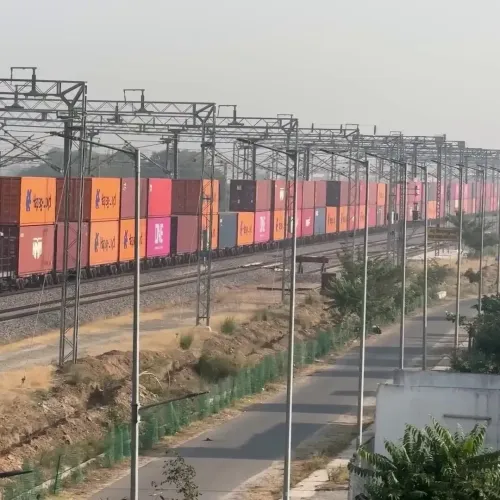
The corridor could reduce heavy truck traffic on national highways by around 40% , with one freight train equivalent to 400 trucks .
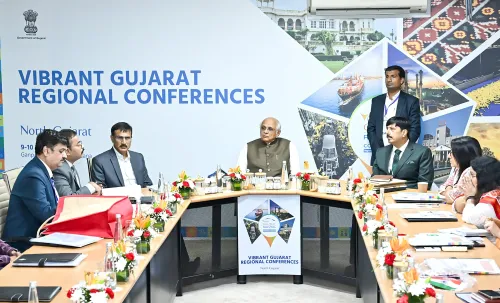
The DFC will be a key showcase at the Vibrant Gujarat Regional Conference on 29–30 June 2025 in Vadodara .
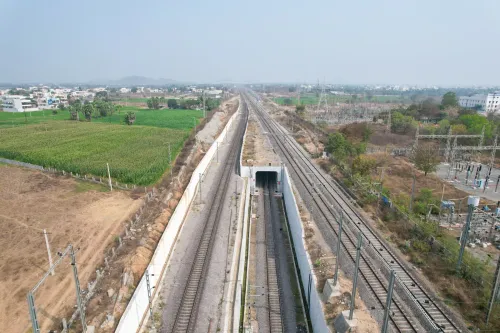
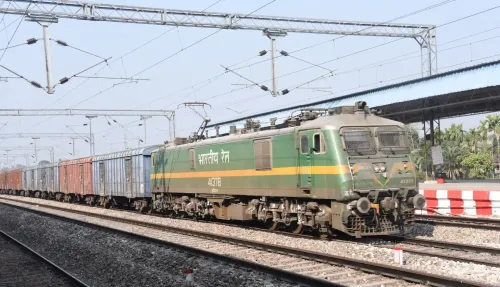
The Dedicated Freight Corridor (DFC) at Varnama in Vadodara has nearly tripled freight train speeds and sharply cut transit times for key commodities, officials said ahead of the Vibrant Gujarat Regional Conference (VGRC) scheduled for 29–30 June in Vadodara. The infrastructure push is being positioned as a centrepiece of Gujarat's case for industrial investment at the upcoming conference, which will focus on infrastructure and investment opportunities across Central Gujarat.
Speed and Capacity Gains
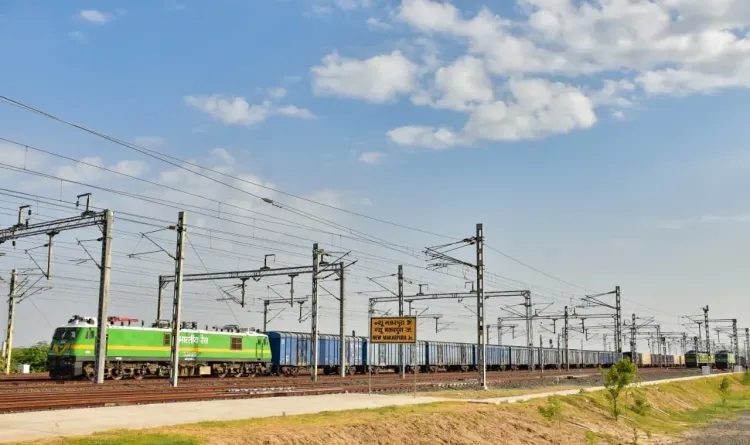
Freight trains on conventional shared tracks in the region previously averaged just 25–26 kmph, constrained by the simultaneous movement of passenger and goods trains. On the dedicated corridor, average speeds have climbed to around 70 kmph, according to officials associated with the Varnama DFC. The Dedicated Freight Corridor Corporation of India Limited (DFCCIL) has set a target of pushing speeds further to 100 kmph.
Currently, between 50 and 70 goods trains operate daily on the Vadodara–Mumbai route. Railway authorities plan to divert all freight traffic to the dedicated corridor within the next two to three months, after which daily freight train numbers on the dedicated tracks are expected to rise to between 110 and 140 — effectively doubling freight-handling capacity while freeing conventional tracks for additional passenger services.
Transit Time Cuts: The Dudhsagar Example
Officials cited the movement of milk from Mehsana's Dudhsagar Dairy to Delhi to illustrate the corridor's real-world impact. The combination of the dedicated freight network and Truck-on-Train services has reduced transit time from approximately 17 hours to seven hours — a reduction of nearly 60 per cent. The faster movement has also lowered fuel consumption and overall logistics costs for operators.
Cost Advantage Over Road and Air
The economics of the corridor are stark. Officials noted that air freight typically costs more than ₹40 per tonne-km, while road transport ranges between ₹25 and ₹30 per tonne-km. Dedicated rail freight, by contrast, costs less than ₹10 per tonne-km, making it the most cost-efficient mode for bulk movement. Authorities estimate that once fully operational, the corridor could reduce heavy truck traffic on national highways by around 40 per cent, given that a single freight train can carry the equivalent load of approximately 400 trucks.
Network Pressure and the Golden Quadrilateral Problem
The urgency behind dedicated freight infrastructure stems from a structural imbalance in India's rail network. The country's Golden Quadrilateral rail corridor accounts for only 16 per cent of total track length yet carries nearly 58 per cent of all freight traffic. The Vadodara–Mumbai stretch had been operating at around 150 per cent of its designed capacity, making congestion relief a strategic necessity rather than an incremental improvement.
The DFC passing through 30 villages in Vadodara district forms part of the broader Western Dedicated Freight Corridor connecting northern and western India. Connectivity with major ports — Mumbai, Mundra, Pipavav, and Kandla — has also been strengthened, improving export logistics for Gujarat-based businesses.
What Comes Next
Preparations are underway to run freight trains between Vadodara and Mumbai's Jawaharlal Nehru Port on fixed timetables, mirroring passenger train scheduling. Traffic management is being handled through an advanced Train Management System, and plans are in place to establish a Gati Shakti Cargo Terminal in Vadodara to support rising commercial traffic. The shift of cargo from road to rail is also expected to reduce carbon emissions. The DFC is set to feature prominently in VGRC discussions as Gujarat seeks to leverage large-scale infrastructure to attract industrial investment.
Point of View
It is structural. But the real test is execution speed: the two-to-three-month window for full freight diversion has slipped in similar rail projects before. Gujarat's ability to showcase this at VGRC matters less than whether DFCCIL hits its 100 kmph target and the Gati Shakti terminal actually comes up on schedule. If it does, the cost-per-tonne-km advantage over road could meaningfully shift how Central Gujarat's industry moves goods — and that is worth watching more closely than the conference optics.
NationPress
22 Jun 2026
Frequently Asked Questions
What is the Dedicated Freight Corridor at Varnama in Vadodara?
The Varnama DFC is a segment of the Western Dedicated Freight Corridor passing through 30 villages in Vadodara district, designed to move goods trains on exclusive tracks separate from passenger rail. It is operated by the Dedicated Freight Corridor Corporation of India Limited (DFCCIL) and connects northern and western India while improving port access to Mumbai, Mundra, Pipavav, and Kandla.
By how much have freight train speeds increased on the Vadodara DFC?
Average freight train speeds have risen from 25–26 kmph on shared conventional tracks to around 70 kmph on the dedicated corridor, according to officials. DFCCIL has set a further target of 100 kmph.
How has the DFC reduced transit times for perishable goods?
Officials cited milk transportation from Mehsana's Dudhsagar Dairy to Delhi as an example: transit time has fallen from approximately 17 hours to 7 hours — a reduction of nearly 60% — thanks to the dedicated network and Truck-on-Train services.
What is the Vibrant Gujarat Regional Conference and why is the DFC relevant to it?
The Vibrant Gujarat Regional Conference (VGRC) is scheduled for 29–30 June 2025 in Vadodara, focusing on infrastructure and investment opportunities across Central Gujarat. The DFC is being highlighted as a flagship infrastructure project to attract industrial and trade investment to the region.
How does rail freight cost compare to road and air under the DFC?
Dedicated rail freight on the corridor costs less than ₹10 per tonne-km, compared to ₹25–₹30 per tonne-km by road and over ₹40 per tonne-km by air, according to officials. Authorities also estimate that full operationalisation could cut heavy truck traffic on national highways by around 40%.