Air India AI-171 crash: Victim's kin says Captain Sabharwal 'tried till the end'
Synopsis
A relative of three AI-171 victims says he entered the Ahmedabad Civil Hospital mortuary the day after the crash and found Captain Sumeet Sabharwal's body still gripping the aircraft controls — a claim that directly challenges any narrative of deliberate pilot action. With the first anniversary approaching and 200 families demanding black box access, the account adds a deeply human dimension to an investigation that remains unresolved.
Key Takeaways
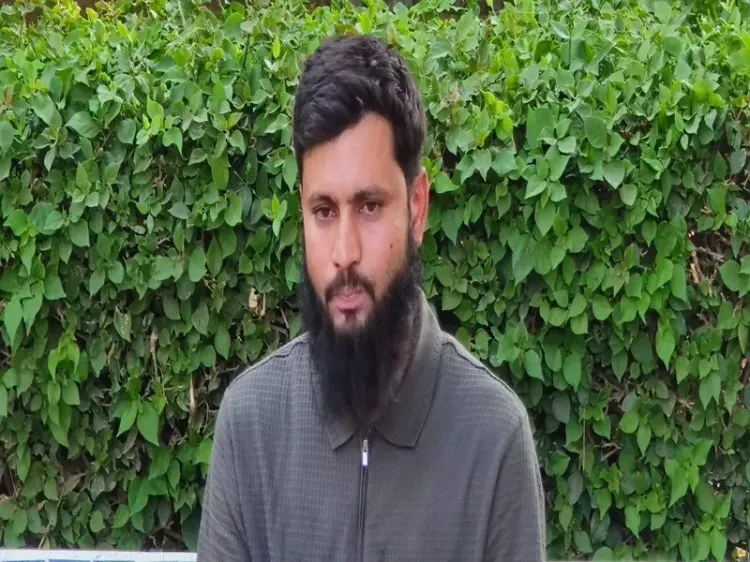
Romin Vohra , who lost three family members in the Air India AI-171 crash, claims he saw Captain Sumeet Sabharwal 's body in a seated position with his hand on the aircraft controls inside the Civil Hospital mortuary on 13 June .
The AI-171 crash on 12 June killed 260 people , including 19 on the ground , with only one survivor from 242 on board.
Preliminary findings indicated fuel supply switches moved to cutoff positions after take-off, with cockpit voice recordings capturing pilots questioning each other over the action.
Nearly 200 families are seeking access to black box data; Vohra says families will legally challenge any final report attributing the crash to pilot error.
Vohra signed panchnama documents for seven bodies at Meghani Nagar police station , which he cites as documentary proof of his mortuary access.
The final investigation report is awaited as the first anniversary of the disaster approaches on 12 June .
Nearly a year after the Air India AI-171 crash in Ahmedabad, a relative of three victims has come forward with a harrowing firsthand account from inside the Civil Hospital mortuary, claiming he saw the body of Captain Sumeet Sabharwal seated in what he described as a 'boxer position' — with his hand still on the aircraft controls. The account, shared nearly 11 months after the disaster, has reignited debate over the cause of one of the deadliest aviation tragedies in recent Indian history.
Romin Vohra, a resident of Thasra village in Gujarat's Kheda district, lost three family members in the crash — his elder brother Parvez Vohra, 33; his niece Zuveriya Vahora, aged three years and eight months; and his maternal aunt Yasmin Vahra, 50.
What Vohra Saw Inside the Mortuary
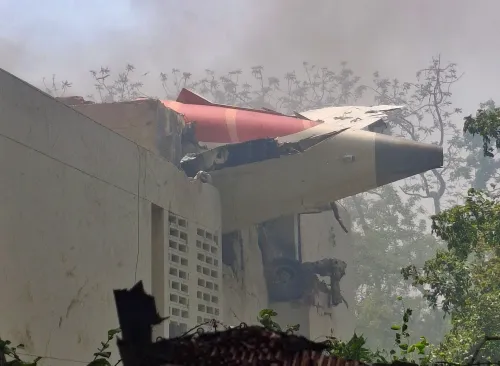
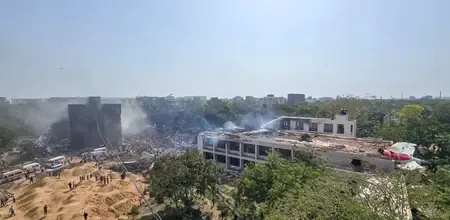
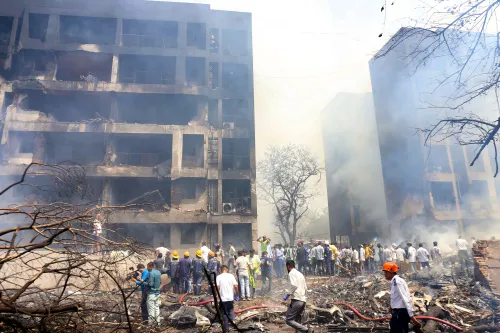
Vohra said he entered the mortuary on 13 June, a day after the London-bound Boeing 787-8 Dreamliner crashed seconds after take-off from Sardar Vallabhbhai Patel International Airport on 12 June. The aircraft, operating as AI-171 from Ahmedabad to London's Gatwick Airport, had issued a Mayday call to air traffic control before going down, according to reports from the time. The flight was carrying 242 people, including passengers and crew. In total, 260 people died, including 19 on the ground, with only one survivor.
Vohra, who works as a laboratory technician in the paramedical field and had volunteered at Civil Hospital during the Covid-19 period, said he obtained permission to enter the mortuary through his contacts and medical background. He said he remained inside between approximately noon and 2 pm on 13 June, moving through five rooms filled with bodies and body parts.
'There were five rooms and all five were filled with bodies, one over another. I opened the coverings and searched body after body hoping I would find my brother, the child or my aunt,' he said.
He described seeing severed body parts, burnt remains, and victims from both inside the aircraft and on the ground. Among the scenes he recounted: 'the severed head of a small child, maybe one-and-a-half or two years old'; a pregnant woman 'whose stomach had burst open'; and 'a mother wrapped around her child and both were completely burnt.'
The Account of Captain Sabharwal's Body
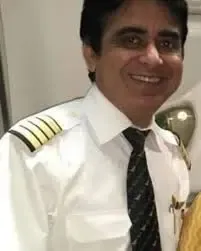
According to Vohra, he noticed a separate table in a corner where he said Captain Sumeet Sabharwal's body had been placed. 'The body was in a sitting position. His legs were bent, one hand was straight and there was a steering control in his hand. He was wearing a white shirt, blue trousers and a tie,' he said.
He claimed the back of the body had sustained burn injuries while the front remained comparatively identifiable. Drawing on his medical background, Vohra said he could distinguish between the two pilots by body structure, age, and build — noting that First Officer Clive Kunder was younger than Captain Sabharwal.
Vohra was unequivocal in his belief that the captain had fought to save the aircraft until the final moments. 'My main point is that Captain Sumeet Sabharwal sir tried till the end to save the flight and the passengers. If someone wanted to die intentionally, he would not continue holding the steering,' he asserted. He repeatedly rejected any suggestion of deliberate action by the pilot.
The Investigation and What Families Are Demanding
Preliminary findings released months after the crash pointed to confusion in the cockpit after fuel supply switches reportedly moved to cutoff positions shortly after take-off. Cockpit voice recordings reportedly captured one pilot asking, 'Why did you cutoff?', with the other responding, 'I did not do so.' Neither pilot has been officially named as responsible in any released findings to date.
Vohra is part of a group of nearly 200 families seeking access to the black box data. He said that if the final investigation report attributes the crash to pilot error, families would challenge it legally. 'If the final report says pilot error, then we will challenge the report as per our lawyers' guidance,' he said.
Some victims' families have also reportedly approached the UK Air Accidents Investigation Branch (AAIB) requesting participation in the probe, but were informed that the investigation remained under Indian jurisdiction.
The Human Cost: Days of Waiting, Bodies on Footpaths
Vohra recounted the ordeal families endured in the days that followed. His brother's body was handed over on 14 June at around 6 pm, his aunt's remains on 15 June at around 3 pm, and the child's remains only on 19 June. 'I had decided I would not leave without taking the child with me,' he said.
He alleged that families spent days sleeping outside the hospital while awaiting DNA identification and documentation. 'We slept on footpaths. One night police beat us with sticks because politicians were expected to visit. For 10 days, we survived almost only on water,' he claimed.
Vohra also noted that his sister-in-law had been nine months pregnant at the time of the crash and gave birth to a baby boy around 20 days after her husband's death. 'My brother's dream was to have a son because he already had two daughters. God gave him a son but took away the father,' he said.
He added that he signed panchnama documents for seven bodies at Meghani Nagar police station as a witness, which he said could serve as documentary proof of his presence inside the mortuary.
What Comes Next
Investigations by Indian authorities and international aviation experts are continuing as the first anniversary of the disaster approaches on 12 June. The outcome of the final investigation report is expected to have significant legal and regulatory implications for the families, the airline, and Indian aviation oversight bodies.
Point of View
And the investigation has not yet assigned cause — yet it is already shaping the families' legal strategy and public perception of the pilots. The preliminary cockpit voice recording detail — two pilots each denying they moved the fuel cutoff switches — is the central unresolved question, and a first-person mortuary account, however affecting, does not answer it. What the account does expose is the institutional failure in managing grief: families sleeping on footpaths, waiting a week for a child's remains, and allegedly being beaten by police ahead of a political visit. That story has received far less scrutiny than the technical investigation, and it deserves its own accountability.
NationPress
12 Oct 2026
Frequently Asked Questions
What did Romin Vohra claim he saw in the Civil Hospital mortuary after the AI-171 crash?
Vohra claimed he saw Captain Sumeet Sabharwal's body seated in a 'boxer position' on a separate table in the mortuary, with one hand still on the aircraft's steering control. He said the back of the body had burn injuries while the front remained comparatively identifiable, and he used his paramedical background to distinguish between the two pilots.
How many people died in the Air India AI-171 crash?
A total of 260 people died in the AI-171 crash on 12 June, including 241 of the 242 people on board and 19 people on the ground. There was only one survivor.
What do preliminary findings say about the cause of the AI-171 crash?
Preliminary findings indicated that fuel supply switches moved to cutoff positions shortly after take-off. Cockpit voice recordings reportedly captured one pilot asking 'Why did you cutoff?' and the other responding 'I did not do so.' No final cause has been officially established.
What are the families of AI-171 victims demanding?
Nearly 200 families are demanding access to the aircraft's black box data. Vohra has stated that if the final investigation report attributes the crash to pilot error, the families will legally challenge it with the guidance of their lawyers.
When is the final investigation report on the AI-171 crash expected?
No official release date for the final report has been announced. Investigations by Indian authorities and international aviation experts are continuing as the first anniversary of the crash approaches on 12 June.